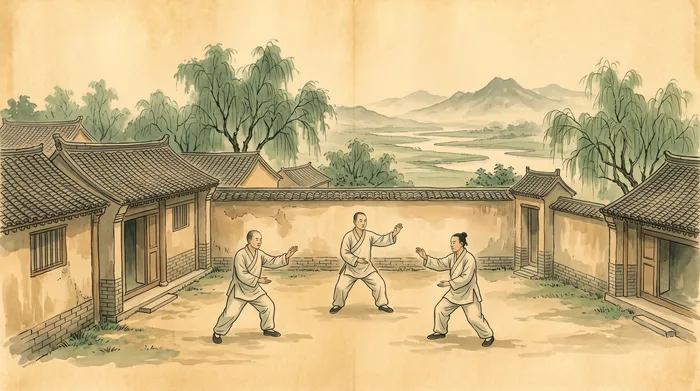
Every tai chi lineage in the world traces back, sooner or later, to a village in Henan Province called Chenjiagou — Chen Family Ditch. It is not a famous place in the way that Shaolin Temple is famous, and for most of its history it was an unremarkable agricultural settlement in a flood-prone stretch of the North China Plain.
It is also where a martial art practised today by tens of millions of people began, and where the family that created it still lives.
Where It Is
Chenjiagou sits in Wenxian County, Jiaozuo Prefecture, in northern Henan Province, a little north of the Yellow River and roughly midway between the historic capitals of Luoyang and Kaifeng.
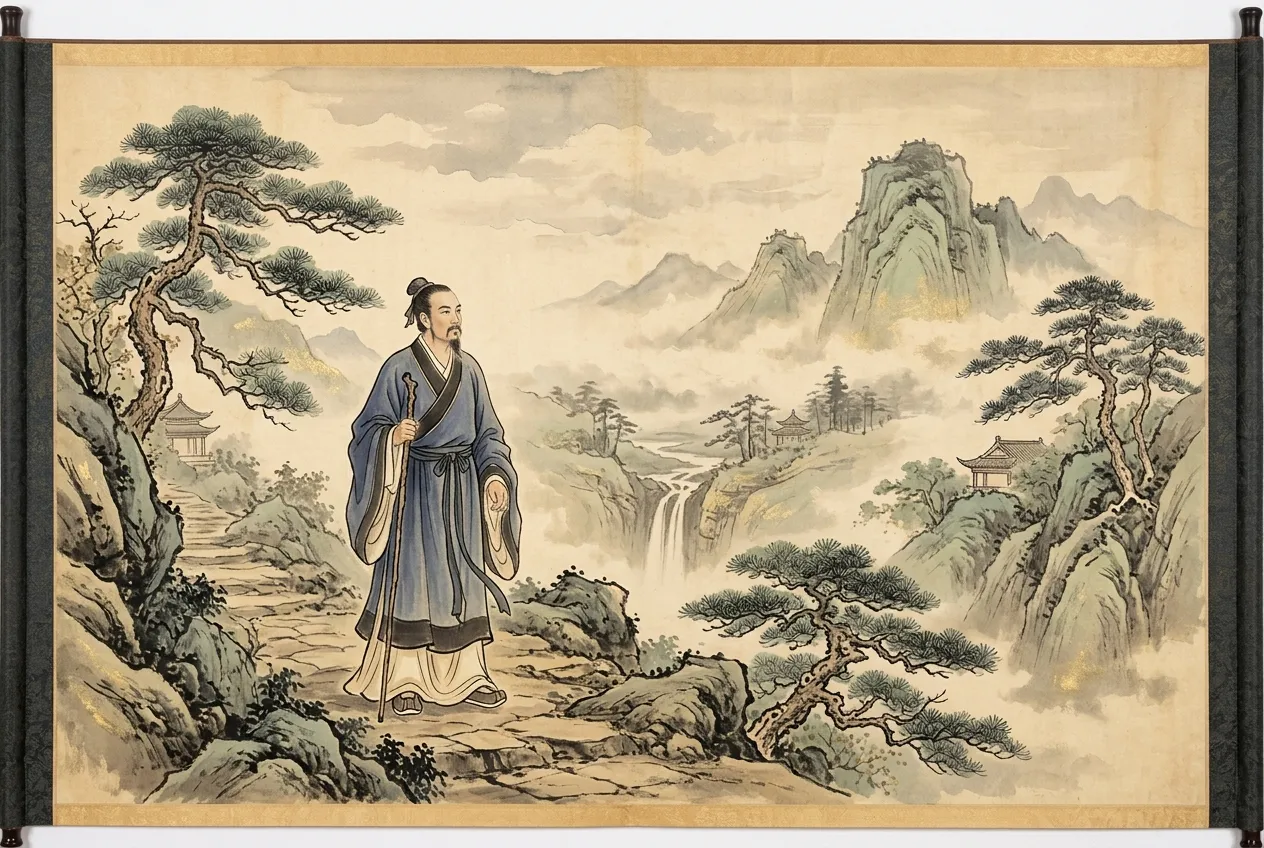
The location matters more than it first appears. This is a corridor that armies moved through repeatedly across Chinese history, and a region subject to flooding, banditry, and the general insecurity of a place people fought over. The Chen family’s own account of their arrival — migrating from Shanxi during the early Ming dynasty, in the resettlement of a region depopulated by war — is itself a story about instability.
A village in such a place had practical reasons to maintain martial skill. Local militias were common, self-defence was not theoretical, and a family with a fighting reputation had advantages.
Chen Wangting and the Creation of the Art
The figure credited with creating what became tai chi is Chen Wangting, conventionally dated 1600 to 1680 — the ninth generation of the Chen family in the village.
He was a military man. The accounts describe him serving as a garrison commander in the late Ming, and retiring to the village after the dynasty’s collapse in 1644, in the disorder that accompanied the Qing conquest. What he did in retirement, according to the traditional account, was systematise what he knew.
What he drew on is reasonably well established in outline. Existing military martial arts, including the systems recorded in the sixteenth-century general Qi Jiguang’s manual, which is known to have circulated widely. Daoyin and tuna — traditional Chinese breathing and stretching practices. Traditional Chinese medical theory, particularly meridian theory. And his own combat experience.
The result was not tai chi as anyone would recognise it today. It was a family martial system of several routines, including empty-hand forms, weapons, and the partner practice that became push hands. The name taijiquan came much later; the Chen family art was known simply as the family’s boxing.
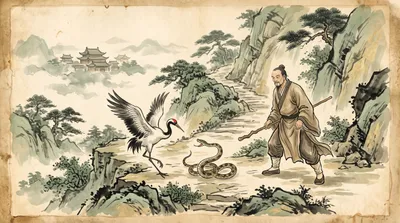
The historical record here is thinner than the confident retellings suggest. Much of what is known comes from Chen family genealogies and from later reconstructions, and scholarly work on early tai chi history involves a good deal of argument about what can actually be established. The origins article covers the competing accounts, including the Zhang Sanfeng legend that attributes the art to a Daoist immortal several centuries earlier.
Generations of Transmission
What makes Chenjiagou unusual is the continuity. The art stayed in one family in one village for roughly three hundred years, transmitted from generation to generation with the village’s other practices.
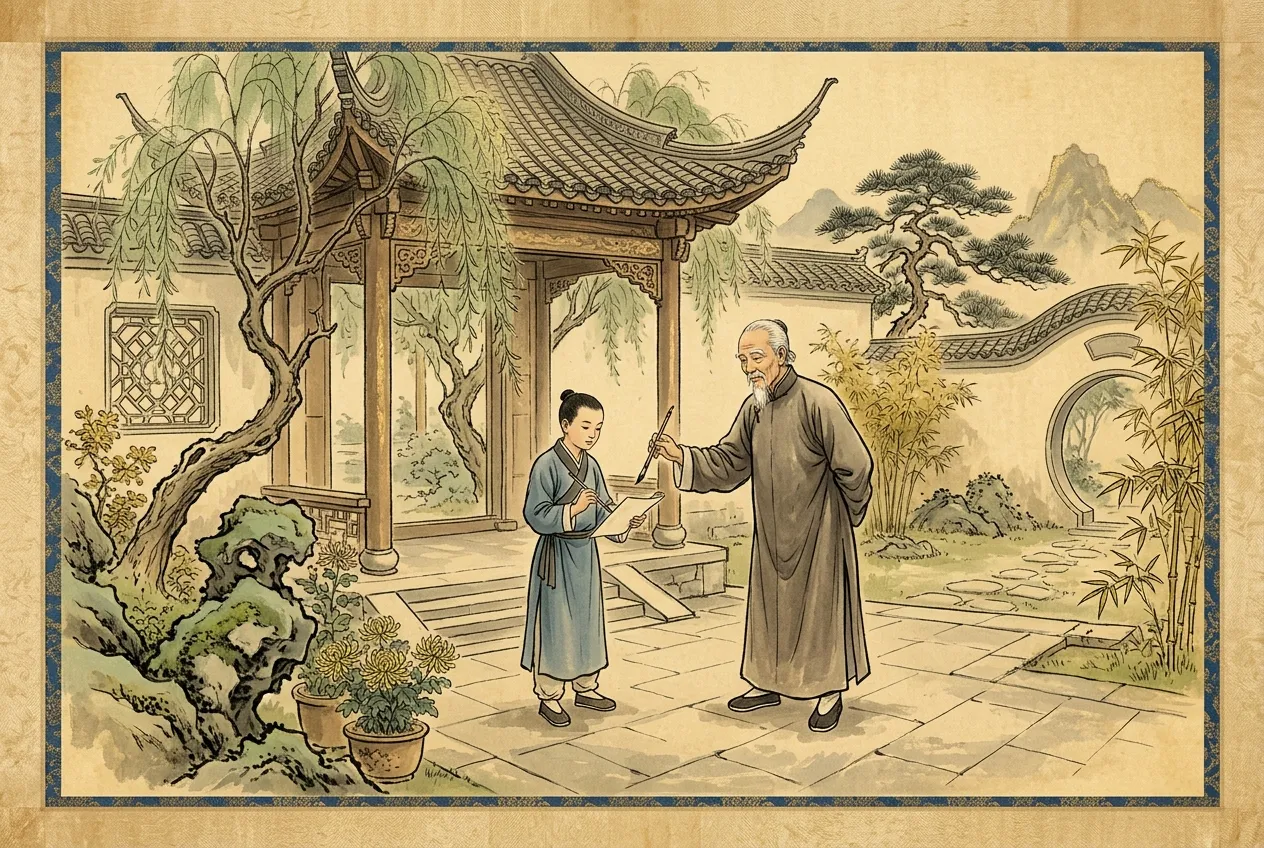
Chen Changxing (1771-1853), of the fourteenth generation, is the pivotal figure for everyone outside the family. He is credited with consolidating the older routines into the two forms that became the Old Frame — Laojia Yilu and Erlu — and, more consequentially, with teaching an outsider.
That outsider was Yang Luchan, who arrived in the village as a servant or worker, depending on which version you read, and eventually learned the art. Every Yang, Wu, and Sun style practitioner in the world descends from that decision. The traditional stories about how it happened — Yang watching secretly through a gap in a wall, practising at night, being discovered and admitted as a student — are colourful and probably embellished, but the transmission itself is not in doubt.
Chen Youben and Chen Qingping, working in the nineteenth century, developed the Small Frame variants, and Chen Qingping taught Wu Yuxiang, from whom Wu (Hao) style descends.
Chen Fake (conventionally dated 1887-1957), of the seventeenth generation, took Chen style out of the village. Accounts place his move to Beijing around 1928, where he taught publicly until his death, establishing the style’s reputation in the capital at a time when Yang style had long since dominated the public understanding of tai chi. He also developed what became known as New Frame.
Chen Zhaopi returned to the village in the 1950s and taught there through a difficult period, and is generally credited with preserving the village’s transmission when it might have lapsed.
The generation after him — including Chen Xiaowang, born in the mid-1940s and recognised as the nineteenth generation lineage holder, along with several contemporaries collectively known as the Four Buddha’s Warriors of Chen Village — took the art international from the 1980s onward.
How the Art Left the Village
The single most consequential event in the village’s history was a decision to teach an outsider, and it is worth dwelling on what followed from it.
Yang Luchan took what he learned at Chenjiagou to Beijing, where he taught the imperial court and the Manchu nobility. That audience was decisive. Court officials were not village militiamen — they were older, less physically conditioned, and interested in health and self-cultivation as much as in combat. The art was adapted accordingly: stances raised, tempo evened, explosive releases softened.
From that modified transmission came every major development that followed. Wu Quanyou learned from Yang Luchan’s son and founded Wu style. Wu Yuxiang learned from Yang Luchan and from Chen Qingping at nearby Zhaobao, and founded Wu (Hao) style. Sun Lutang learned Wu (Hao) style from Hao Weizhen and founded Sun style. Yang Chengfu standardised the large-frame Yang form in the early twentieth century and his students carried it across China and then the world.
The result is a curious asymmetry. The village that created the art spent most of the last two centuries as a footnote to it. Until Chen Fake’s arrival in Beijing in the late 1920s, many practitioners in the capital did not connect what they practised with a Henan village at all, and some traditions actively preferred the Daoist origin story to the village one.
The rediscovery of Chen style as the parent lineage is largely a twentieth-century phenomenon, and its acceptance was not universally quick. Some Yang-lineage traditions maintained for decades that their art descended from an earlier and separate source. That argument has largely subsided, but it is a reminder that lineage claims in Chinese martial arts have always been partly about status.
The Twentieth Century
The village’s history in the twentieth century was not smooth.
The upheavals of the republican period, the Japanese occupation, the civil war, and then the political campaigns of the People’s Republic all affected it. Traditional martial arts occupied an awkward position for much of this time — sometimes promoted as national culture, sometimes suppressed as feudal remnant. During the Cultural Revolution in particular, traditional practices and the families associated with them were frequently targets.
That the transmission survived at all owes something to the village’s remoteness and a good deal to individuals who kept teaching through periods when doing so was unwise.
From the 1980s, the direction reversed entirely. Chinese policy came to treat traditional martial arts as cultural heritage and, increasingly, as a tourism asset. Chenjiagou was developed accordingly.
The Village Today
Modern Chenjiagou is a destination. It has training schools, a martial arts museum, memorial halls, competition facilities, and a steady flow of visitors from China and abroad. Foreign students come for training periods ranging from days to years, and the village hosts international events.
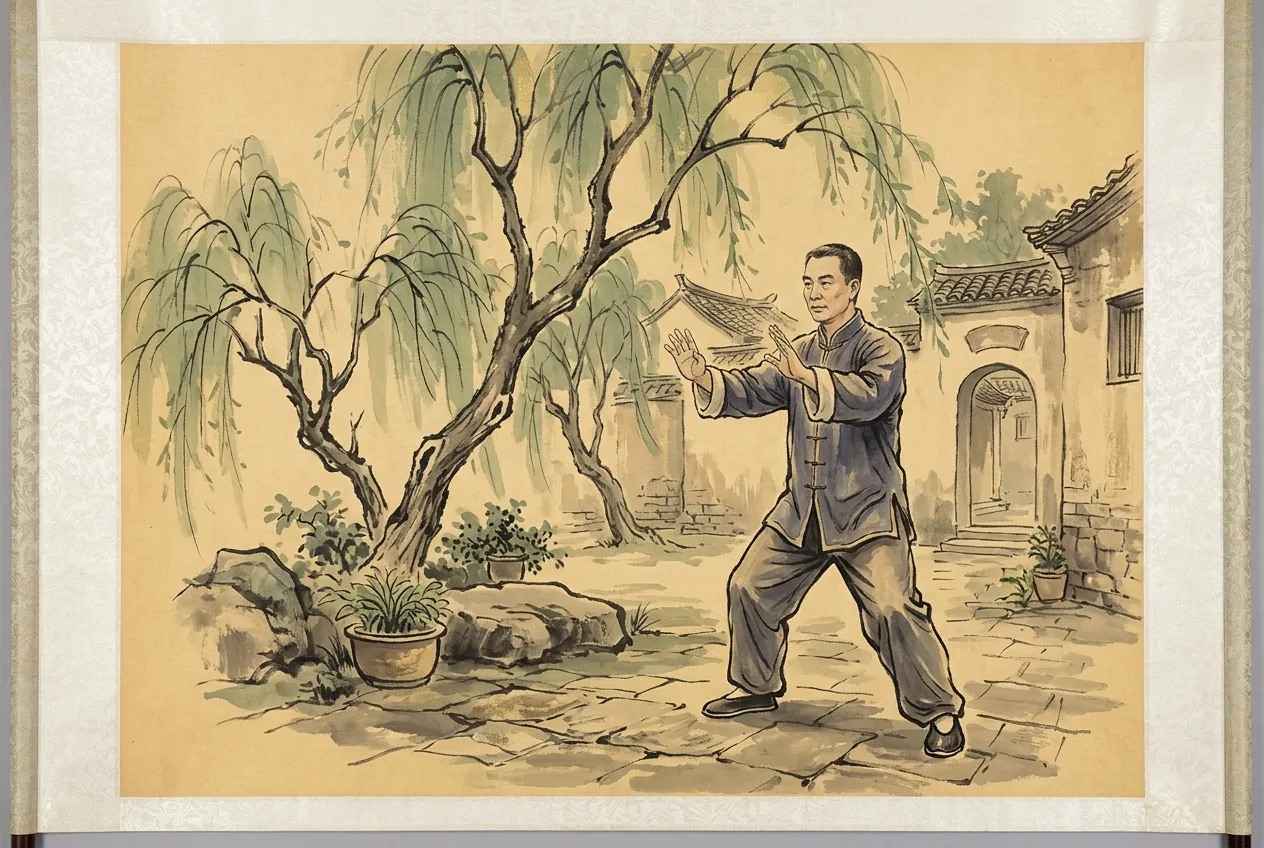
Whether this constitutes preservation or commercialisation is a live argument among practitioners. The case for is that the art is being taught, the lineage is intact, and international interest has funded the village’s development and kept the tradition economically viable. The case against is that a heritage tourism destination is a different thing from a village that happens to practise a martial art, and that some of what is presented to visitors is performance.
Both readings are probably right at once, which is the usual outcome when a living tradition becomes a visitable one. My own view is that the alternative — a tradition preserved only in obscurity — has a poor record of surviving, and that a slightly touristic Chenjiagou is better than none.
Visiting Chenjiagou
For anyone considering going, some practical observations gathered from accounts by people who have.
Getting there. The nearest large city is Zhengzhou, the provincial capital, with the village reachable by road from there or from Jiaozuo. It is not remote in any serious sense, but it is rural and public transport is limited.
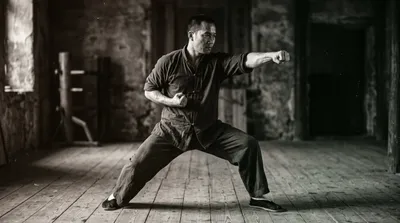
Training options. Several schools in and around the village take foreign students, offering programmes from a week to a year. Standards vary, and the reputation of individual schools is worth researching rather than assuming. Training is typically intensive — multiple sessions daily, heavy emphasis on standing practice and basic silk-reeling exercises before any form work.
Language. Instruction is generally in Chinese, sometimes with translation. Schools accustomed to international students manage this; others do not.
What to expect physically. Chen-style training at the village is demanding. Accounts from visitors consistently mention long periods in low stances and a volume of repetition that Western classes rarely approach. Arriving fit is sensible.
The village itself is small, and the surrounding area is agricultural Henan rather than scenic China. Visitors come for the training and the lineage, not for the setting.
I have not been, and I am relaying rather than reporting. If tai chi becomes a long-term interest, it is on the list of places worth going — less for any technical revelation than for seeing the practice in the context that produced it.
Why the Village Matters to Practitioners
For someone practising Yang-style tai chi in a community centre, Chenjiagou can seem like distant background. A few reasons it is worth knowing about.
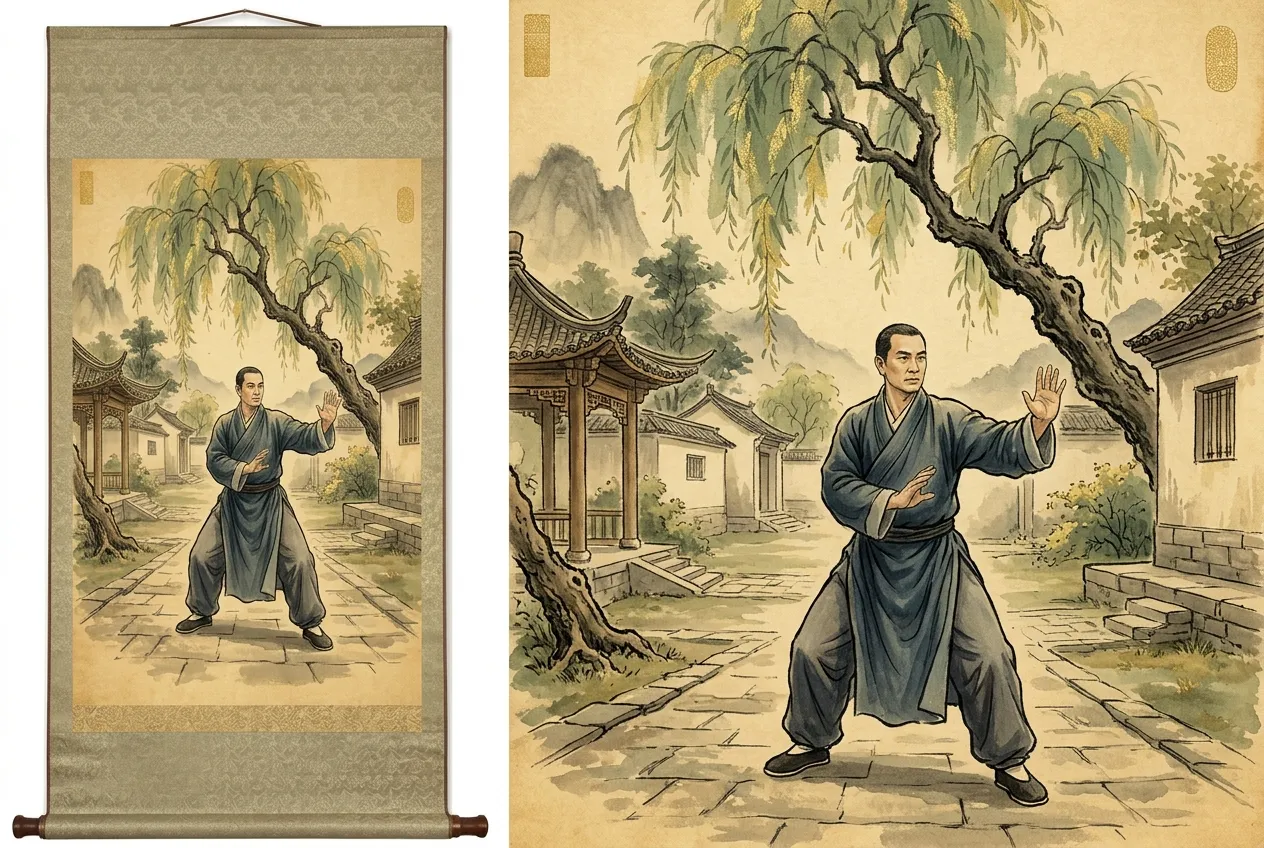
It explains why the styles differ. Yang, Wu, Wu (Hao), and Sun styles are all downstream of decisions made about what to keep and what to change from the Chen village art. Knowing the source clarifies what those decisions were.
It anchors the martial content. Tai chi’s origins in a village that needed to defend itself is the context that makes sense of movements whose purpose is otherwise obscure.
It grounds the philosophy. The Daoist concepts attached to tai chi are real and important, but they were attached to an existing martial practice rather than generating it. A village martial art came first.
It provides a reference point. For practitioners who want to see what the art looks like at its source, the village is a real place with real teachers, and visiting is possible.
What Can and Cannot Be Established
A note on historical confidence, since this area attracts a great deal of assertion.
Reasonably well established: that the Chen family of Chenjiagou practised a distinctive martial art from at least the seventeenth or eighteenth century; that Chen Changxing taught Yang Luchan; that all major tai chi lineages trace to the village either directly or through Yang; and the broad outline of the transmission from Chen Fake onward, which is within documented memory.
Less certain: the precise role of Chen Wangting, the exact content of the earliest forms, the relationship between the Chen art and earlier military systems, and almost everything about the period before the nineteenth century, where the sources are family genealogies and later accounts rather than contemporary documentation.
Not established: the Zhang Sanfeng attribution, and the various claims of Daoist temple origins that would place the art’s creation centuries earlier and elsewhere. These are traditional beliefs with a long history of their own, and they matter culturally, but they are not history in the documentary sense.
Chinese martial arts history is genuinely difficult, and the confident versions found in most introductory books smooth over a great deal of scholarly disagreement.
The origins of tai chi covers the competing accounts of the art’s beginnings, the Chen style overview covers the practice that came out of the village, and the grandmasters article covers the individuals in more detail. More is collected in the tai chi history section.