Chen Style Tai Chi: Origins, Principles, and Practice
Among the major tai chi traditions, Chen style holds a particular position: it’s the oldest documented lineage, the root from which Yang, Wu, Sun, and Wu Hao styles eventually grew, and the style that most visibly preserves tai chi’s martial character. Visit Chen Village (Chenjiagou) in Henan Province, China today, and you’ll find a community where tai chi practice is woven into daily life in the way it has been for centuries.
Understanding Chen style means understanding something essential about tai chi’s origins — not as a gentle health exercise, but as a sophisticated martial system that happened to produce extraordinary health benefits as a consequence of its training methods.
Origins in Chen Village
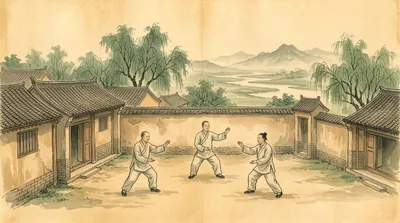
The story of Chen style begins in Chenjiagou, a village in Wenxian County, Henan Province. The development of what would become Chen-style tai chi is attributed to Chen Wangting (1600–1680), a general and martial artist who retired to the village after military service and synthesised his martial knowledge into a systematic training method during the latter years of the Ming dynasty and the early Qing dynasty.
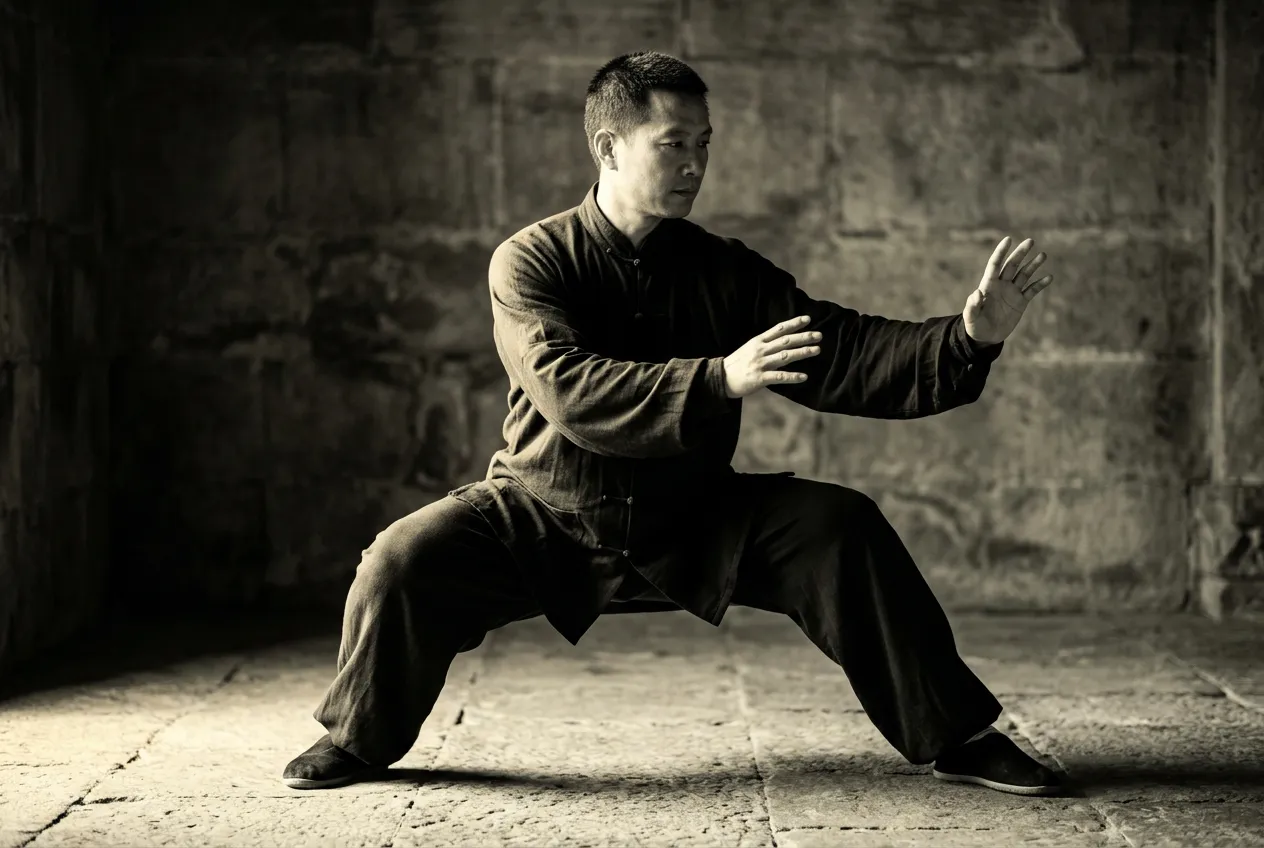
Chen Wangting drew from multiple traditions in creating this system — classical military texts on martial arts, elements of traditional Chinese medicine and meridian theory, and the combat experience of his own military career. The result was a comprehensive training system that combined physical conditioning, breath work, and fighting skills in an integrated practice.
The lineage remained within the Chen family and within Chenjiagou for generations, which is why the style’s development is so closely tied to the family’s history. Each generation produced its own masters who refined and transmitted the art. The Chen family maintained relative secrecy about their practice, teaching outsiders only selectively.
The pivotal moment in bringing Chen style to wider attention came in the 19th century with Chen Changxing (1771–1853), who accepted a non-family student named Yang Luchan. Yang Luchan went on to found Yang-style tai chi, which would eventually become the most widely practised style in the world — but the origin point remained Chen Village.
In the 20th century, Chen Fake (1887–1957) played a crucial role in establishing Chen style in Beijing, where he taught for decades and is credited with demonstrating that the style’s explosive power and precise techniques could be refined to an extraordinary level. Chen Fake is generally regarded as one of the most important figures in 20th-century Chen-style history.
As someone who has read extensively about Chen Village and spent time studying accounts of Chen Fake’s demonstrations, I find it notable how consistently observers across different eras describe watching skilled Chen practitioners as a distinctive experience — the combination of apparent softness with sudden, surprising power seems to reliably produce a similar reaction across contexts and cultures.
The Two Core Principles: Fajin and Silk-Reeling
Chen style is distinguished most clearly from other tai chi styles by two interconnected principles: fajin and chansijing (silk-reeling energy). Understanding these is central to understanding what Chen style is actually doing.
Fajin: Explosive Release
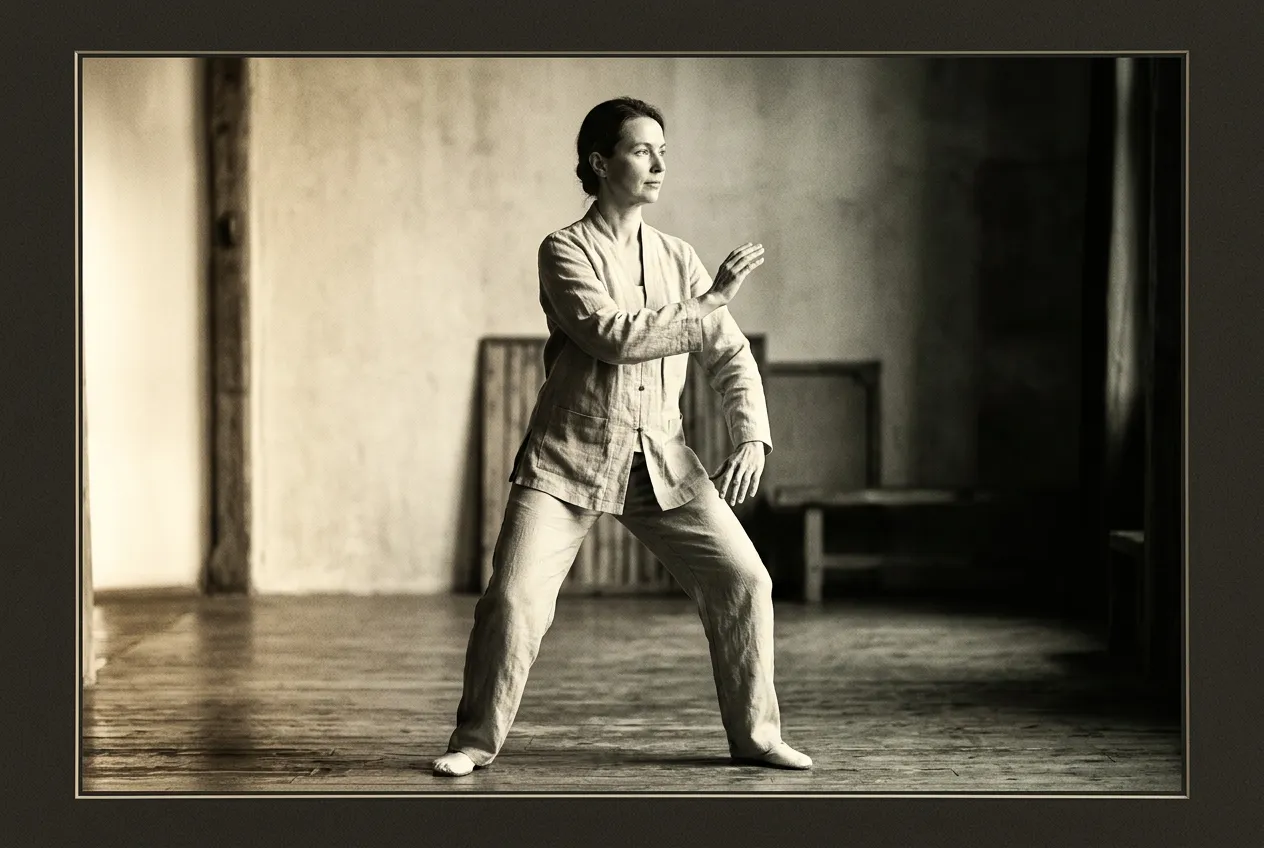
Fajin (发劲) refers to the release of accumulated force in a sudden, explosive burst. In Chen style practice, practitioners move slowly and softly for much of the form, then release a sharp, audible discharge of power. The sound — a short, crisp exhalation coordinated with the physical release — is one of the most recognizable aspects of watching Chen style.
This isn’t muscular contraction in the conventional sense. Fajin is understood to originate from the centre of the body — the dantian, roughly the lower abdomen — and thread outward through the legs and spine before discharging through the hands or arms. The analogy used in Chen-style teaching is that of a whip: the handle moves, the wave travels along the length, and the tip cracks. The practitioner doesn’t generate the power primarily in the striking limb — they generate it at the root and transmit it through the body.
Learning to produce genuine fajin takes years. Many beginners who have learned the movements of Chen style and can produce a sharp-looking release are actually generating muscular tension rather than the rooted, transmitted power the concept describes. Teachers are generally clear that fajin is a long-term project, not a beginner’s skill.
Chansijing: Silk-Reeling Energy
Chansijing (缠丝劲), literally “silk-reeling energy,” describes the spiralling quality of movement that pervades Chen style. The name refers to the process of reeling silk from a cocoon: the thread must be drawn at a consistent tension and speed, with a continuous spiralling motion. Too fast or too slow, or with inconsistent tension, and the thread breaks.
In practice, chansijing appears as a spiralling quality in the arms and legs that begins from the dantian and spirals outward. The forearm rotates — pronating and supinating — in coordination with the larger movements of the body. This rotation is continuous rather than isolated to specific moments in the form.
Silk-reeling is trained as a dedicated practice in Chen style, separate from learning the forms. Silk-reeling exercises focus on single movements or small sequences, performed repeatedly to develop the spiralling coordination before it’s integrated into the longer forms. A new Chen student might spend weeks on silk-reeling exercises before beginning to learn the main form.
The Chen Forms
Chen style has two main training systems, distinguished as Old Frame (Laojia) and New Frame (Xinjia).
Old Frame (Laojia) — The classical form system, developed by Chen Changxing in the 19th century from the earlier Chen family practices. Old Frame consists of two routines:
- Laojia Yilu (Old Frame First Routine): 74 movements, primarily slow and flowing with some fajin. This is the main beginner’s form in Chen style.
- Laojia Erlu (Old Frame Second Routine, also called Cannon Fist / Paochui): Faster, more explosive, with more frequent fajin. Typically learned after Yilu is established.
New Frame (Xinjia) — Developed by Chen Fake in the 20th century. New Frame has the same overall structure as Old Frame but contains more silk-reeling circles and more complex internal content. Generally considered harder than Old Frame and usually learned after Old Frame is established.
Beyond these primary forms, Chen style includes weapons training: the double-edged sword (jian), broadsword (dao), staff (gun), and spear (qiang). Weapons practice typically begins after several years of bare-hand form training.
Chen Stances and Physical Requirements
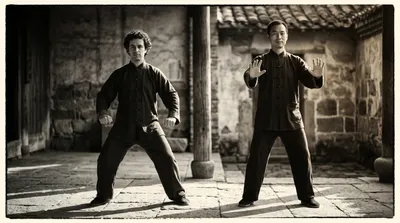
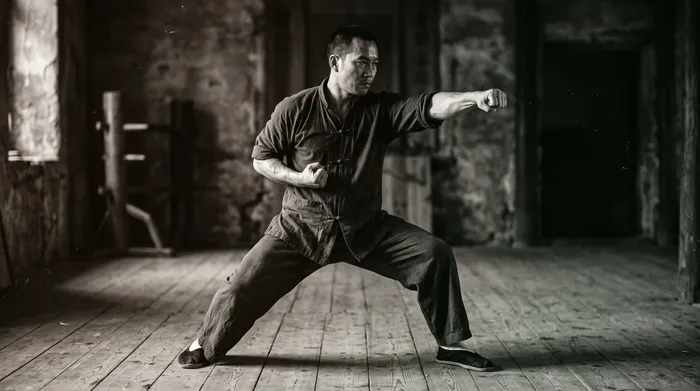
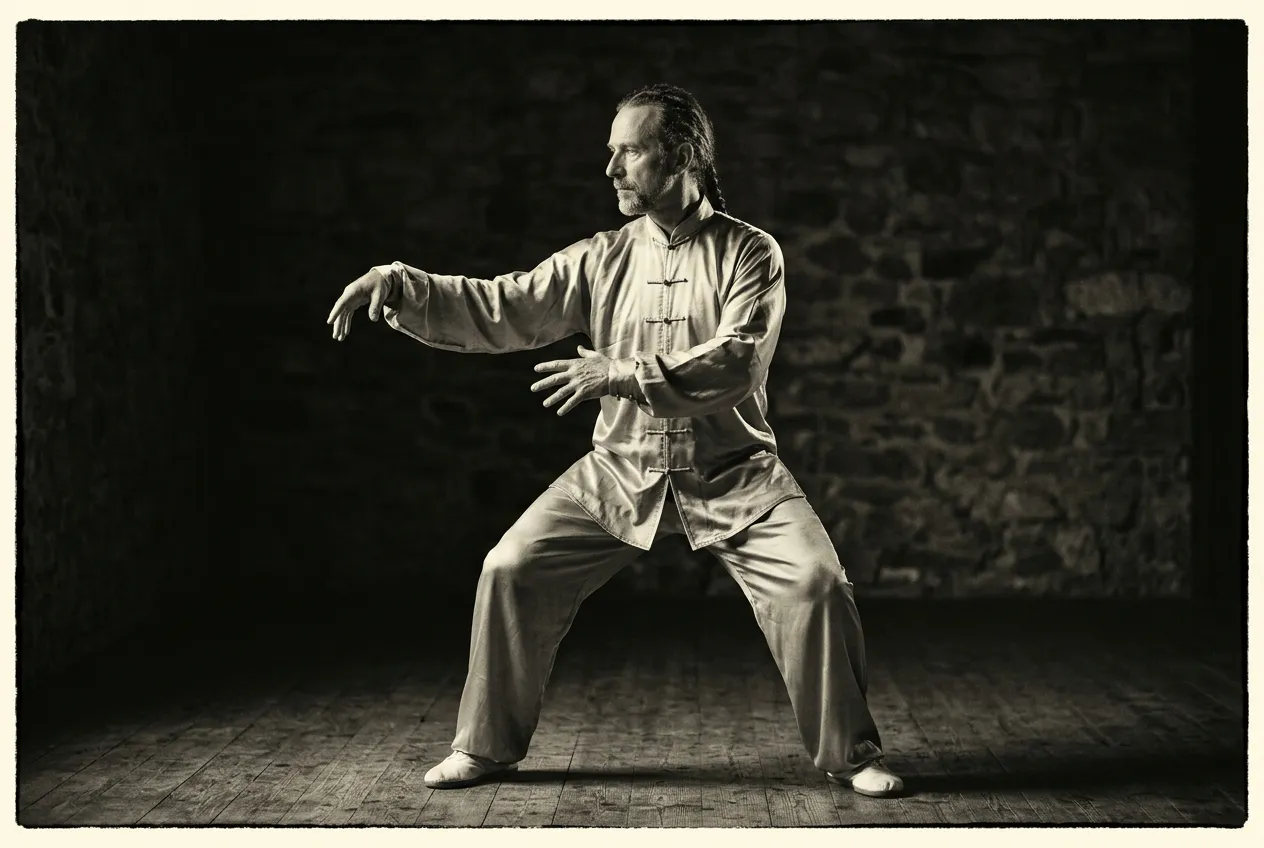
Chen style’s stances are lower than Yang or Sun style, and the form covers more ground. The horse stance (mabu) appears in Chen style in a more demanding form than in many other martial arts contexts — lower, wider, and held for longer transitions.
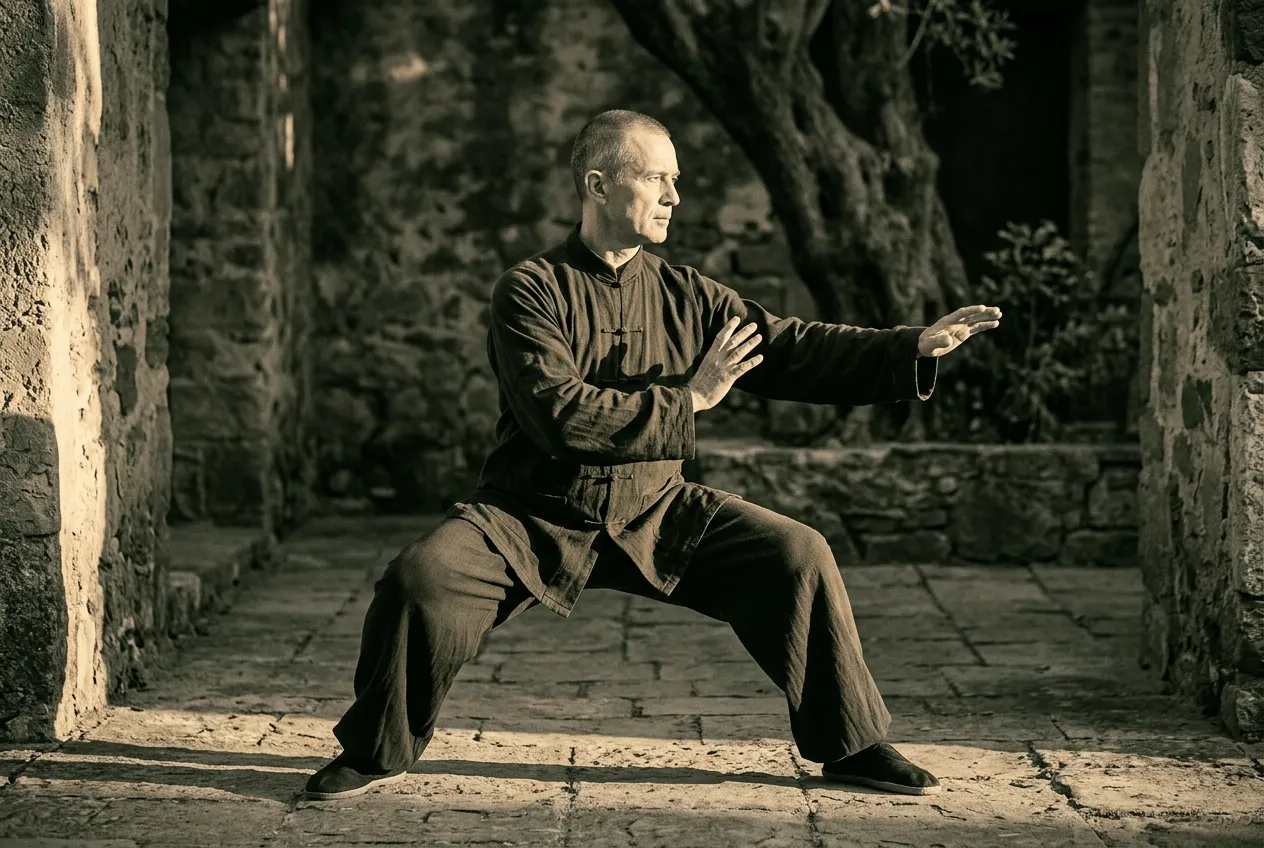
The physical demands of Chen style are real. Lower stances create greater demands on the quadriceps and knees. The fajin releases, while not high-repetition, require the kind of whole-body coordination that takes time to develop without creating compensatory tension elsewhere. The footwork is more varied, including stamps and jumps in the Cannon Fist form.
This doesn’t mean Chen style requires exceptional fitness to begin. Practitioners of all ages learn Chen style successfully, and the forms can be adapted to working at higher stances initially. But it’s honest to say that Chen style’s physical demands are generally greater than Yang or Sun style at equivalent stages of learning.
When I’ve watched beginners in a Chen class alongside beginners in a Yang class, the Chen students typically have more to manage in the early weeks — more movement complexity, more physical demands on the lower body, more to coordinate in any given posture. The curve is steeper but the rewards of mastery are correspondingly rich.
Chen Style and Martial Application
Of the five major tai chi styles, Chen style maintains the most explicit connection to martial application in its regular practice. The slow-fast alternation, the fajin, the silk-reeling, the lower stances — all of these are most clearly understood in terms of martial function.
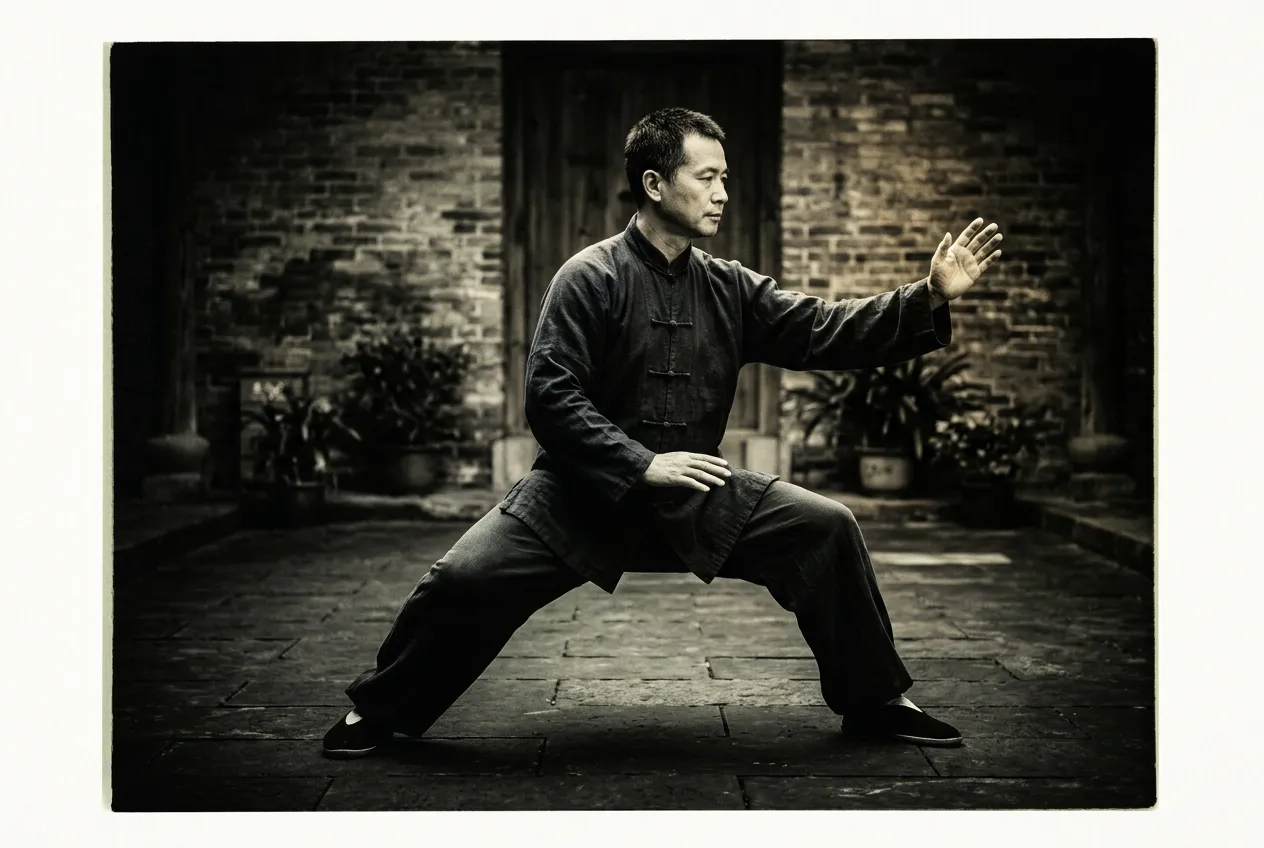
This doesn’t mean Chen style is used primarily as a combat art in contemporary practice. But the martial context remains visible in how the style is taught and understood. Push-hands (tui shou) practice is central to Chen-style training — it’s where practitioners begin to experience the principles of yielding, redirecting, and discharging force in a live context with a partner.
For practitioners who want to understand tai chi as a fighting art as well as a health practice, Chen style offers the most transparent window into that dimension.
Is Chen Style Right for You?
Chen style rewards commitment. The system is deep — the forms alone represent years of work, and the silk-reeling training, weapons practice, and push-hands add further layers. This depth is the same quality that makes Chen style demanding to begin.
Honest considerations before choosing Chen style:
- Physical demands: Lower stances and the physical demands of fajin practice mean Chen style benefits from reasonable lower-body strength and flexibility. This develops over time, but the initial learning is more physically demanding than Yang or Sun style.
- Teacher availability: Chen style has good teacher availability in most countries, but is less universally available than Yang style. Finding a qualified teacher who can correct your silk-reeling is more important in Chen than in styles where self-correction from video is more feasible.
- Time commitment: Learning Laojia Yilu to a working level typically takes a year or more with regular practice. The full system represents a much longer commitment.
- Martial interest: If martial application holds no interest for you and your goals are purely health-related, Chen style’s martial orientation means some of its practice content is less directly relevant to your goals. That said, the health benefits of serious Chen-style practice are substantial.
For a direct comparison of Chen and Yang style — the two styles practitioners most frequently choose between — our guide to Chen vs Yang style covers the practical and philosophical differences. Our tai chi styles comparison places all five major styles in a broader context.
The Chen Village Tai Chi Association maintains English-language resources on the Chen tradition, including information about teachers and seminars. Wikipedia’s article on Chen-style tai chi provides additional historical context and lineage information.
For the broader history of how tai chi emerged from its origins, see our guide to the origins of tai chi.
Browse our complete collection of tai chi forms guides for more on other styles and practice approaches.
Frequently Asked Questions
Who founded Chen style tai chi? Chen-style tai chi’s development is attributed to Chen Wangting (1600–1680), a military general who retired to Chen Village (Chenjiagou) in Henan Province, China. He synthesised his martial knowledge with classical texts and traditional Chinese medicine into a comprehensive training system. The lineage has been maintained within the Chen family and Chen Village across many generations.
What is the difference between Old Frame and New Frame Chen style? Old Frame (Laojia) is the classical form system associated with Chen Changxing, the 19th-century master who also taught Yang Luchan. New Frame (Xinjia) was developed by the 20th-century master Chen Fake and contains more silk-reeling circles and additional internal complexity. Old Frame is typically learned first; New Frame is an advanced system studied after Old Frame is established.
Is Chen style suitable for beginners with no martial arts background? Yes, though it’s worth being honest about the learning curve. Chen style is more physically demanding and technically complex than Yang or Sun style at the beginner level. Most people without martial arts backgrounds can learn Chen style successfully, but benefit from patient teaching and a realistic timeline. Expecting to learn Laojia Yilu in a few weeks is unrealistic — a year of regular practice is a more honest estimate for the basic form.
What is silk-reeling energy and how do you develop it? Silk-reeling (chansijing) is a spiralling quality of movement that originates from the body’s centre and threads outward through the limbs. It’s developed through dedicated silk-reeling exercises — simple, repetitive movements that isolate the spiralling coordination before it’s integrated into the full forms. Most Chen teachers introduce silk-reeling exercises from the first class. It develops gradually over months and years, not weeks.
Can I practise Chen style for health rather than martial arts? Absolutely. Many Chen-style practitioners are primarily motivated by health benefits and have no interest in fighting applications. The physical training — silk-reeling, slow sustained movement, controlled breathing, postural awareness — produces genuine health benefits regardless of whether the practitioner understands or practises the martial applications. The martial context remains present in how the style is taught, but it doesn’t prevent a health-focused practice.