Tai Chi Styles Compared: Yang, Chen, Sun, Wu, and Wu Hao
Ask a group of tai chi practitioners which style is best and you’ll hear five different answers, each delivered with absolute conviction. The truth is that no style is objectively superior — they emerged from different lineages, serve different emphases, and attract different practitioners. What they share is far more significant than what separates them.
This guide compares the five major recognised styles: Yang, Chen, Sun, Wu (Wu/Jianquan), and Wu Hao (Wu/Yuxiang). For each, we’ll look at what distinguishes it visually and functionally, who typically practises it, and what it emphasises in the spectrum between martial application and health cultivation.
A note on names: “Wu style” actually refers to two distinct lineages that share the surname Wu but have no direct connection. This causes confusion among beginners. Wu/Jianquan style (founded by Wu Jianquan) is the larger and more widely practised of the two. Wu Hao style (founded by Wu Yuxiang, also romanised as “Wu/Yuxiang”) is smaller, older, and much less common. Both are included here.
Chen Style: The Original
Chen style is the oldest documented form of tai chi and the root from which all other major styles eventually derived. It originated in Chen Village (Chenjiagou) in Henan Province, China, with its development attributed to Chen Wangting in the 17th century — though the exact history is more complex than this single attribution suggests.
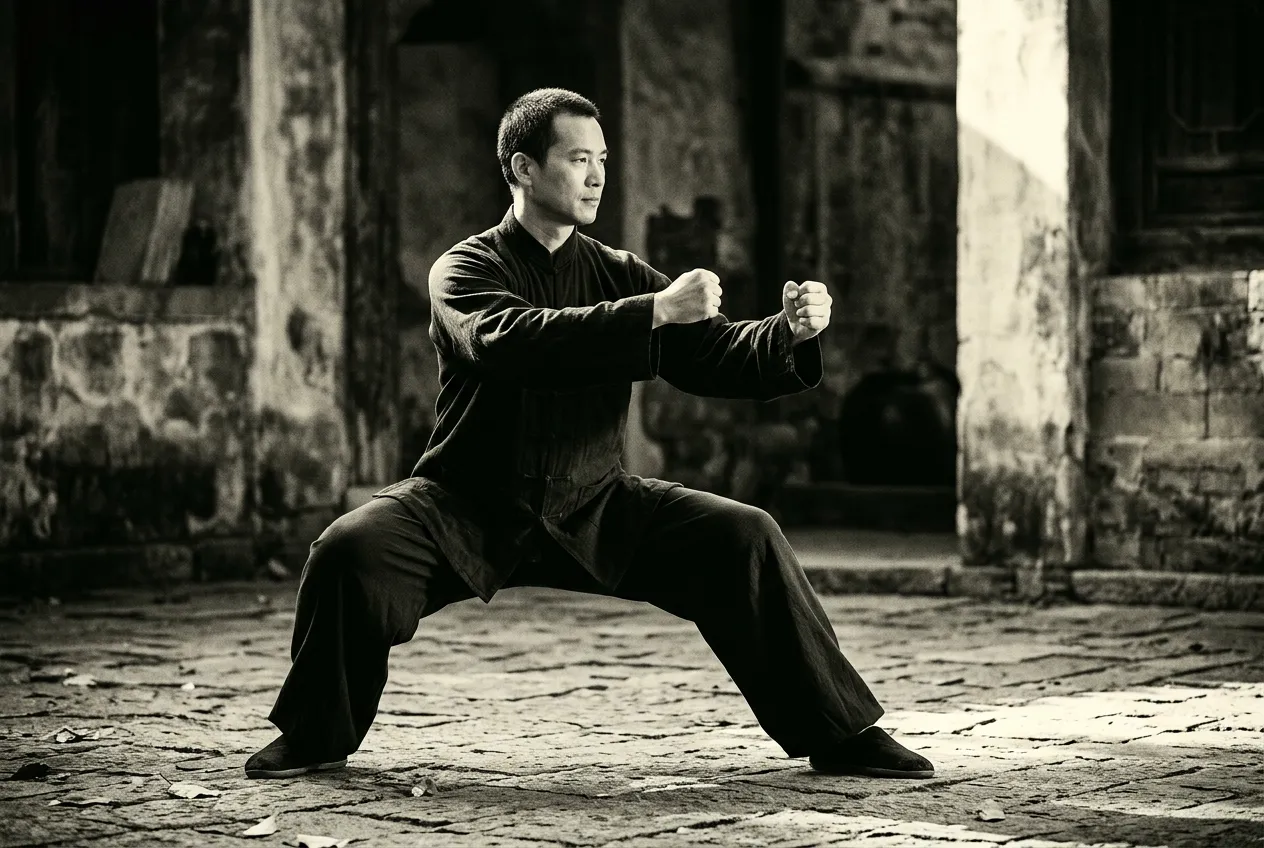
What immediately distinguishes Chen style from the others is its combination of slow, flowing movements with sudden bursts of explosive power called fajin (发劲). A practitioner moving through Chen style will appear to be moving slowly and softly, then suddenly release a sharp, focused discharge of power. This alternation of soft and hard, slow and fast, is fundamental to Chen’s character and connects it most directly to its martial origins.
The other defining characteristic is chansijing (缠丝劲), or silk-reeling energy — a spiralling quality to the movements that originates in the dantian (lower abdomen) and threads outward through the limbs. Chen practitioners frequently describe it as the movement of energy through the body following the path of a silk thread being unwound from a cocoon: continuous, spiralling, under constant tension.
Chen stances tend to be lower than Yang or Sun style, the footwork more varied, and the forms longer. The Old Frame First Routine (Laojia Yilu) is the main beginner’s form in Chen style and typically runs to 74 movements. Learning it takes considerably longer than learning the Yang 24.
As someone who came to tai chi first through Yang style, I found Chen style’s combination of softness and sudden power genuinely surprising the first time I watched it performed by a skilled practitioner. The intellectual understanding that tai chi was a martial art didn’t quite prepare me for what that actually looks like in Chen’s expressive fajin.
Typical Chen practitioners: Those with a martial arts background or a specific interest in tai chi as a fighting art; younger practitioners; people who enjoy the physical challenge of lower stances and varied footwork; practitioners seeking the oldest and arguably most complete expression of the art.
Yang Style: The Global Standard
Yang style is the most widely practised tai chi in the world, and for good reason. Yang Luchan (1799–1872) learned from the Chen family, then spent decades teaching in Beijing, adapting the practice for a broader audience. His sons and grandson Yang Chengfu (1883–1936) further refined the style into the form most practised today: expansive, open, and flowing.
Yang style removed most of the fajin and low stances from the Chen original, producing movements that are larger, slower, and more accessible. The movements flow continuously without the soft/hard alternation of Chen style. Stances are higher and more upright, making the style considerably more accessible to older practitioners or those with physical limitations.
The 1956 standardisation of the Yang-24 short form by the Chinese National Sports Commission — created by selecting 24 representative movements from the full Yang long form — made Yang style the de facto introduction to tai chi for millions of people. If someone has done tai chi without knowing which style, they almost certainly practised Yang.
Having practised the Yang-style long form alongside the 24 form over many years, I’ve found Yang’s quality of continuous, even flow to be both its greatest accessible virtue and its subtlest challenge. Because there’s no explosive release to mark the martial moment, the practitioner must find the martial intention within the softness — which requires more advanced understanding, not less.
Typical Yang practitioners: The broadest possible range of people — beginners, older practitioners, health-focused practitioners, and serious martial artists who appreciate the depth within the softness. Yang style’s gentler entry point and worldwide teacher availability make it the natural starting point for most.
Wu Style (Wu/Jianquan): Compact and Refined
Wu style was developed by Wu Jianquan (1870–1942), who learned Yang style from Yang Banhou (son of Yang Luchan) and evolved it into a more compact form with a distinctive slight forward lean to the torso. This lean — which would look like an error in Yang style — is a structural feature of Wu style, and practitioners are adamant that it’s not a loss of balance but a specific way of aligning force.
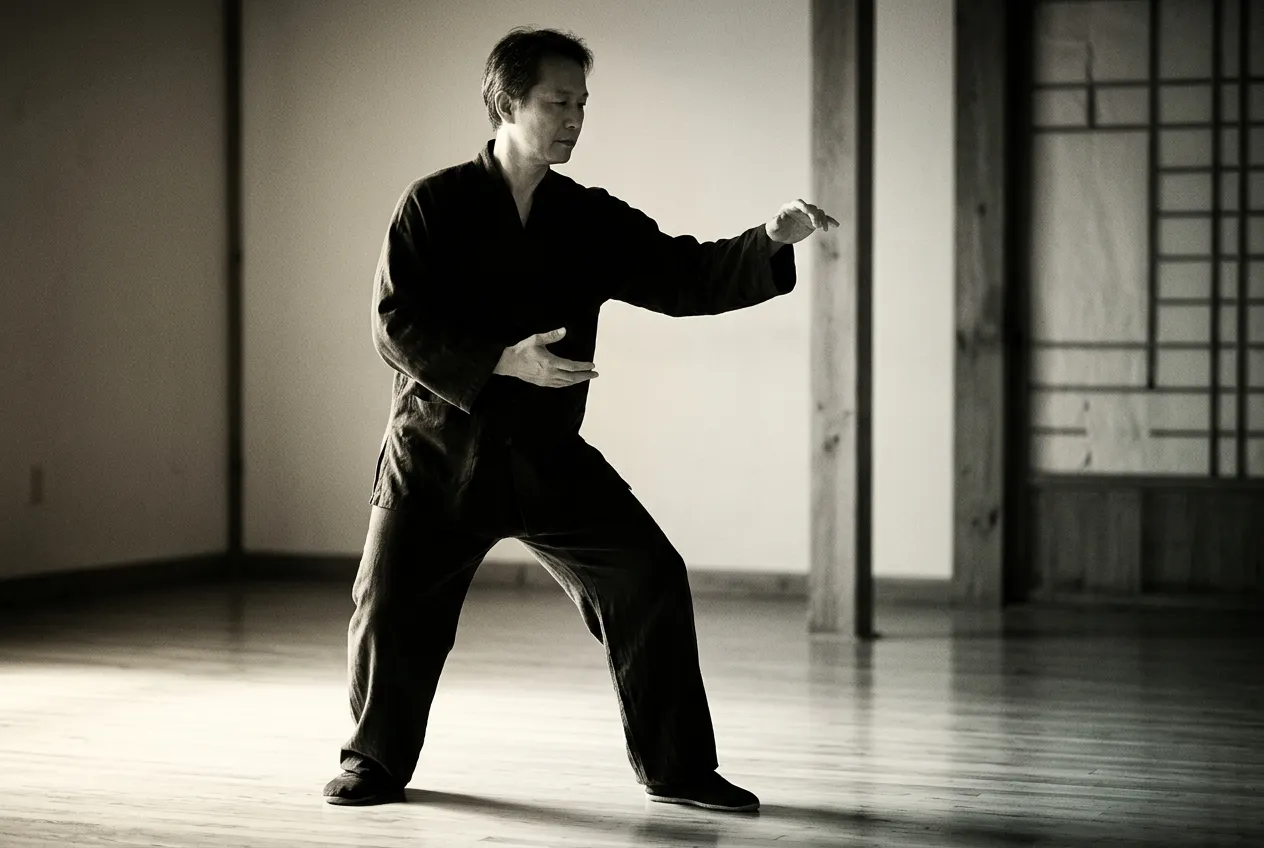
Wu style movements are smaller than Yang style, closer to the body, and the footwork is narrower. The form has a certain refinement and precision: less expansive, more economical. The double-hand push is a signature movement, performed with both palms pressing forward from the centre.
This compactness makes Wu style particularly well-suited to practice in smaller spaces and for practitioners who prefer a more intimate scale of movement. The style also maintains a strong push-hands tradition.
As a practitioner who has watched various styles for a long time, I notice that Wu style often attracts people who have moved through Yang and are looking for something that feels more internally precise rather than externally expansive — though this is a generalisation, not a rule.
Typical Wu (Jianquan) practitioners: Intermediate or advanced practitioners moving from another style; those interested in push-hands and partner practice; practitioners who find Yang style’s large movements physically difficult; people drawn to precision over breadth.
Sun Style: Lively Steps and Qigong Integration
Sun style was created by Sun Lutang (1861–1932), a martial arts master who was equally accomplished in Xingyiquan (Form-Intent Fist) and Baguazhang (Eight Trigram Palm) before studying Hao-style tai chi. He synthesised elements from all three into a distinctive style that looks quite different from the others.
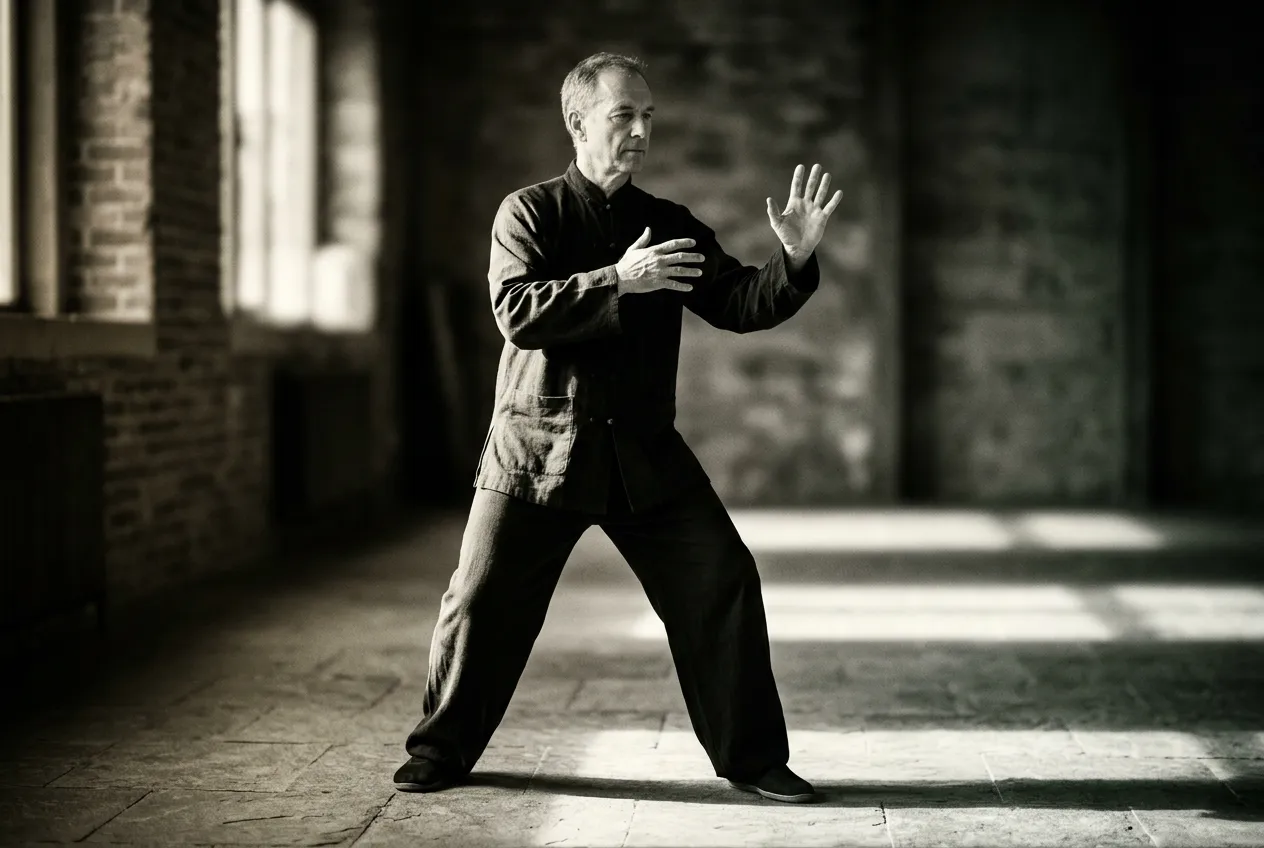
The most immediately distinctive feature of Sun style is its footwork. Where Yang and Wu style practitioners shift weight slowly between bow and empty stances, Sun style uses a follow-step: when the front foot advances, the rear foot follows immediately to close the gap. This gives Sun style a lively, almost dancing quality — the practitioner is always ready to move in any direction.
Sun style incorporates kai-he (open-close) hand movements that recall qigong practice, and many practitioners find the style more obviously connected to qigong and health cultivation than other styles. The stances are higher than Chen or Yang, and the forms shorter. This makes Sun style particularly accessible to older practitioners and those with joint limitations.
Research has examined various tai chi styles in the context of health applications. Sun style’s upright posture and lively step have made it a frequent subject of arthritis research — the Arthritis Foundation recommends tai chi for arthritis management, and Sun-style movements specifically underpin the widely taught Tai Chi for Arthritis programme referenced in clinical trial designs.
Typical Sun practitioners: Older adults; practitioners interested in tai chi primarily for health benefits; those with knee or hip limitations who benefit from higher stances; practitioners with backgrounds in Xingyi or Bagua seeking continuity.
Wu Hao Style (Wu/Yuxiang): The Internal Specialist
Wu Hao style — named after Wu Yuxiang (1812–1880) and his student Hao Weizhen, who spread the style — is the smallest of the five major lineages and the most internally focused. Wu Yuxiang learned from Chen Qingping, a practitioner of a small-frame variant of Chen style, and combined this with elements of Yang style to create something quite different from both.
The movements are small, the stances are narrow, and the form runs short. From the outside, Wu Hao style can appear almost undramatic — the significant activity is internal. Practitioners emphasise refined internal sensation: the precise coordination of breathing, intention, and movement within a small physical envelope.
This internal emphasis and the style’s small practitioner base mean Wu Hao is rarely encountered outside China. Finding a qualified teacher is genuinely difficult in most Western countries.
I’ve only seen Wu Hao style performed live a handful of times, and each occasion gave the impression of a practice deeply preoccupied with subtlety — the practitioners appeared to be doing very little externally while clearly experiencing significant internal activity. Whether that’s accessible to most beginners is another question.
Typical Wu Hao practitioners: Serious practitioners seeking the most internally refined expression of tai chi; those with access to rare Wu Hao teachers; practitioners who have moved through other styles and seek a more compact, internal approach.
A Comparison at a Glance
| Feature | Chen | Yang | Wu (Jianquan) | Sun | Wu Hao |
|---|---|---|---|---|---|
| Origin | 17th century | 19th century | Early 20th century | Early 20th century | 19th century |
| Movements | Fast + slow mixed | Slow, even | Slow, compact | Lively steps | Small, precise |
| Stances | Low | Medium | Medium, lean forward | High | Narrow, upright |
| Fajin (explosive power) | Yes | Minimal | Minimal | No | No |
| Beginner accessibility | Moderate | High | Moderate | High | Low |
| Martial emphasis | High | Medium | Medium | Lower | Medium (internal) |
| Teacher availability | Good | Excellent | Good | Moderate | Very limited |
| Common in clinical research | Moderate | Frequent | Less common | Frequent | Rare |
Which Style Should You Learn?
This is the question everyone wants a definitive answer to, and the honest answer is that it depends on factors only you can weigh.
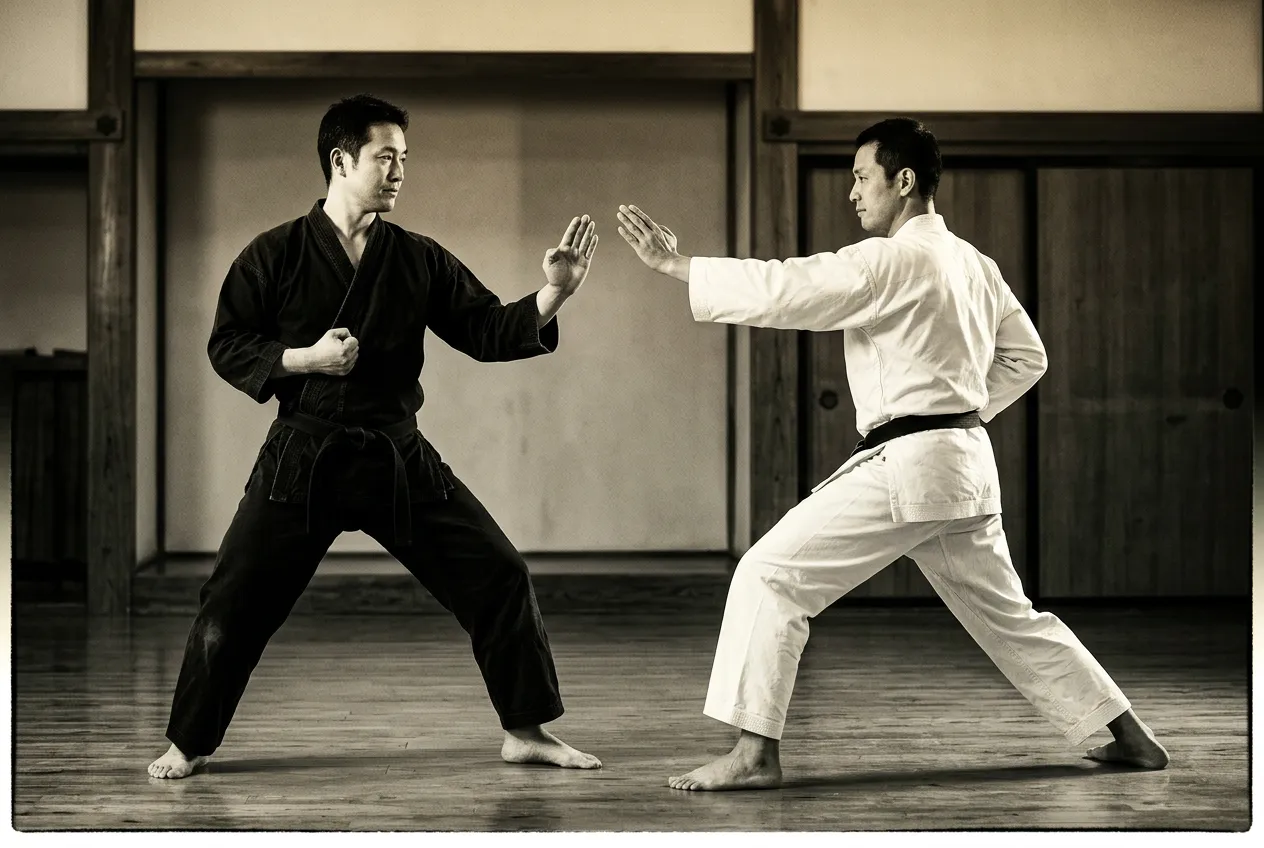
If you’re a complete beginner with no martial arts background and health is your primary motivation, Yang style offers the most teachers, the most resources, and the most accessible entry point. The Yang-24 short form is the best-documented beginner sequence in tai chi.
If you have a martial arts background and want to understand tai chi’s fighting dimensions most directly, Chen style connects most explicitly to those roots. The explosive fajin and silk-reeling energy are unlike anything in the other styles.
If you have joint limitations or are an older adult specifically seeking low-impact practice, Sun style’s high stances and follow-step footwork are frequently cited in clinical contexts as particularly accessible.
If you’re drawn to internal refinement over external expression, Wu (Jianquan) or Wu Hao style may suit intermediate or advanced practitioners looking for depth in a more compact form.
What I’d caution against is choosing a style primarily because of its reputation rather than your practical access to it. A good teacher in any style will take you further than a great style with a mediocre teacher or no teacher at all.
For the history of how these styles emerged from their common roots, see our guide to the origins of tai chi. If you’re specifically considering Chen style, our Chen style overview covers the lineage and characteristics in depth.
The Wikipedia article on tai chi provides additional lineage information and links to individual style pages for each tradition.
Browse our full collection of tai chi forms guides for more on specific forms and styles.
Frequently Asked Questions
Is Chen style harder to learn than Yang style? Generally yes. Chen style’s combination of slow and fast movements, lower stances, and explosive fajin requires a greater range of physical abilities and is typically considered more physically demanding for beginners. This doesn’t make it better — just more demanding at the beginning. Many practitioners learn Yang style first and move to Chen style later.
Can you practise more than one style? Yes, and many serious practitioners do. Learning multiple styles deepens understanding of the shared principles and highlights the unique qualities of each. That said, most teachers recommend becoming genuinely grounded in one style before studying another — spreading attention too thin early on usually produces a shallow grasp of all styles rather than depth in any.
Which tai chi style is best for health benefits? The research evidence for tai chi’s health benefits is largely style-nonspecific — studies showing improvements in balance, fall prevention, blood pressure, and mental health have used various styles. Sun style appears most frequently in arthritis studies due to its accessible stances, but Yang style has the most research volume overall because of its prevalence. Any style practised regularly will produce health benefits.
Are there other tai chi styles beyond the five major ones? Yes. Wudang style, Zhaobao style, and several regional traditions exist. The five styles described here are the most widely recognised and practised, but tai chi is a broad tradition with many branches. Some styles are almost indistinguishable from the five major ones to an outside observer; others are quite distinct.
What is push-hands (tui shou) and which style emphasises it most? Push-hands is a two-person practice where partners maintain contact and practise yielding and redirecting force. All major styles have push-hands traditions, but Wu (Jianquan) and Chen styles are perhaps most associated with serious push-hands training. Yang style also has a substantial push-hands tradition, particularly in competitive contexts.