Practice & Training
How to build a daily practice, warm-ups, breathing, and training tips.
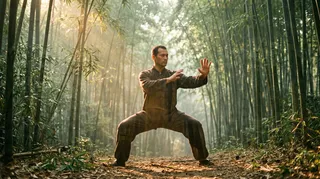
Most of the practical questions about tai chi practice — how often, how long, what to do when you can't get to class — don't have complicated answers. The honest answer to "how often should I practice?" is: daily if you can, even for ten minutes, because consistency matters more than duration. The honest answer to "what should I practice at home?" depends on where you are in your learning, but warm-ups, breathing exercises, and a short qigong set are a reasonable starting point for almost anyone.
This section covers the mechanics of building a practice: structured warm-up routines, breathing techniques, how to develop standing meditation (zhan zhuang), and how to use supplementary practices like the Eight Brocades or Shibashi qigong alongside your main form work. These aren't alternative paths — they're tools that support each other. In my own practice, the days I skip the warm-up are noticeably worse than the days I don't.
There are also guides on practicing outdoors, practicing at home without a teacher present, and walking as a meditative practice. These might seem like peripheral topics, but a lot of tai chi happens outside of class — and having some guidance on how to use that time well makes a real difference to how quickly you progress.
Articles in Practice & Training
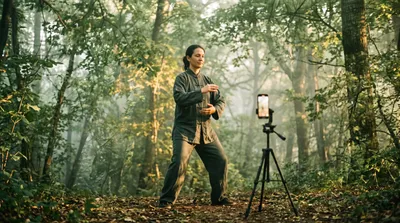
Best Tai Chi Apps: An Honest Guide (From an App Maker)
How to choose a tai chi app — what separates good ones from wallpaper, honest notes on the main options including our own, and when an app is the wrong tool.
Free Tai Chi Resources: Learn Without Spending
The genuinely free ways to learn tai chi — YouTube channels, health-service programmes, community classes, apps and printed resources — and what free can't do.

The Microcosmic Orbit: A Grounded Introduction
What the microcosmic orbit meditation is, where it comes from, how the practice actually works step by step, and a realistic view of what it does and doesn't do.

Qigong Exercises for Beginners: 8 to Learn First
Eight foundational qigong exercises explained step by step — standing, breathing, and moving practices you can learn at home, with guidance on building a routine.

Tai Chi for Athletes: Cross-Training That Works
Why athletes and martial artists use tai chi as cross-training — what it develops that sport does not, how to fit it into a week, and what it will not do.
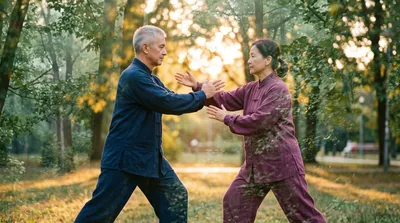
Tai Chi Push Hands: A Guide to Tui Shou
Push hands explained — what tui shou trains, the single and double-hand patterns, fixed and moving step, common faults, and how to start partner practice.
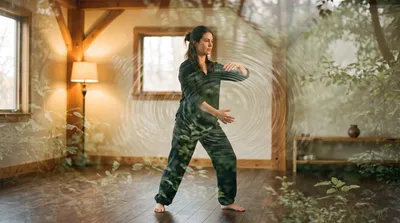
Tai Chi Music: Should You Practise With It?
Whether to practise tai chi with music, what kind works, the case against it, and how to set up a practice environment that supports rather than distracts.
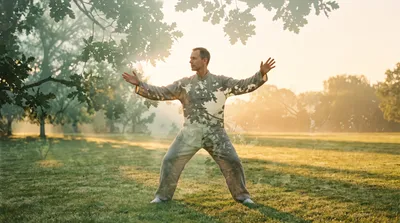
Practising Tai Chi Outdoors: Where and How
Why outdoor tai chi feels different, how to choose the right ground and location, handle weather and self-consciousness, and make park practice a habit.
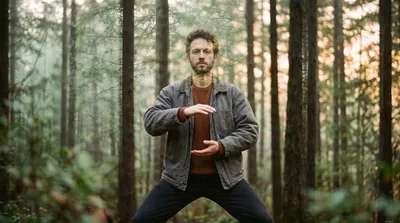
Zhan Zhuang: Tai Chi Standing Meditation Explained
Standing meditation in tai chi — the zhan zhuang postures, why standing still is such hard training, how long to hold, and how to build a standing practice.
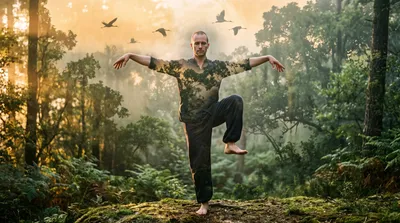
Five Animal Frolics (Wu Qin Xi): History, Movements, and Practice
The Five Animal Frolics — Wu Qin Xi — is one of China's oldest qigong sets. Explore the Tiger, Deer, Bear, Monkey, and Crane, with movement descriptions and practice guidance.
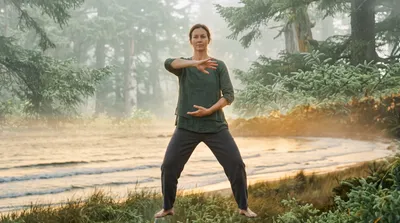
Shibashi Qigong: All 18 Movements with Chinese Names
A complete guide to Taiji Qigong Shibashi — all 18 movements with English and Chinese names, practice guidance, and origins of this widely practised qigong set.
Online Tai Chi Classes: How to Choose the Right One
A practical guide to finding online tai chi classes that match your level and learning style — covering YouTube, apps, subscription platforms, and what to look for.

Tai Chi as Moving Meditation: Mindfulness in Motion
Tai chi is often called 'moving meditation' — but what does that mean in practice? Explore how intention, breath, and movement merge into a meditative state.
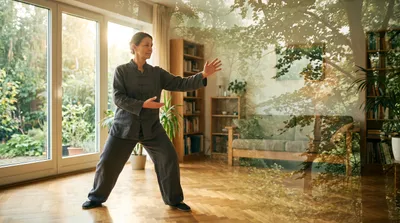
Tai Chi at Home: Your Complete Guide to Home Practice
Everything you need to practise tai chi at home — space requirements, surface tips, what to wear, and how to structure a complete home session effectively.

Tai Chi Breathing Techniques: How to Breathe in Practice
Learn how to breathe in tai chi — diaphragmatic breathing, reverse abdominal breathing, and coordinating breath with movement explained clearly.

Tai Chi Warm Up Exercises: A Complete Pre-Practice Routine
Prepare your body for tai chi with this essential warm-up routine. Neck rolls, shoulder circles, hip rotations, and more to prevent injury and improve practice.
How to Build a Daily Tai Chi Practice Routine
How to structure a daily tai chi practice — warm-up, form work, cool-down, and habit strategies. A practical guide for beginners and returning practitioners.
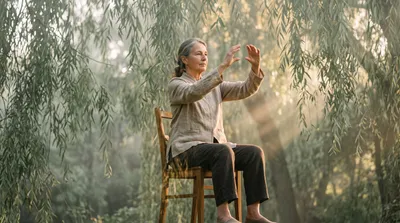
Seated Qigong: Chair Exercises for All Abilities
Seated qigong exercises for people with limited mobility, older adults, and wheelchair users — breathing, upper body movements, and gentle chair stretches.

Tai Chi Chest Openers: 5 Movements for the Upper Body
Five tai chi chest opening movements with clear body mechanics — ideal as a warm-up or standalone practice for releasing tension in the chest and shoulders.

Tai Chi Walking: The Art of Mindful Stepping
Learn tai chi walking — the heel-toe stepping pattern, weight shifting, foot placement, and knee alignment for a meditative movement practice anywhere.
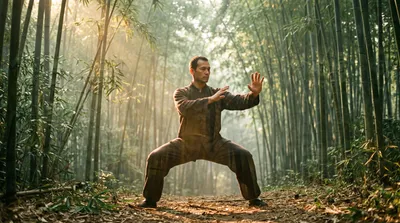
Tai Chi Fundamentals: Core Principles for Your Practice
Discover the core principles of tai chi practice — rooting, weight shifting, alignment, song, and breath. Essential foundations for every level of practitioner.