Tai chi is built on a handful of core principles that underlie every movement in every form. You can practise a sequence for years and still find that returning to these fundamentals reveals something new. That is not a frustrating feature of tai chi — it is the whole point.
This article covers the essential foundations: rooting, weight shifting, structural alignment, the concept of song (relaxation), and breath coordination. Each principle connects to the others, and understanding how they interrelate is what separates deliberate practice from going through the motions.
If you are just beginning, the complete beginner’s guide to tai chi gives useful context before diving into these principles. If you are more experienced, you may find that revisiting fundamentals reveals gaps you did not know existed.
Rooting: The Foundation Beneath Everything
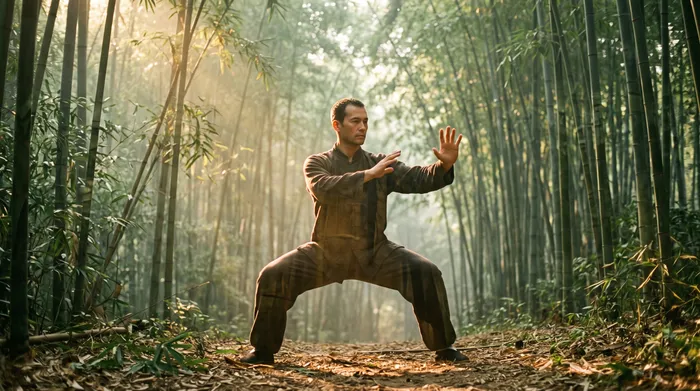
Rooting is the quality of connectedness to the ground. A rooted practitioner feels stable and grounded — their movements draw from the earth rather than floating on top of it. Without rooting, tai chi becomes a series of shapes in the air rather than an integrated practice.
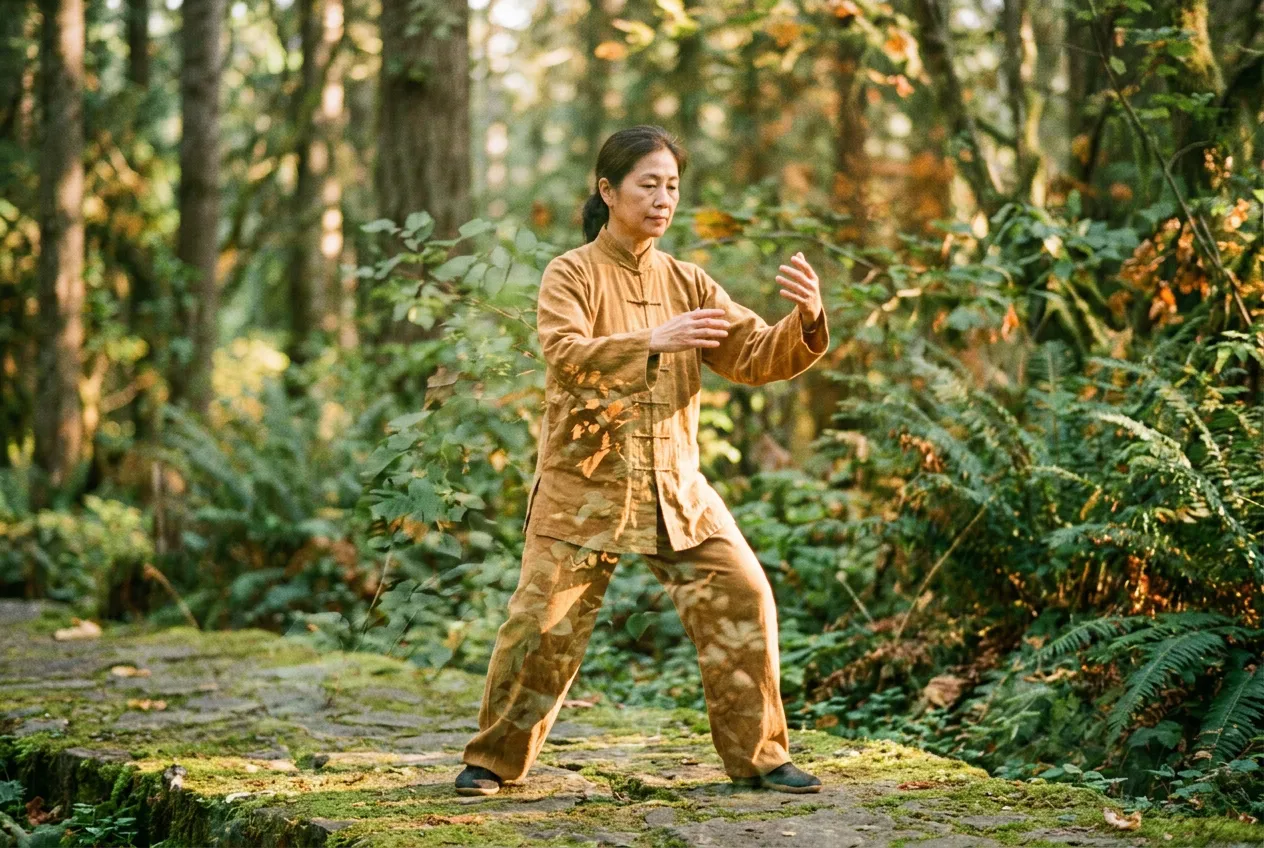
The first time I understood what rooting actually meant, I was attempting the Yang-24 form and my weight kept shifting unpredictably during transitions. A senior practitioner watching me said something simple: “You are moving your feet before your weight has arrived.” That observation changed everything. Rooting is not just about standing still — it is about knowing precisely where your weight is at every moment and ensuring that weight transfer is complete before you move.
To develop rooting, try this: stand with your feet shoulder-width apart, knees soft, and close your eyes. Pay attention to the pressure distribution across the soles of your feet. Most people discover they are carrying more weight on their heels than they realised, or that one side is subtly bearing more than the other. This awareness is the beginning of rooting.
In practice, rooting means:
- Weight is fully committed to one leg before the other moves
- The centre of gravity drops low rather than floating high
- Movement initiates from the ground upward, not from the arms or shoulders
Practitioners sometimes describe the feeling as having roots growing into the earth from the soles of the feet. While that image might sound abstract, it describes something physically real — the sensation of downward pressure and upward support that comes when the body is properly aligned with gravity.
Weight Shifting: The Engine of Tai Chi Movement
If rooting is the foundation, weight shifting is the engine. Almost every transition in tai chi involves moving the body’s centre of gravity from one leg to the other, or adjusting it within a stance. Doing this smoothly, completely, and with awareness is one of the most practised and most challenging skills in tai chi.
In my early years of practice, I was surprised to discover that imprecise weight shifting was the cause of nearly every problem I had with form execution. When a transition felt choppy, it was usually because I had started moving my empty foot before my weight had fully arrived on the supporting leg. When a stance felt unstable, it was because the weight was distributed between both feet when it should have been committed to one.
The key distinction to understand is between double-weighted and single-weighted movement. Double-weighted means weight is split roughly equally between both feet — a condition that feels stable but actually makes movement slower and less responsive. Single-weighted means the body’s mass is committed predominantly to one leg, with the other leg free to step, adjust, or initiate the next movement.
Traditional tai chi teaching identifies double-weighting as a fault to be corrected. In practice, you will pass through moments of double-weighting during transitions, but the goal is to make those moments brief and intentional rather than the default resting state.
The Wave Principle
Weight shifting in tai chi follows what might be described as a wave principle: the shift moves through the body continuously rather than stopping and restarting. In the Yang-24 form, this is particularly visible in sequences like Cloud Hands, where the weight rolls from side to side in a continuous rhythm. The arms follow the weight shift — they do not lead it.
Practising weight shifts in isolation is one of the most effective ways to improve overall form. Stand naturally and slowly shift your weight from foot to foot, paying attention to the exact moment of full commitment. Notice when you rush the shift (moving before weight arrives) versus when you complete it (moving only when fully supported).
Structural Alignment: Where Your Body Stacks
Tai chi places precise demands on how the body stacks vertically. These are not aesthetic demands — they are functional ones. Correct alignment allows forces to travel through the body efficiently; misalignment creates leaks, compensations, and eventually strain.
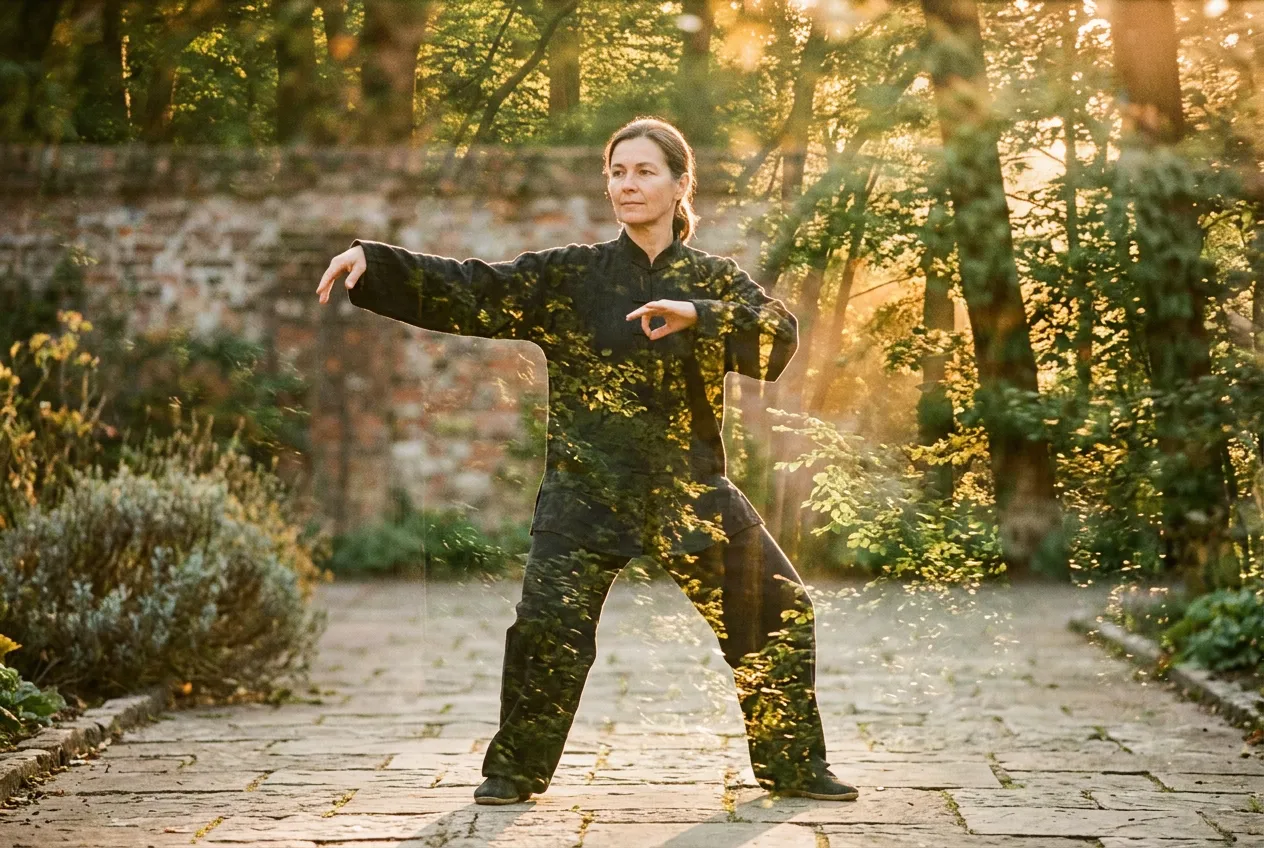
The key alignment points to understand are:
Head and neck: The crown of the head lifts gently, as if suspended from above. This naturally lengthens the neck and positions the chin parallel to the floor. A head that drops forward (very common in modern life) creates tension in the neck and upper back that propagates through every movement.
Shoulders: The shoulders release downward and outward — not held or hunched. Many practitioners initially carry chronic shoulder tension into their practice without realising it. The cue often used is “sink the shoulders, hollow the chest.” This does not mean slumping; it means releasing the habitual held quality in the shoulders.
Spine: The spine maintains its natural curve while slightly elongated. There is a subtle engagement of the lower back — the tailbone drops slightly, creating a gentle posterior tilt of the pelvis. This is not an exaggerated tuck; it is a correction of the common anterior tilt that comes from sitting.
Knees: The knees always track over the toes. They never collapse inward (valgus). In stances where significant knee bend is required, the weight must remain centred through the foot — not pushed forward onto the toes.
In my practice, I have found alignment is easiest to develop using slow-motion rehearsal of individual postures. Rather than running through a form, hold each posture for 30–60 seconds and use the time to scan for misalignment. You will notice things you miss when moving.
Having video guidance helps enormously here — alignment errors that are invisible to you are often obvious to an observer. At TaiChiApp.com you will find guided video demonstrations of these foundational postures that make alignment much easier to self-correct against. Including a here for a fundamentals alignment video.
Song: Learning to Relax Properly
Song (pronounced “soong”) is the Chinese concept usually translated as “relaxation” or “release,” but neither word quite captures it. Song is not the relaxation of lying on a sofa. It is an active, aware releasing of unnecessary muscular tension while maintaining the structural engagement required for movement.
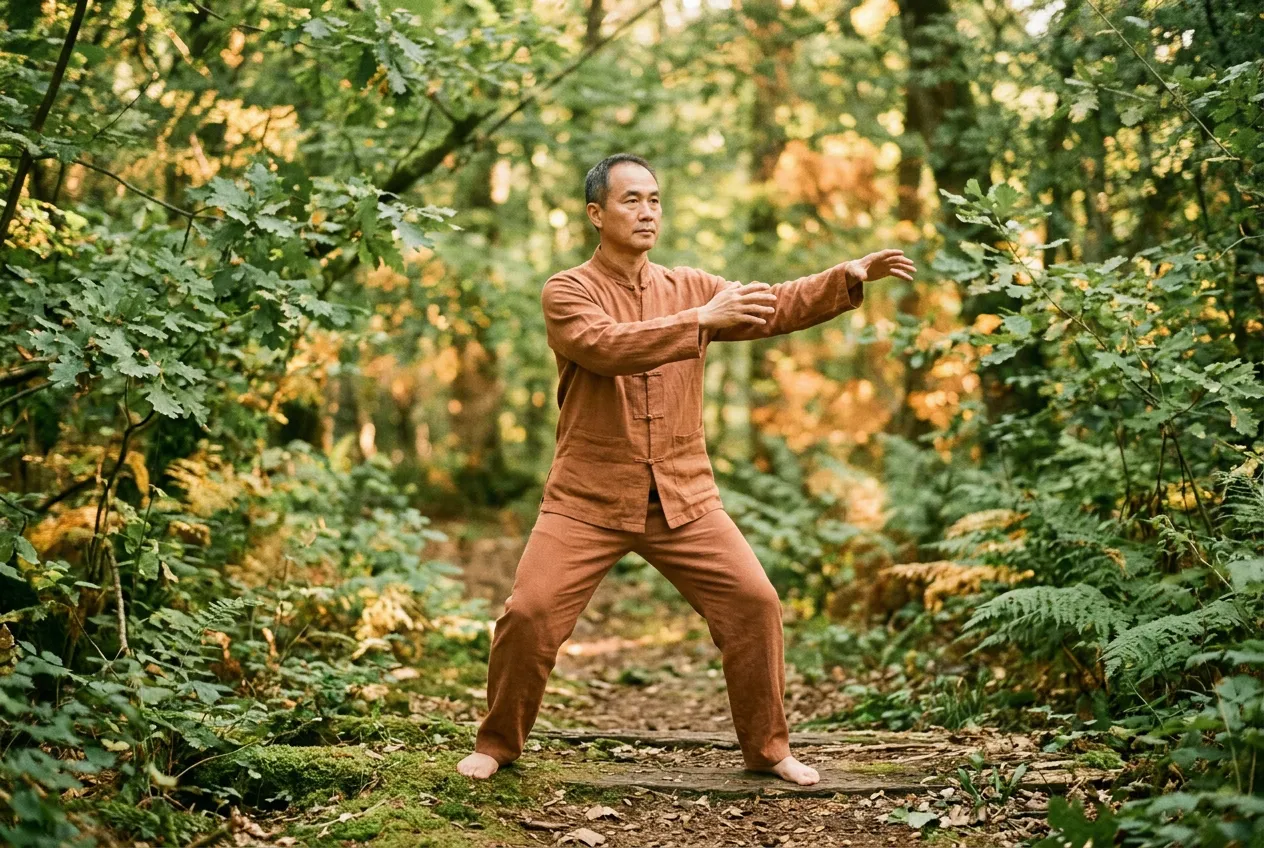
This is one of the most misunderstood concepts in tai chi, and one of the ones I found most confusing when I first encountered it. My early interpretation was that song meant being loose and floppy, which produced exactly the wrong result — movements that had no connection or power. What song actually means is using only the muscle engagement that is necessary and no more.
Consider the difference between these two states: a hand that is held rigid, with every muscle firing, versus a hand that is resting naturally, with no unnecessary tension but ready to respond. The second state is closer to song. Applied throughout the body, song means:
- The face is soft, jaw unclenched
- The neck is free, not held
- The shoulders have released their habitual tension
- The arms move from the shoulder socket, not from gripped hands
- The hips are open and free, not braced
- The knees have some flex — they are never locked
Song is cultivated gradually, not achieved in a single session. One useful practice is to pause during a form at a posture you find challenging and ask: “Where am I holding tension that is not necessary?” The answer is usually surprising. Common hidden tension points include the tongue pressed to the roof of the mouth, the eyebrows raised slightly, and the fingers gripped together.
The paradox of song is that a practitioner who has truly achieved it looks effortless — their movements appear soft and slow. But that softness has power behind it, because the body is structurally sound and movement transmits efficiently rather than leaking into unnecessary tension.
Breath Coordination: Connecting Breath and Movement
Breath in tai chi is coordinated with movement, not independent of it. The basic principle is that inhalation accompanies gathering, rising, and receiving movements, while exhalation accompanies releasing, descending, and expressing movements. This coordination is easier to feel than to describe.
When I first tried to consciously coordinate my breath with tai chi movements, I became so focused on the breathing that I lost the movements entirely. It was an early lesson in how these principles must be practised separately before they can be integrated. I spent several weeks just doing slow deliberate movements while simply noticing when I naturally wanted to inhale and when I naturally wanted to exhale. That observation revealed the pattern — my body already knew the coordination. The practice was becoming conscious of it.
In the Yang-style forms, most practitioners find a natural breathing rhythm emerges without forcing it. A useful starting point:
- Inhale when drawing the hands toward the body, rising, or gathering energy
- Exhale when extending the hands away, lowering, or releasing energy
- Never hold the breath — even during transitions, keep breathing naturally
The breath should be nasal, quiet, and smooth. If you find yourself breathing loudly or feeling short of breath during slow form practice, it is a signal that tension is present — the movements are taking more effort than they should, which usually points to an alignment or song issue upstream.
As practice deepens, the coordination of breath with movement becomes natural and continuous. The breath begins to feel like part of the movement rather than something overlaid on top of it. This is when tai chi begins to feel genuinely integrated rather than assembled from separate components.
For a daily tai chi practice routine that incorporates all these principles from warm-up through form practice, see the linked guide.
Putting the Principles Together
These five principles — rooting, weight shifting, alignment, song, and breath — are not separate items on a checklist. They are aspects of the same underlying quality that tai chi seeks to develop. A practitioner who is rooted will naturally find better weight shifting. Someone who achieves song in their shoulders will find their alignment improves. Better breath coordination supports deeper song.
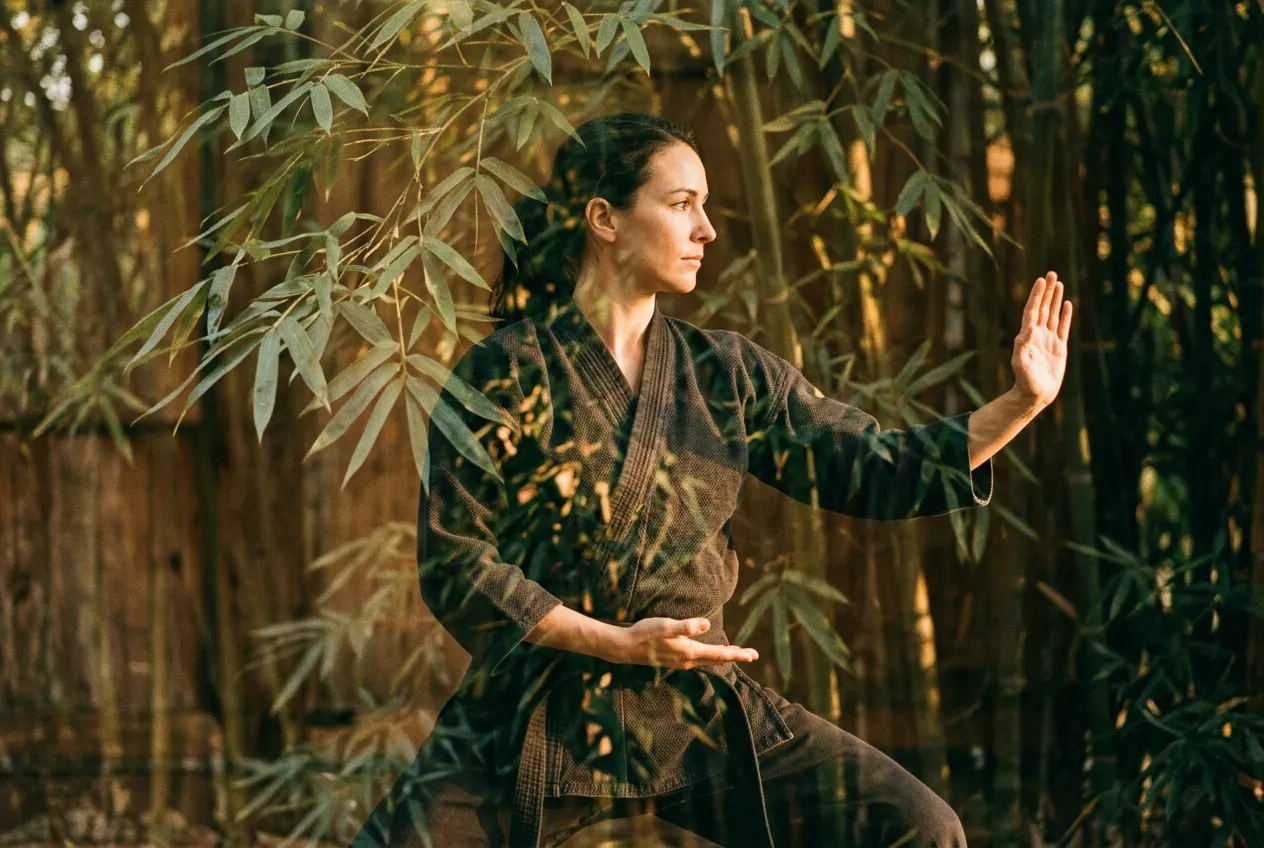
This is why tai chi fundamentals do not become irrelevant as you advance. They become more refined and more interconnected. After 10+ years of practice, I still begin every session by checking in with these principles before starting any form work. Not because I have not learned them, but because they are what the practice is.
Returning to fundamentals is not a step backward. It is the practice.
For more detailed guidance on applying these principles within a specific sequence, the Yang-24 form guide shows how rooting, weight shifting, and alignment play out across an entire form. Explore all guides in the tai chi practice section for further reading.