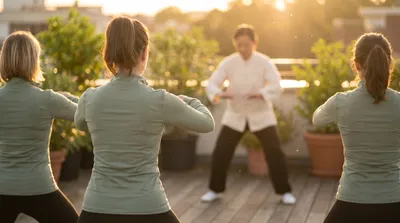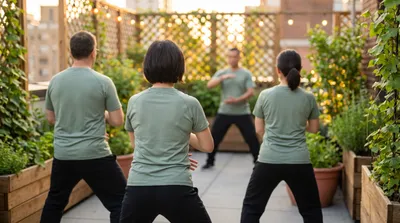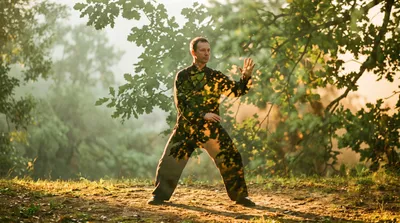
Warming up before tai chi is one of those things you know you should do but can feel tempting to skip — especially when you’re eager to get into the form. I made that mistake plenty of times in my early years of practice, particularly on cold mornings when the last thing I wanted was five minutes of neck rolls before I could start moving. The stiff shoulders and tight hips I’d carry through the first half of a session were proof enough that skipping the warm-up was a false economy.
A proper tai chi warm-up does two distinct jobs. It prepares the joints and muscles for the flowing, weight-shifting movements the form demands. And it bridges the mental gap between ordinary life and practice — a chance to arrive fully in your body before the first posture begins. This guide gives you a complete, practical warm-up routine you can use before every session.
Why Warming Up Before Tai Chi Matters
Tai chi is often described as gentle, and in terms of impact it is. But the form places genuine demands on joint mobility, balance, and muscular coordination — demands that work better when the body has been prepared.
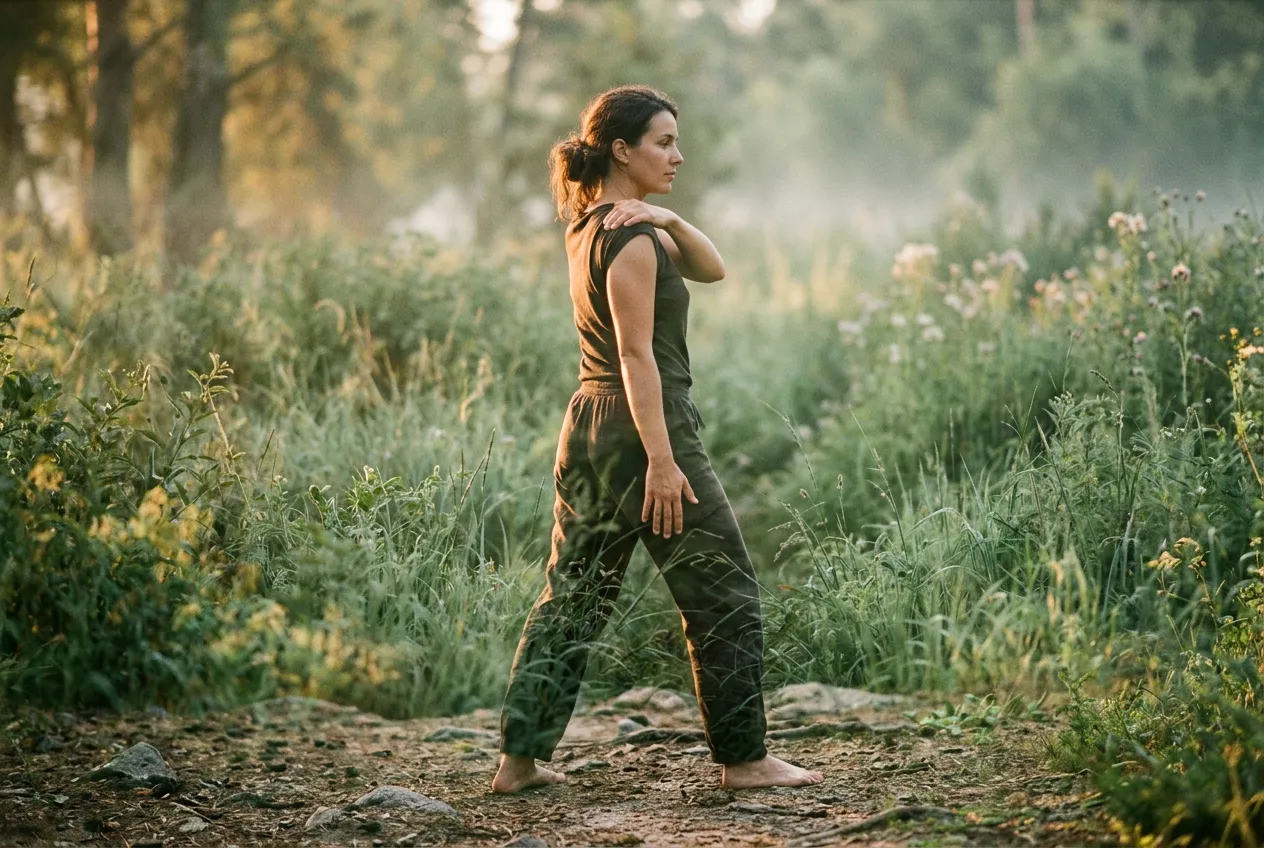
Cold muscles and joints move less freely and are more vulnerable to strain. The hip rotations in tai chi, for instance, require a good range of motion through the hip socket. The spinal rotation in movements like Wave Hands Like Clouds needs the thoracic spine to be mobile. When you walk straight into a form without warming up, you’re asking already-stiff structures to immediately perform at their full range.
In my practice, I’ve noticed that sessions where I skip the warm-up almost always feel harder in the first five to ten minutes. The weight transfers feel clunky, my posture is less centred, and there’s a quality of effort rather than ease. The warm-up sets the tone.
For older practitioners in particular — a significant portion of the tai chi community — warming up is genuinely important for joint health. Synovial fluid in the joints distributes more evenly when the joint has been moved gently, which reduces friction during the more demanding transitions. This isn’t abstract theory; it’s why you feel looser fifteen minutes into practice than you did at the first posture.
What Does a Tai Chi Warm-Up Consist Of?
A tai chi warm-up consists of five stages worked in sequence — neck and shoulder loosening, spinal rotation, hip circles, knee and ankle mobility, and a short static stretch — moving systematically from the top of the body to the bottom over roughly eight to ten minutes. None of the five stages is optional: skipping straight to the hips because you’re short on time undoes the loosening work the neck and spine need before they can rotate cleanly once the form begins. I’ve caught myself doing exactly that on rushed mornings, jumping straight to hip circles, and could feel the difference in how stiffly my shoulders moved through the first few postures.
How Long Should a Tai Chi Warm-Up Take?
A full tai chi warm-up takes about eight to ten minutes when each of the five stages gets genuine attention, though a shortened four- or five-minute version covering just the hips and ankles is far better than skipping it entirely on a rushed morning. There’s no strict minimum to hit — the goal is covering the joints that do the most work in the form, not reaching a specific clock time. On mornings when I only have five minutes before a session, I keep the hip circles and ankle rotations and drop the static stretching at the end; it’s not the full routine, but it prepares what matters most for the opening postures.
The Complete Tai Chi Warm-Up Routine
This routine takes approximately eight to ten minutes. Work through it in the order given — it moves systematically from the neck down to the ankles, preparing each area before the one below it.
Start in a comfortable standing position, feet shoulder-width apart, knees very slightly soft. Keep breathing throughout.
Neck and Shoulder Warm-Up
Neck rolls (gentle): Bring your chin gently towards your chest. From there, slowly roll your head to the right — ear towards shoulder — then continue the arc to look up at the ceiling, then roll to the left, and back down to the chest. Complete four or five slow circles in each direction. Never force this movement. The neck should guide the motion; no pulling, no snapping.
Shoulder circles: Let your arms hang naturally. Begin rolling both shoulders forward in large, slow circles — up, forward, down, back. After six or eight circles, reverse the direction. This loosens the shoulder joint capsule and the muscles across the upper back that tend to hold tension from desk work or driving.
A note from my own practice: after years of video production work — lots of time hunched over edit suites — my upper back accumulates tension through the week. These two exercises alone make a significant difference to how my shoulders feel during the form.
Arm swings: Raise both arms in front of you to shoulder height, then let them swing outward and back behind you, allowing the shoulder joints to open. Bring them forward again. Repeat this gentle pendulum swing eight to ten times, gradually increasing the amplitude. The arms should feel heavy and relaxed, not controlled.
Spine and Torso Loosening
Spinal rotation: Stand with feet shoulder-width apart and let your arms hang loosely. Begin rotating your torso from left to right, letting the arms swing naturally with the rotation — they should follow the body passively, like ropes attached to a turning post. Start with a small range of motion and gradually increase it. Twenty to thirty rotations, unhurried.
This exercise directly prepares the thoracic spine for the turning movements in nearly every tai chi form. The spine needs to be warm and mobile to rotate cleanly without the whole movement collapsing into hip twist.
Side bends: Place your hands on your hips. Bend slowly to the right, feeling the left side of your body lengthen. Return to centre, then bend to the left. Four or five repetitions on each side. Keep the motion smooth and controlled — this is not a stretch to push hard; it’s a gentle range-of-motion primer.
Hip Rotations
The hips are central to virtually every tai chi movement. Weight transfer, root, and the driving power of the lower body all originate here. Hips that haven’t been prepared tend to either over-rotate or under-rotate, both of which affect balance and the quality of transitions.
Hip circles: Place both hands on your hips. Begin drawing slow circles with your hips — imagine you’re stirring a large pot with your pelvis. Six to eight circles clockwise, then the same counter-clockwise. The knees should remain slightly soft throughout. The movement should be fluid, not jerky.
Weight-shifting hip warm-up: Stand with feet a bit wider than shoulder-width. Shift your weight slowly to the right leg, feeling the left foot lighten. Return to centre, then shift to the left. Repeat this eight to ten times, gradually adding a small hip rotation at each end of the shift. This directly mimics the weight transfer mechanics of the form.
When I first started tai chi, I underestimated how much of the work lives in the hips. I thought tai chi was mostly about the arms and hands. The warm-up is a good corrective for that misunderstanding — even before the form begins, you can feel how much the hips lead.
Knee and Ankle Warm-Up
Knee circles: Stand with feet together and both hands lightly resting on your knees. Bend the knees slightly and begin drawing small circles with both knees together — clockwise, then counter-clockwise. Six to eight circles each direction. This mobilises the knee joint and warms the surrounding musculature.
Knee raises: From a standing position, slowly raise your right knee towards your chest, hold briefly, then lower with control. Alternate legs, eight to ten times each. This gets the hip flexors engaged and also gives you a brief balance challenge — a preview of what the form demands.
Ankle rotations: Shift your weight to your left leg. Lift the right foot slightly and draw slow circles with the ankle — six each direction — then repeat on the left side. Ankles are often neglected in warm-ups but they’re a key link in the balance chain. A stiff ankle makes it harder to feel the ground, which undermines everything else.
Calf raises: Standing tall, slowly rise onto both toes and lower back to flat feet. Eight to ten repetitions. This warms the calf and activates the foot musculature. Combined with the ankle rotations, it brings the lower leg online before the proprioceptive demands of single-leg stance movements.
Gentle Stretching Finish
End the warm-up with two or three minutes of gentle, static stretching:
Standing hamstring stretch: Step your right foot forward, flex the toes towards you, and lean forward slightly from the hip with a flat back. Hold for fifteen seconds. Repeat on the left. This opens the backs of the legs, which can otherwise limit how deeply the posture sinks.
Chest opener: Clasp your hands behind your back. Gently draw your shoulder blades towards each other and lift your arms slightly. Hold for ten to fifteen seconds. This counters the forward-shoulder rounding that comes from sitting and directly improves the openness of the upper body in practice.
Integrating the Warm-Up With Guided Practice
If you practise with video guidance — which is an effective way to keep form consistent, especially for home practitioners — TaiChiApp.com includes structured warm-up sequences before its main practice videos. Following a guided warm-up can be useful if you find you tend to rush through or skip the routine when practising alone.
For more on structuring a complete home session, the guide to building a daily tai chi practice routine covers how the warm-up fits into the broader practice structure.
Common Warm-Up Mistakes to Avoid
Starting too quickly. The warm-up is not a formality to complete as fast as possible. The movements should be genuinely slow, with attention on each joint. Rushing through neck rolls defeats the purpose.

Holding breath. Breathe continuously throughout. This sounds obvious but it’s easy to hold the breath during balance challenges or unfamiliar movements. If you notice you’re holding your breath, it’s usually a sign you’re working too hard or going too fast.
Pushing into discomfort. A tai chi warm-up is preparation, not training. Any movement that produces sharp or significant discomfort should be modified or skipped. Gentle exploration of your current range of motion is the goal — not pushing to a new limit.
Skipping the lower body entirely. Upper body warm-ups feel more intuitive, but the hips, knees, and ankles do most of the structural work in tai chi. Don’t let the neck and shoulder work eat all your warm-up time.
Do You Need to Warm Up Before Every Tai Chi Session?
Yes — every tai chi session benefits from a warm-up, even a short one, because the form’s weight transfers and rotations ask more of cold joints than most people expect, regardless of how experienced the practitioner is. Some long-term practitioners assume the need for a formal warm-up fades with years of practice, but the physical demand on the joints doesn’t change just because the movements feel familiar. Years into daily practice, I still notice a difference in the first five minutes of a session when I’ve skipped the warm-up — the weight transfers feel less clean, and it takes longer to find the settled quality the form needs.
Moving Into Practice
Once you’ve completed the warm-up, you’re not rushing straight into the form. Take a moment in a relaxed standing posture — feet shoulder-width apart, knees soft, arms hanging naturally — and let the breath settle. Thirty seconds to a minute of this quiet standing acts as a transition, gathering awareness before the first movement.
For newer practitioners, this is also a good moment to recall the opening sequence mentally before beginning. For the warm-up to have done its full job, the mind needs to be present as well as the body.
Explore the full range of practice guidance in our tai chi practice articles, or if you’re just getting started, our complete beginner’s guide to tai chi covers everything from the very basics. For the breathing side of your warm-up and practice, tai chi breathing techniques explains how breath and movement coordinate in the form.
The eight to ten minutes you invest here sets up everything that follows. Once it becomes habitual, you’ll notice its absence on the rare sessions when circumstances force you to skip it.