Online tai chi instruction has improved enormously over the past decade. What was once a patchwork of low-quality recordings is now a legitimate way to learn and practise — whether you’re a complete beginner who can’t access a local class, someone who wants to supplement in-person teaching with home practice, or an experienced practitioner maintaining a daily routine.
The challenge is the opposite of what it used to be. There’s now so much online tai chi content — YouTube channels with hundreds of videos, subscription platforms, apps, paid courses, and live-streamed classes — that figuring out where to start is genuinely confusing.
This guide cuts through it. Here’s what to look for, what to avoid, and how to match a platform to your needs.
What Qualifies as a Good Online Tai Chi Instructor
Before choosing a platform, it helps to know what separates effective online tai chi instruction from the rest.
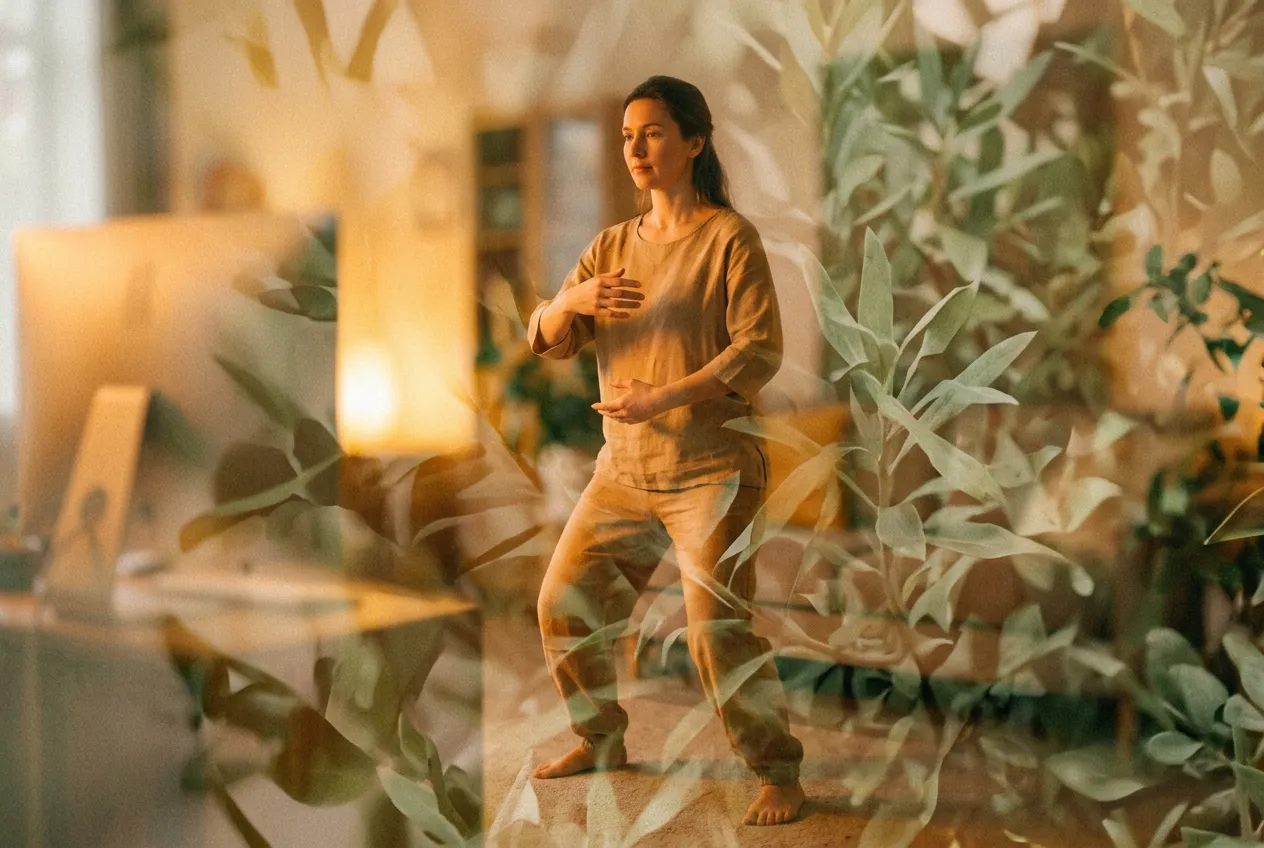
Clear cueing of body mechanics, not just demonstration. The most common gap in online tai chi instruction is beautiful demonstration paired with inadequate explanation of what the body is actually doing. Good online instruction tells you where the weight is, which foot is rooted, how the hip drives the arm, what the hands are doing internally. If you can watch a video and replicate the movement correctly without seeing yourself in a mirror, the cueing is probably adequate.
Pacing calibrated to the audience. A beginners’ class should move at a pace that allows a beginner to actually follow along. This sounds obvious, but many “beginners” videos on YouTube are labelled beginner simply because they cover foundational movements — not because the pace or depth of explanation is calibrated to someone who has never done tai chi. Look for explicit pace adjustments and repetition of individual movements before linking them.
Qualification and lineage. The best online tai chi instructors have trained with recognised teachers and have transparent lineages. This doesn’t mean only traditional masters qualify — many excellent contemporary teachers trained with certified instructors and have decades of their own practice. But “I’ve been doing tai chi for two years and now I’m teaching” is a warning sign. Look for information about the instructor’s training background on their “About” page or channel description.
Consistent style. Online learners are particularly vulnerable to the problem of learning from multiple sources who teach slightly different versions of the same movements. If you’re learning Yang-style, you want an instructor who clearly teaches Yang-style consistently, not someone who mixes in Chen-style footwork without explanation.
I’ve watched a lot of online tai chi content over the years — partly because building TaiChiApp.com required understanding what video-guided practice looks like from a learner’s perspective. The instructors who retain students long-term are the ones who explain principles, not just steps.
YouTube: Free, Abundant, and Uneven
YouTube has more tai chi content than any other platform, and it costs nothing. For the right learner, it’s the best possible resource. For the wrong learner, it’s a source of confusion and inconsistency.
Best for: Self-directed learners who can research instructor backgrounds, recognise when something feels wrong, and resist the urge to jump between teachers. Also excellent for experienced practitioners looking for variety.
Weaknesses: No progression structure, no ability to ask questions, enormous variation in quality, and no accountability.
Some genuinely strong YouTube channels to explore:
- Sifu Anthony Korahais at flowingzen.com — extensively documented Yang-style content with clear mechanical explanations
- Yoqi Yoga and Qigong — strong on qigong sets and supplementary practice; less on full tai chi forms but useful for complementary work
- Master Jesse Tsao at taichihealthways.com — covers multiple forms with good teaching depth
The key when using YouTube is to pick one channel and stay with it long enough to make progress before exploring others. Hopping between teachers is the single most common pattern that keeps beginners stuck.
Subscription Platforms and Paid Courses
Paid platforms offer something YouTube cannot: structure, progression, and in many cases access to the instructor for questions.
What to look for in a paid platform:
- Clear curriculum organised by level (beginner → intermediate → advanced)
- Stated style (Yang, Chen, Sun, Wu — or a hybrid with an explanation of what that means)
- Some form of student community or Q&A access
- A trial period or money-back guarantee so you can assess fit before committing
Cost benchmark: Quality online tai chi platforms typically charge $15–$40/month or $100–$300 for a complete course. Be cautious of very cheap platforms — good instruction at scale requires significant production investment.
TaiChiApp.com is one option in this space, focused on guided video practice for Yang-style tai chi. It includes a. Other well-regarded platforms include Udemy (which hosts several well-reviewed tai chi courses as one-time purchases), DoYouYoga (which includes tai chi alongside yoga content), and instructors like Paul Lam of the Tai Chi for Health Institute (taichiforhealthinstitute.org), who offers structured therapeutic tai chi programmes widely used in healthcare settings.
The advantage of apps like TaiChiApp.com is that the guided practice format — where you follow along in real time — is closer to the in-person class experience than a recorded lecture. Passive video watching and active follow-along practice produce quite different results.
Live-Streamed Classes
A growing number of instructors offer live classes via Zoom or similar platforms. These occupy a middle ground between recorded content and in-person instruction.
Advantages: Real-time interaction, the ability to ask questions, accountability of showing up at a set time, and occasional feedback on what the instructor can see. Some instructors will request a brief webcam-on moment to offer corrections.
Limitations: You’re still learning without tactile feedback. An instructor can see that your elbow is floating but cannot physically guide it into position. The corrections available are cue-based rather than kinaesthetic.
Live classes work well for practitioners who have an established foundation and want to maintain a practice with some social dimension. For absolute beginners without any prior instruction, in-person classes remain superior if they’re accessible.
Matching Platform to Learning Stage
Different types of online resources work better at different stages of learning.
Complete beginner (no prior tai chi): Start with a structured beginner programme — either a dedicated beginners’ course on a subscription platform or a YouTube channel that explicitly sequences content from the most basic foundations. Avoid jumping into full-form instruction before you have the basic stances and footwork. The complete beginner’s guide to tai chi covers what the initial learning stages actually involve.
Some experience, developing a form: You’re past the raw beginner stage but still learning a specific form. Subscription platforms with form-specific courses work well here. The ability to pause, rewind, and replay at different speeds is valuable. A platform with a form broken down by section (rather than as a single long video) makes independent practice much easier.
Established practitioner, supplementing or maintaining: YouTube and apps work well for variety and maintenance. You have enough background to evaluate what you’re seeing and adapt instruction to your own practice. Apps with daily practice prompts help with consistency.
Seeking to learn a new or advanced form: Advanced forms (Chen long form, weapons forms, 48-form) are difficult to learn from online instruction alone. Consider whether there is a qualified in-person teacher or workshop accessible for the foundational weeks of learning. The guide to finding a local tai chi teacher covers this — even occasional in-person instruction from a qualified teacher transforms the quality of home practice.
What Online Instruction Cannot Replace
This is worth stating plainly: online tai chi instruction, even excellent online instruction, cannot fully replace in-person teaching for beginners.
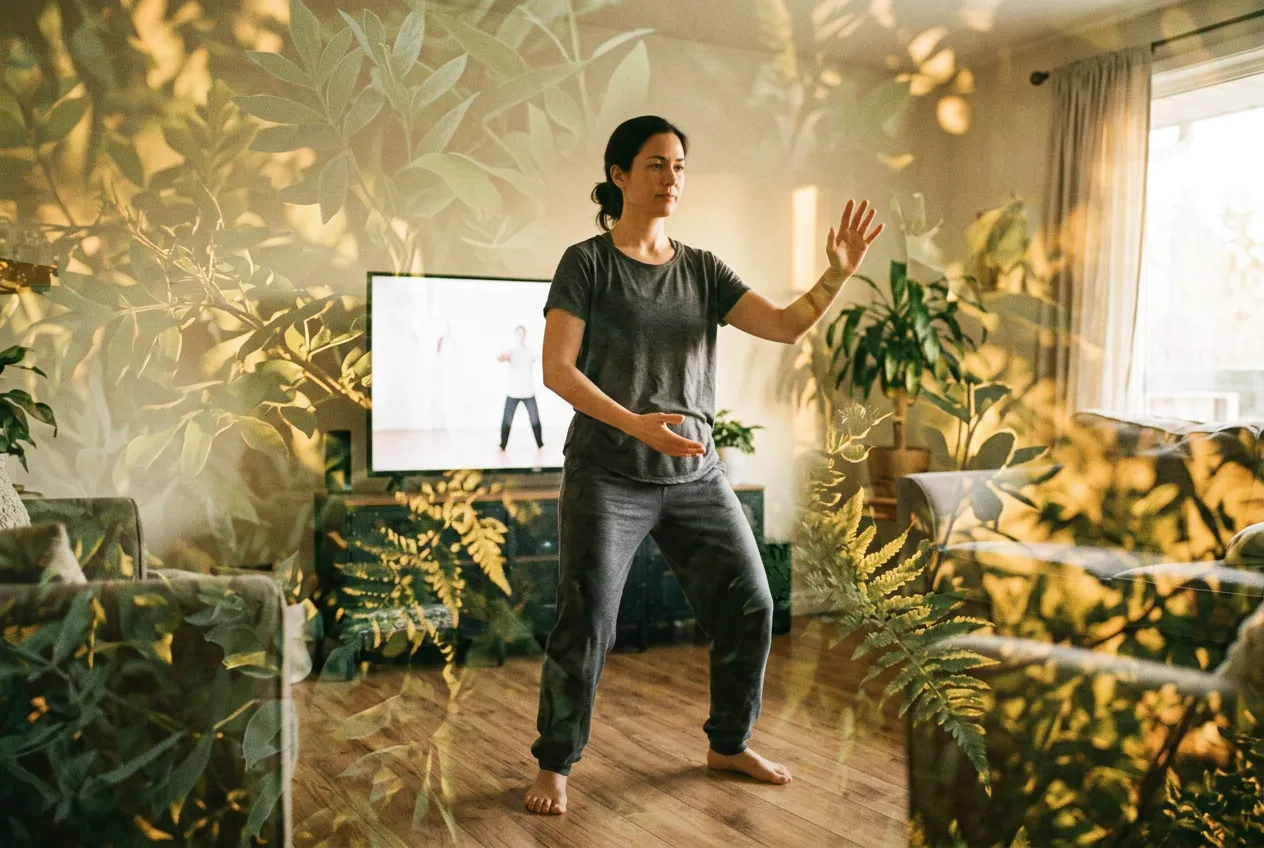
The reason is proprioceptive feedback. Tai chi requires learning precise body positions — the angle of a knee, the relationship between hip and shoulder, the quality of rootedness in the standing foot. These are internal sensations that a practitioner develops over time, but a new student often cannot yet feel what is wrong. A qualified instructor watching you in person and placing a hand on your shoulder or adjusting your hip gives information that no amount of video viewing can provide.
This is not an argument against online learning — it’s a reason to use online instruction as a complement rather than a complete substitute when access to in-person teaching is possible. Practicing tai chi at home is genuinely valuable and online resources make it more effective. But the occasional in-person correction accelerates development dramatically.
Frequently Asked Questions
For more on building a home practice with or without formal instruction, browse the guides in the tai chi practice section.
Can I learn tai chi entirely online? Yes, many people do — particularly in areas without local classes. The results are better for self-directed learners with some movement background (yoga, martial arts, dance) who can identify and self-correct mechanical issues. Pure beginners will progress more slowly online than in person, but consistent online practice does produce genuine learning.
How many classes per week do I need online? Three to four sessions per week produces good progress for most learners. Daily practice — even 15–20 minutes — is better than two long sessions per week. Online platforms that offer short daily practice modules (rather than only full-length classes) tend to get better practice consistency from their students.
Is it worth paying for online classes or is YouTube enough? For complete beginners, a structured paid course often produces better results than free YouTube content because the curriculum is sequenced and the instruction is calibrated to a learning progression. Once you have a foundation — after 6–12 months of consistent practice — YouTube offers excellent supplementary content for free.
What equipment do I need for online tai chi classes? A clear floor space of approximately 6x6 feet (1.8x1.8 metres), comfortable clothing that allows full leg movement, flat-soled shoes or bare feet on a non-slip surface, and a screen large enough to see the instructor’s feet and hands clearly. No equipment is required.
How do I know if an online instructor is qualified? Look for: stated training lineage and named teachers they studied under, years of practice (10+ is a meaningful benchmark), affiliation with recognised tai chi organisations, and transparent information about the style they teach. Avoid instructors who make vague credentials claims (“trained in the ancient Chinese tradition”) without naming specific teachers or lineages.