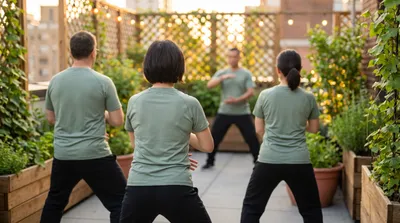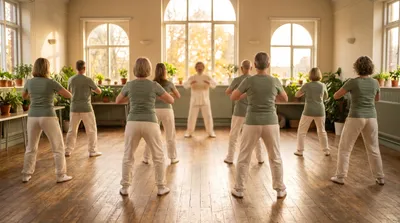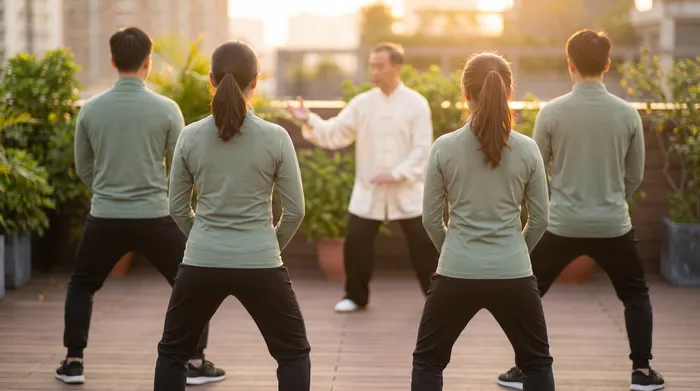
Finding a good tai chi teacher is not as straightforward as finding a good yoga instructor or personal trainer. There’s no universal governing body, no standardised certification system, and no agreed-upon minimum qualification. Anyone can call themselves a tai chi teacher, and many do.
This matters because tai chi is an art form with real depth. A poor instructor can teach you movements that look like tai chi but function as neither health practice nor martial art — they produce the form without the substance. Years later, students who were poorly taught often need to unlearn before they can relearn.
This guide covers what to look for, what to avoid, and where to actually search.
What Qualifications Actually Mean in Tai Chi
Because there is no single governing body for tai chi, “certification” means different things from different sources:
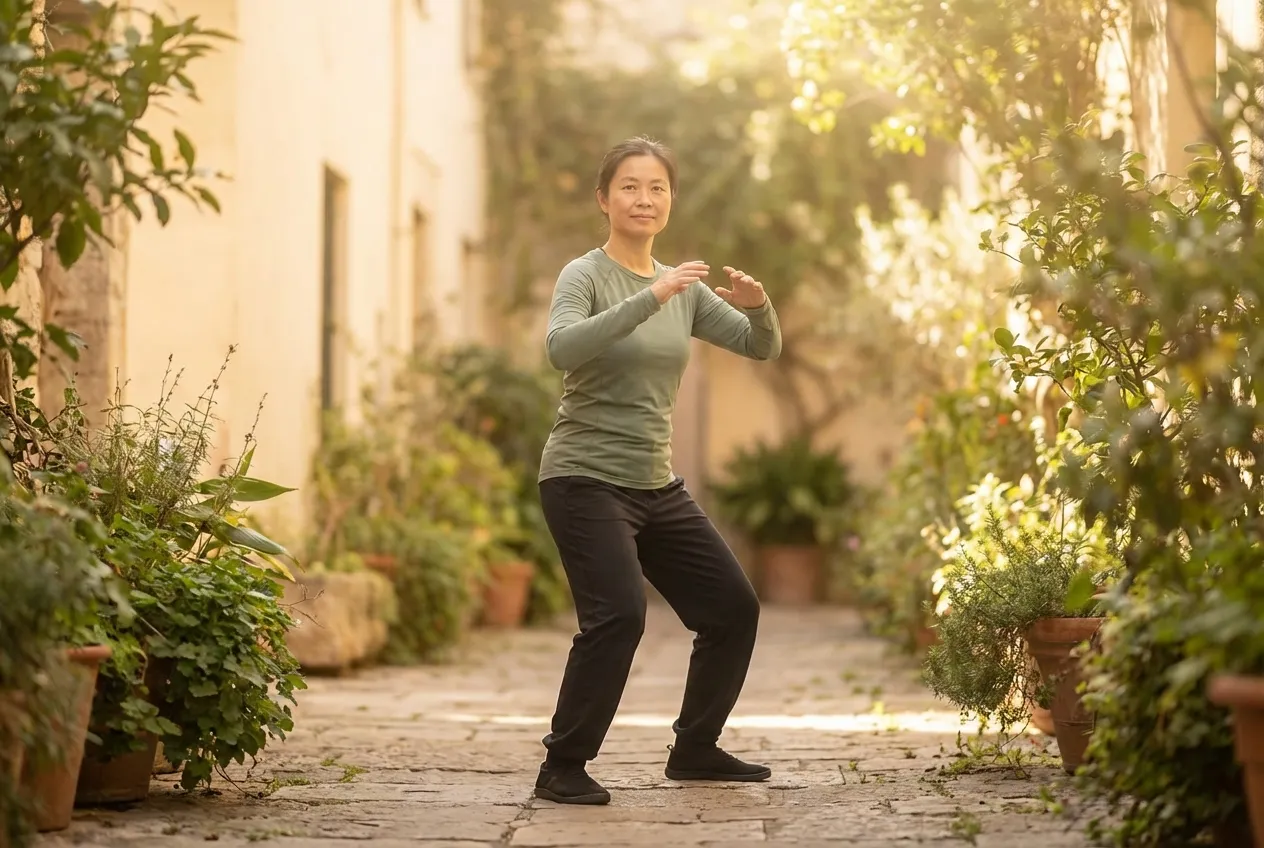
Lineage and training time: The most meaningful credential in traditional tai chi is not a certificate but documented training time with a recognised master within an established lineage. A teacher who trained for years under a well-known Yang, Chen, or Wu family master is likely to have been exposed to serious instruction. Ask who they trained with and for how long.
Organisation-issued certificates: Bodies like the Tai Chi Union for Great Britain, the American Tai Chi and Qigong Association, and similar national organisations issue instructor certificates with varying standards. These are meaningful markers of having met some established standard, though the standards vary between organisations.
Short-course certificates: Certificates from weekend courses or brief online programs are common and largely meaningless as indicators of teaching quality. They indicate the teacher completed the course, not that they can teach tai chi well.
Teaching experience: How long has the instructor been teaching? How long did they practise before they started teaching? A practitioner who began teaching after two years of personal practice is in a different category from one who practised for a decade before teaching.
When I’ve evaluated instructors over the years, the most informative question is: “Who did you train with, and for how long?” A teacher with genuine depth usually answers this without hesitation and in some detail. Vague or defensive answers are a signal.
How to Evaluate a Prospective Teacher
Most reputable instructors will allow you to observe or try a class before committing. Use that opportunity deliberately.
Watch Their Own Movement
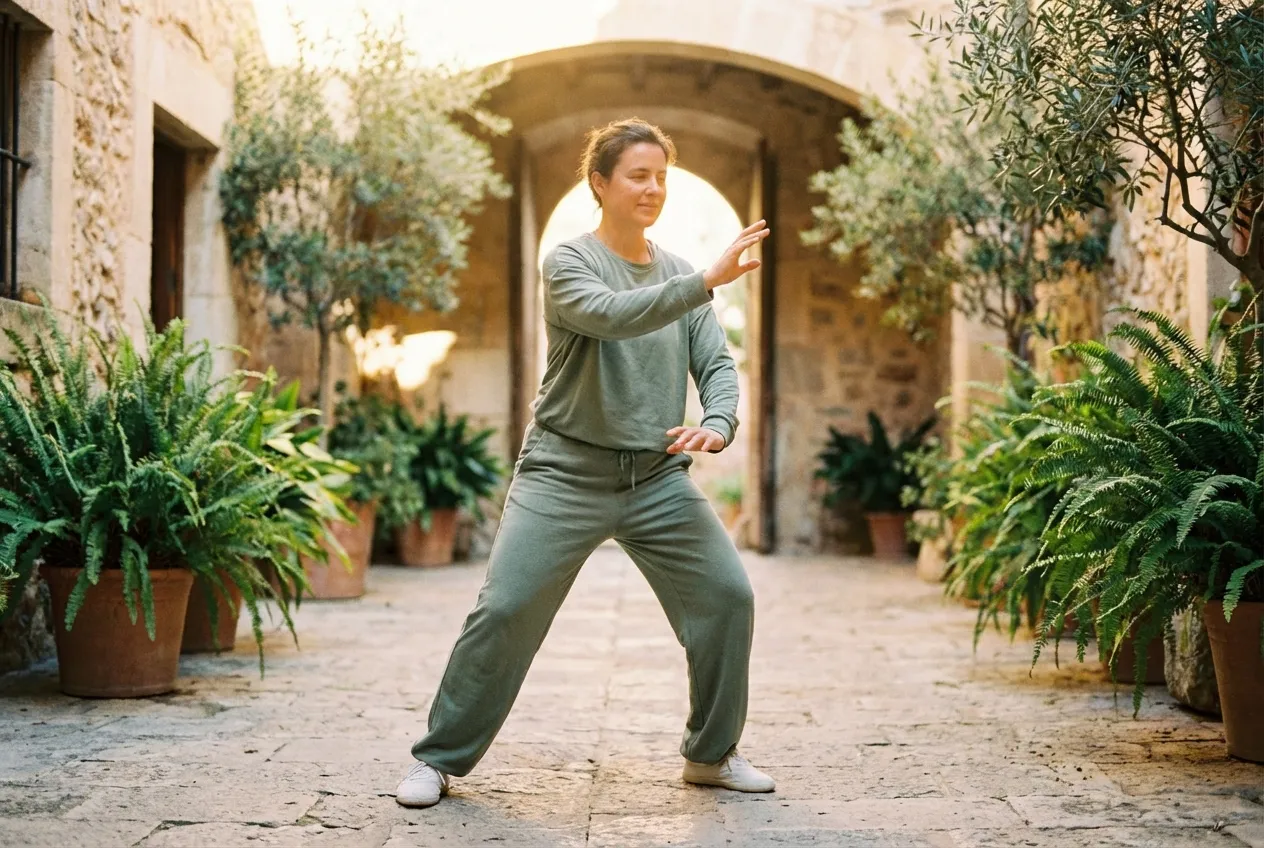
A good tai chi teacher should move well — their own form should demonstrate the qualities they’re teaching. Look for:
- Rootedness: Do they look stable and grounded, or do they look like they’re balancing carefully?
- Relaxation: Are their shoulders and arms visibly relaxed, or are they held with effort?
- Continuity: Does the form flow as one continuous movement, or does it look like a series of connected positions?
- Consistency: Does the form look the same every time, or does it vary significantly?
You don’t need to be an expert to notice these things. Genuine tai chi quality has a distinct visual quality — a flowing solidity — that becomes recognisable even to untrained observers.
Watch How They Teach
Good teaching in tai chi involves correction, repetition, and explicit instruction on principles. Warning signs in a class:
- The instructor demonstrates once and expects students to copy without further instruction
- No individual corrections are offered during the class
- The teacher can’t explain the purpose or principle behind a movement when asked
- The focus is entirely on the sequence (what comes next) rather than the quality of individual movements
Strong indicators that instruction is good:
- The teacher offers corrections while students practise
- Principles are explained alongside movements (“notice that the weight is fully on one leg before the other foot lifts”)
- Students at different levels are given different feedback
- There’s a visible difference in how long-term students move compared to newcomers (if the longer-term students don’t look better, the instruction isn’t working)
Ask Direct Questions
Don’t be shy about asking an instructor about their background and approach:
- How long have you practised tai chi?
- Who did you train with, and in what lineage?
- What qualification or training have you completed as an instructor?
- What does a typical progression look like for beginners in your class?
- How do you approach teaching people with physical limitations?
The quality and confidence of their answers will tell you a great deal.
Where to Search for a Teacher
Local Community Resources
Community centers, YMCA/YMCA equivalents, senior centers, leisure centers, and libraries often host tai chi classes, especially beginner and health-focused classes. These tend to be affordable and accessible. The instructor quality varies more here — these settings attract community instructors of very different levels.
Martial arts schools sometimes offer tai chi alongside other disciplines. Where tai chi is taught as a martial art alongside the health-oriented practice, the instruction tends to be more technically rigorous.
Parks: particularly in cities, community tai chi groups practise publicly in parks, often in the early morning. This is common in Chinese communities and increasingly visible elsewhere. These informal settings can be excellent — long-term practitioners often welcome interested observers and are happy to point you toward more formal instruction.
National and International Databases
Tai chi organisations maintain searchable directories of affiliated instructors:
- Tai Chi Union for Great Britain — UK-focused, broad membership
- American Tai Chi and Qigong Association — US instructor directory
- International Yang Family Tai Chi Chuan Association — Yang-style lineage practitioners worldwide
These directories give you practitioners who have at least met a stated standard. They’re a better starting point than a general internet search.
Online Classes
Online tai chi instruction has become significantly more established. For students without good local options, the online tai chi classes guide covers how to evaluate virtual instruction.
The key limitation of online learning is the absence of in-person feedback — an instructor can’t see what your knees or hips are doing. This matters less once you have some foundation; it matters a great deal in the first months when body mechanics are being established. If possible, pair online learning with occasional in-person workshops for feedback.
The complete beginner’s guide to tai chi covers the broader question of how to start, including what to expect from your first classes.
Red Flags to Avoid
Some patterns suggest an instructor is unlikely to give you good grounding:
Claims that sound outsized: “I trained for six months in China and now teach the authentic method.” Legitimate lineage takes years of dedicated training.
Focuses only on health benefits, never on principles: Health benefits are real, but a teacher who never addresses body mechanics, weight transfer, or the principles behind movements is likely teaching at a surface level.
Discourages questions: Good instruction welcomes curiosity. An instructor who deflects technical questions often doesn’t know the answers.
Very large classes with no individual attention: A class of 30 people with one instructor and no assistants makes meaningful individual correction essentially impossible.
Certificates displayed prominently without identifiable lineage: The certificates themselves tell you less than the answer to “who trained you.”
None of these flags are automatically disqualifying — context matters. But a pattern of multiple red flags should prompt caution.
Practical Starting Steps
-
Search your local area using the organisation directories above. Find the 2-3 closest instructors who appear to have genuine credentials.
-
Contact them with a brief message: introduce yourself, mention your experience level (likely none), and ask to observe or join a trial class.
-
Attend a class with deliberate attention. Watch the instructor’s movement quality, the teaching approach, and whether students appear to be learning.
-
Ask your questions at the end of the class or in conversation with the instructor.
-
Make a decision after at least one trial class, ideally two with different instructors if you have options in your area.
Finding the right teacher takes some effort, but it’s the most important decision you’ll make in your tai chi journey. Good instruction significantly accelerates learning and prevents the form errors that take years to correct.
For more on getting started, browse the full tai chi for beginners section.
Frequently Asked Questions
How many classes should I try before deciding on a teacher?
One or two trial classes is usually enough to get a clear impression. If you can access two or three instructors in your area, trying one class with each before deciding gives you a useful comparison. If there’s only one instructor available nearby, try two sessions with them — a single class can be atypical.
Is it worth travelling further to find a better teacher?
It can be, especially in the early learning period when foundations are being established. Poor foundations take longer to unlearn than to avoid. If there’s a significantly more qualified instructor an hour away and a mediocre one around the corner, the longer commute may be worth it, at least for the first 6–12 months. Later, supplementing with home practice becomes easier.
Can I learn from different teachers at the same time?
It’s generally better to focus on one teacher and one style as a beginner. Different teachers teach different styles with different vocabulary and different movement priorities. Learning from multiple teachers simultaneously in the early months is confusing and can slow progress. Once you have a solid foundation in one style, studying with additional teachers becomes more enriching than disorienting.
What should I ask about a teacher’s lineage?
Ask who their primary teacher was, what style they teach, and who that teacher’s teacher was. In traditional tai chi, lineage traces back to recognised masters — Yang Chengfu for Yang style, Chen Fa Ke for Chen style, and so on. You don’t need to know these names in detail, but a teacher who can answer the lineage question clearly is demonstrating that their training had genuine roots.