Tai chi is a Chinese mind-body practice built around slow, continuous movement, coordinated breathing, and focused attention. It originated as a martial art, but today it’s practised primarily as a health and wellness discipline — one of the few movement practices that has been studied extensively by medical researchers and found to deliver measurable benefits across a wide range of conditions.
If you’ve landed here wondering what tai chi actually is — not the Wikipedia definition, but what it looks and feels like and why people do it — this article is a direct answer to that question. By the end, you’ll understand what tai chi is, how it differs from similar practices, and whether it’s worth trying.
The Core of What Tai Chi Is
Tai chi (also written taiji or, in its full form, tai chi chuan / taijiquan) is a practice built on a few foundational ideas that shape everything about how it works.
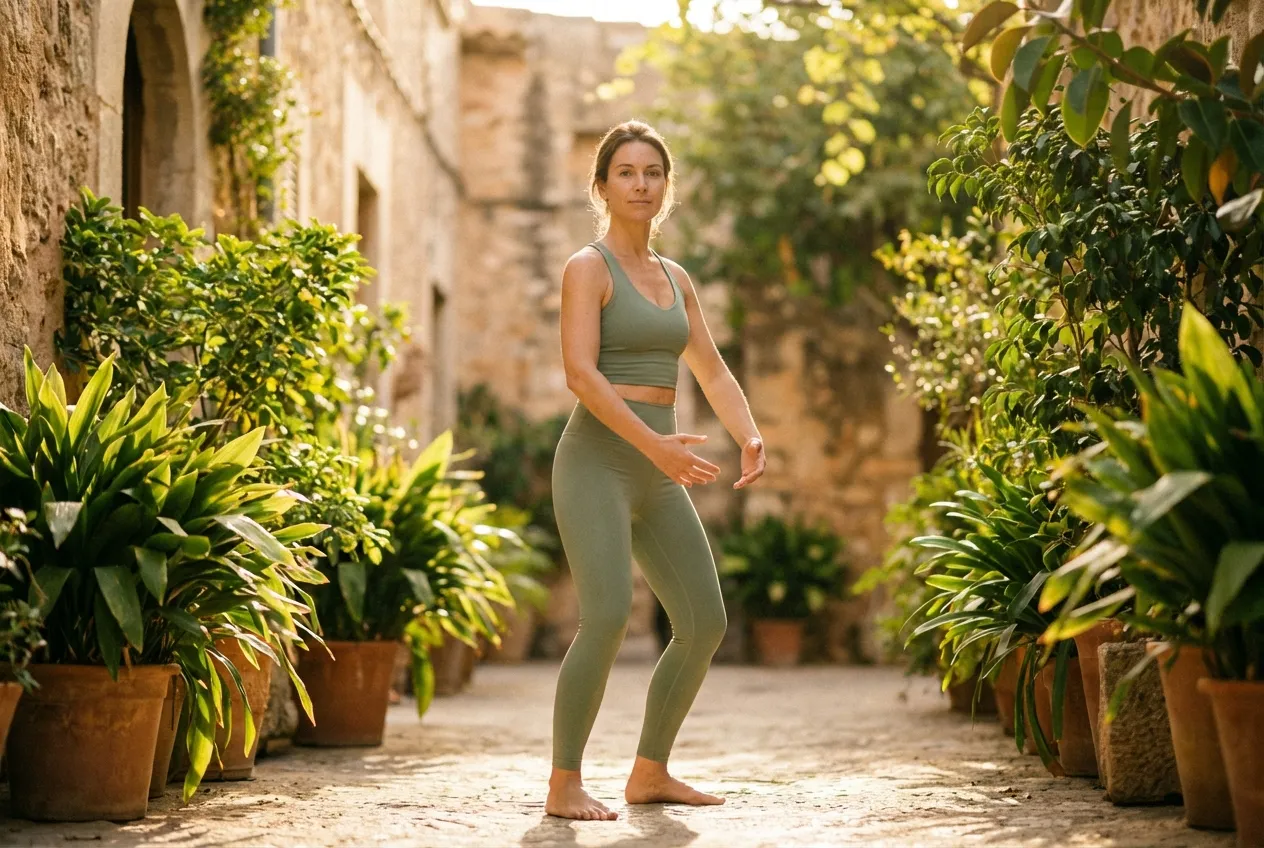
Movement is slow, continuous, and linked. A tai chi sequence — called a form — flows from one posture into the next without stopping. There’s no jumping, no sharp impact, no explosive effort. The movements look gentle from the outside, but they require genuine coordination and body awareness to perform correctly. I remember being surprised, when I first started, by how tiring it is to move slowly and correctly compared to rushing through something.
The body and mind work together. Tai chi isn’t just physical exercise. You’re directing your attention to how your weight shifts, how your arms relate to your torso, how your breath coordinates with movement. That mental engagement is a design feature, not a side effect. It’s what makes tai chi genuinely different from walking on a treadmill while watching TV.
Balance and internal alignment matter more than strength. Unlike most Western exercise, tai chi isn’t trying to make you stronger in a conventional sense. It’s working on the coordination of your whole body — how your joints align, how you distribute weight, how you stay centred as you move. This is why it works well for people across a very wide age range.
The term “tai chi chuan” translates roughly as “supreme ultimate fist” — a philosophical reference to the Taoist concept of opposing forces in balance, symbolised by the yin-yang. The full name captures both dimensions: it’s a martial art (the “fist”) grounded in a philosophical framework (the “supreme ultimate”). For most modern practitioners, the philosophical layer is interesting context rather than a daily focus, but it helps explain why the practice looks and feels the way it does.
What Tai Chi Looks Like in Practice
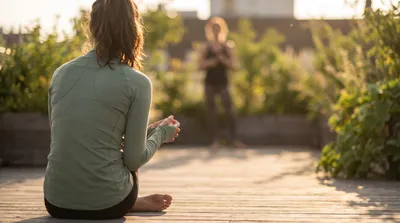
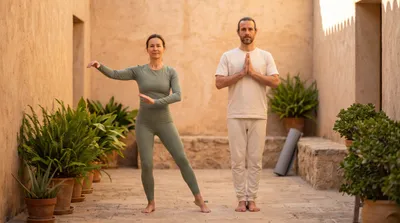
From the outside, watching someone do tai chi looks almost like watching slow-motion dance. Movements are circular, flowing, and unhurried. Arms sweep through arcs. Weight shifts from foot to foot. The practitioner appears completely calm.
There are several different styles of tai chi — Yang, Chen, Wu, Sun, and others — each with a distinct character. Yang-style tai chi is by far the most common, particularly for beginners and health-focused practitioners. It features larger, more open movements and a consistent, moderate tempo. Chen-style (the oldest form) includes faster, more explosive movements mixed with slow sections. Wu and Sun styles tend to be more compact and are often recommended for older adults.
Within each style, practitioners learn a form — a structured sequence of movements with a fixed order and duration. The most widely practised is the Yang-style 24 form, which was standardised in the 1950s as an accessible introduction to tai chi. A single run-through takes about five to eight minutes. More advanced forms can be three to four times as long.
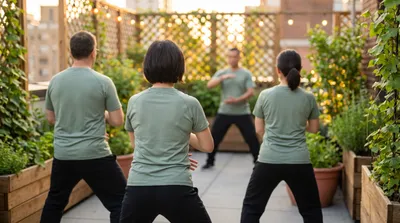
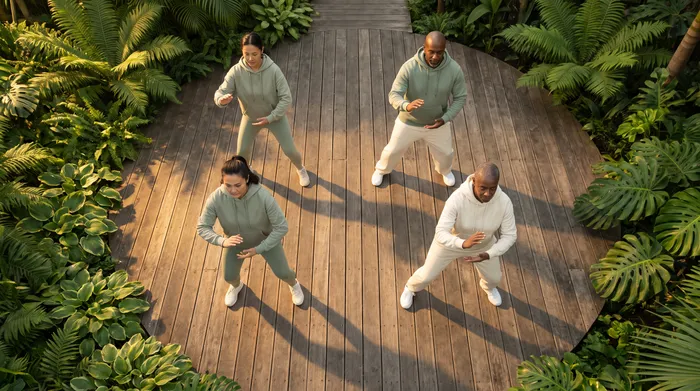
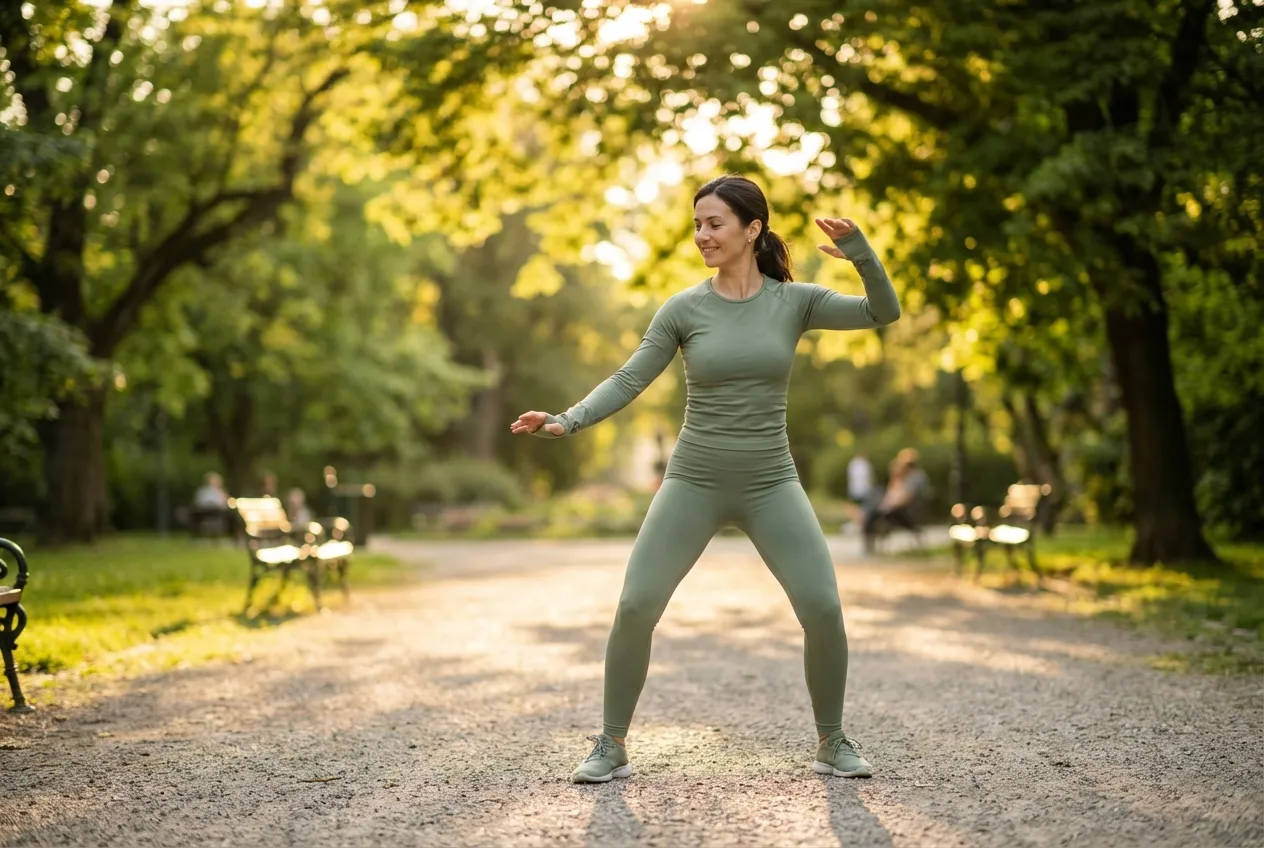
In a group class, you’ll see everyone moving through the same sequence simultaneously. At parks in China (and increasingly in parks and community centres worldwide), groups practise outdoors in the morning. The collective, unhurried quality is part of what makes tai chi distinctive as a practice.
How Tai Chi Differs from Related Practices
Tai chi vs qigong: Qigong is a broader category of Chinese energy-cultivation exercises — many of them involve standing still or simple repetitive movements. Tai chi can be understood as a specific, more complex form of qigong, but it also has distinct martial art origins that most qigong forms don’t. In practical terms, qigong is often simpler to learn; tai chi sequences require more memorisation and coordination.
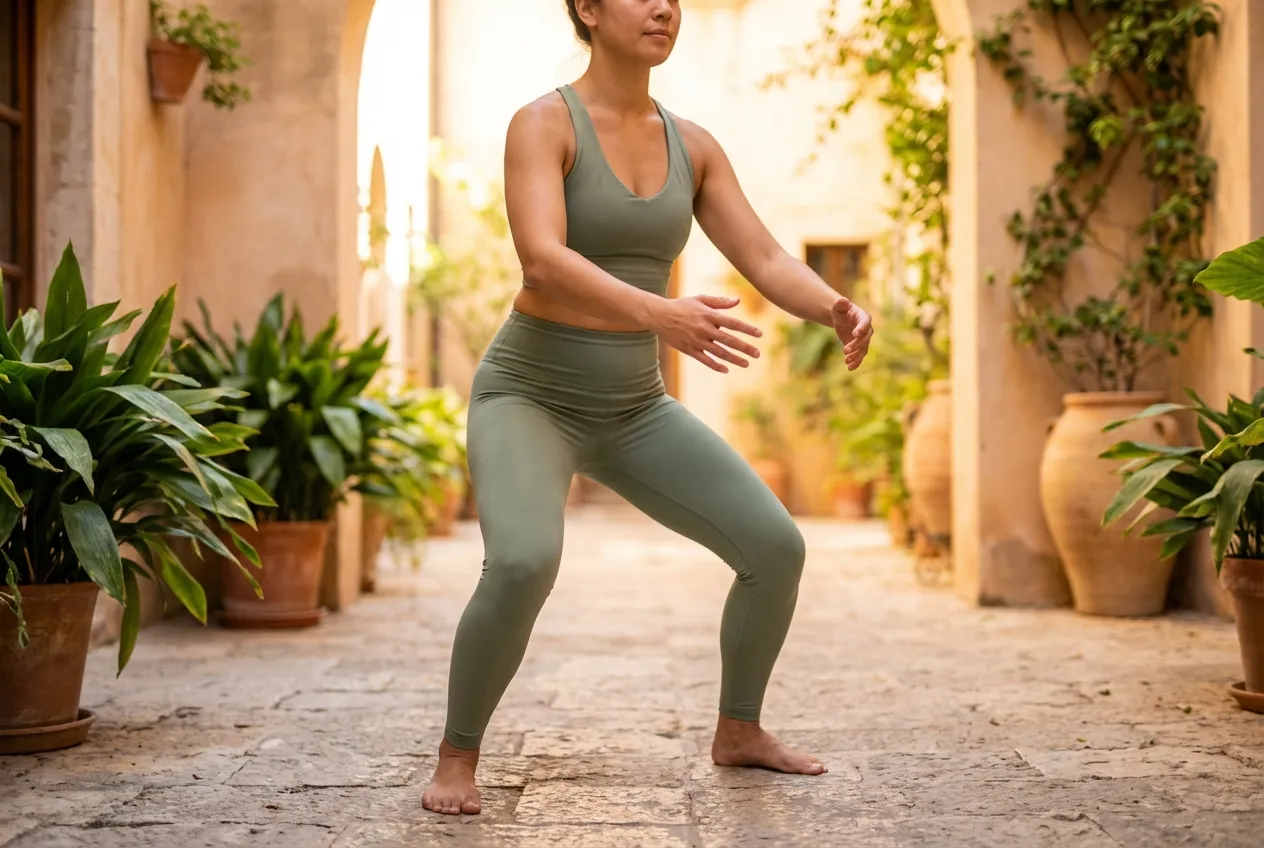
Tai chi vs yoga: Both are mind-body practices with roots in ancient traditions, and both emphasise breath, body awareness, and non-competitive practice. The key differences are in movement structure and physical demands. Yoga involves holding static poses and often significant flexibility and strength requirements. Tai chi is about continuous flowing movement and rarely requires the kind of ground work or flexibility that some yoga styles demand. For this reason, many older adults or people with joint concerns find tai chi more accessible than yoga. If you’re weighing both, the comparison of tai chi and yoga covers this in more detail.
Tai chi vs martial arts (general): Tai chi’s origins are firmly in martial arts — it was designed as a fighting system based on redirecting rather than matching an opponent’s force. Most modern practitioners never engage with the martial applications, but they’re preserved in the forms. A push hands exercise (paired practice involving yielding and redirecting) connects this thread. This is quite different from striking-focused martial arts like karate or Muay Thai.
The Health Case for Tai Chi
The evidence base for tai chi’s health benefits is unusually strong for a complementary practice. Unlike many wellness modalities, tai chi has been studied in rigorous clinical trials, and the findings are consistent across populations.
Balance and fall prevention are the most robustly supported outcomes. Multiple systematic reviews and meta-analyses confirm that regular tai chi practice significantly reduces fall risk in older adults — a finding that’s been replicated across countries and populations. A 2018 randomised clinical trial published in JAMA Internal Medicine found a therapeutically tailored tai chi programme more effective than a multimodal exercise programme, and both more effective than stretching, for reducing falls among older adults at high risk of falling.
Cardiovascular markers improve with regular practice. Blood pressure reductions have been documented across multiple trials. Heart rate variability — a marker of cardiac health — also shows improvement.
Mental health effects are meaningful. Anxiety, depression symptoms, and perceived stress all show consistent improvement in tai chi practitioners in clinical studies. This isn’t surprising: the focused, rhythmic nature of the practice functions partly as a moving meditation.
Arthritis and chronic pain management: NIH-funded trials (including the landmark Chenchen Wang study at Tufts Medical Center) found tai chi effective for reducing pain and improving function in knee osteoarthritis — comparable in some outcomes to physical therapy.
There’s also a growing body of evidence on cognitive benefits, immune function, and quality of life measures in older adults. I’d recommend the full tai chi health benefits overview if you want the detailed evidence summary with citations.
As someone who came to tai chi partly out of curiosity about its health claims — and who’s been practising for over 10 years — I can say the balance and body awareness improvements are personally observable. The mental clarity piece is real, but harder to quantify. The evidence is easier to read about than to fully appreciate until you’ve been practising for a few months.
Who Practises Tai Chi and Why
Tai chi is genuinely one of the most demographically broad physical practices in the world. In China, it’s estimated that tens of millions of people practise daily — predominantly older adults doing morning practice in parks, but also martial arts enthusiasts working on advanced forms and push hands.
In Western countries, the practice base skews toward:
- Older adults who’ve been recommended tai chi for fall prevention or joint health
- People with chronic health conditions including arthritis, Parkinson’s, and cardiovascular disease
- Stress reduction seekers who’ve found meditation difficult and are looking for a movement-based alternative
- Martial arts practitioners interested in the internal aspects of fighting arts
- Younger practitioners drawn to the philosophical or aesthetic dimensions
There’s no physical prerequisite. Tai chi can be practised seated, modified for people with limited mobility, and scaled to any fitness level. The learning curve exists — forms take time to memorise and refine — but the initial entry is accessible almost regardless of physical baseline.
Getting Started
The most common question after “what is tai chi?” is “where do I start?” The short answer: find a class or a good video resource and begin with a short form. The complete beginner’s guide to tai chi walks through this step by step — how to choose a style, what to expect in your first sessions, and how to build a practice from scratch.
If you’re purely curious and want to understand where tai chi came from before deciding whether to practise it, the history and origins of tai chi is worth reading. The story of how a martial art became one of the world’s most researched complementary health practices is genuinely interesting.
The barrier to entry is lower than most people assume. You don’t need special clothing, equipment, or a particular level of fitness. You need curiosity and a willingness to move slowly and pay attention. Most people find that the slowness is the hardest part — not physically, but mentally.
Frequently Asked Questions
Is tai chi a martial art or a health practice?
Both, historically. Tai chi chuan was developed as a martial art — a sophisticated system for combat based on yielding and redirecting force. Over the past century, and especially the past 50 years, it has been adopted worldwide primarily as a health and wellness practice. Most practitioners today never engage with the martial applications. Both dimensions are legitimate; what you focus on depends on your teacher and your goals.
How long does it take to learn tai chi?
Learning a short form (like the Yang 24) well enough to practise independently typically takes 3–6 months of regular practice. “Learning” in the sense of being able to run through the sequence without guidance is faster — often 2–3 months. Refining it to the point where it feels natural and fluid takes years. This is normal; the practice is deep enough to reward long-term engagement.
Do I need to be fit or flexible to start tai chi?
No. Tai chi is routinely practised by people in their 70s, 80s, and beyond, including people with arthritis, balance issues, and limited mobility. Forms can be modified or practised seated. Flexibility is not a prerequisite — the practice develops it gradually. The movements don’t require the flexibility demanded by yoga or the strength required by most gym-based exercise.
Is tai chi religious or spiritual?
Tai chi has philosophical roots in Taoism — the yin-yang symbol and concepts like qi (energy flow) are part of its background. But practising tai chi doesn’t require any particular spiritual beliefs. The vast majority of Western practitioners treat it as a secular mind-body practice, like yoga. You can engage with the philosophical dimensions as deeply or as shallowly as you choose.
Can you lose weight doing tai chi?
Tai chi burns calories — roughly comparable to moderate walking — but it’s not designed or marketed as a weight loss tool. It’s a relatively low-intensity practice that excels at balance, stress reduction, and joint health. If weight loss is the primary goal, tai chi is best combined with higher-intensity aerobic activity. If overall health and wellbeing are the goal, tai chi is highly effective.