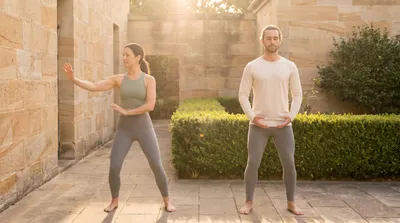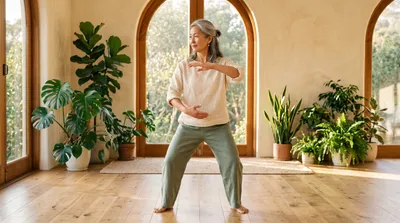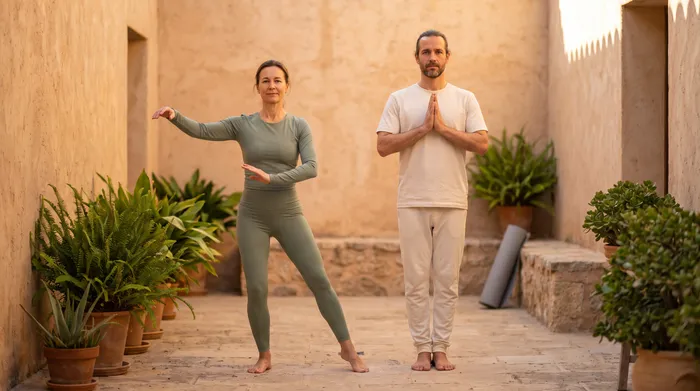
Tai chi and yoga get grouped together constantly — both ancient, both Asian in origin, both slow, both involving breathing and mindfulness. The grouping is not wrong exactly, but it obscures how different they are to actually do.
The shortest useful distinction: yoga is largely about holding positions, tai chi is entirely about moving between them. That single difference produces most of the others.
I should declare an interest. I have practised tai chi for over ten years and yoga only occasionally, so this comparison is written from one side. What follows tries to be fair rather than neutral.
The Core Difference
Yoga, in the forms most commonly practised in the West, is a practice of postures — asanas — entered, held, and released. The work happens in the holding: maintaining a shape while breathing, while muscles fatigue and tissues lengthen. Sequences link postures together, but the postures are the unit.
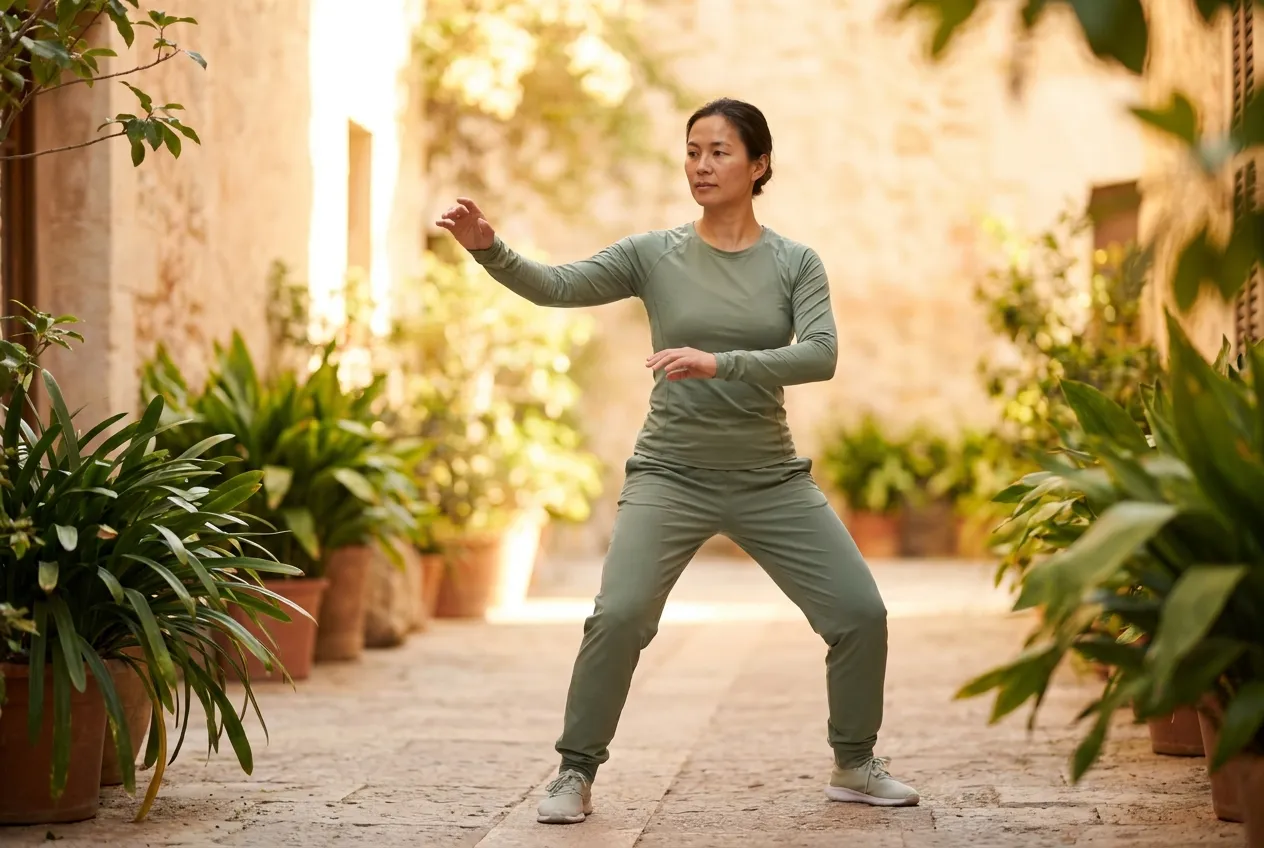
Tai chi has no held postures in this sense. It is a continuous flow of movement in which the body never stops and never quite arrives. There are recognisable shapes, but they are moments in a stream rather than destinations. The work happens in the transitions.
That difference cascades. Yoga develops flexibility and static strength; tai chi develops dynamic balance and coordinated movement. Yoga postures can be photographed meaningfully; a photograph of tai chi shows almost nothing about whether it was done well. Yoga can be practised on a mat in a space the size of the mat; tai chi needs room to step.
Physical Emphasis
Flexibility. Yoga is substantially better. It systematically takes joints and tissues through end range, which tai chi does not — tai chi works within comfortable range almost exclusively. If you want to touch your toes, yoga is the answer.
Balance. Tai chi is substantially better, particularly dynamic balance. The practice consists largely of transferring weight between legs under control, and the clinical evidence for balance improvement and falls reduction is stronger for tai chi than for any other form of exercise.
Strength. Depends on the style. Vigorous yoga styles produce meaningful upper body and core strength; tai chi produces almost none in the upper body and moderate lower-limb endurance from sustained partial squats. Neither is a substitute for resistance training.
Cardiovascular. Both are limited. Power and hot yoga reach genuinely moderate intensity; tai chi and gentle yoga do not.
Joint loading. Tai chi is gentler in the sense that it never loads a joint at end range or under body weight in extreme positions. Yoga’s weight-bearing postures put substantial load on wrists, shoulders, and knees, which is a common source of injury in beginners.
Difficulty and Learning Curve
This is where expectations most often go wrong in both directions.
Yoga is easier to begin. You can attend one class, follow along approximately, and get a real workout on day one. Progress is visible — postures you could not hold become holdable.
Tai chi is harder to begin and slower to reward. There is a memorisation burden that yoga does not have: before you can practise alone you must learn a sequence, which takes months. For the first three months you are mostly trying to remember what comes next, and the practice does not feel like much of anything.
The relationship reverses over time. Yoga’s basic vocabulary is learned reasonably quickly and depth comes from refinement within it. Tai chi remains difficult indefinitely — practitioners with thirty years describe still working on the same fundamentals.
If you want to feel you are doing something within a month, yoga. If you are content with a slow start in exchange for something that keeps unfolding, tai chi.
The Health Evidence
Both have accumulated substantial research, and the profiles differ.
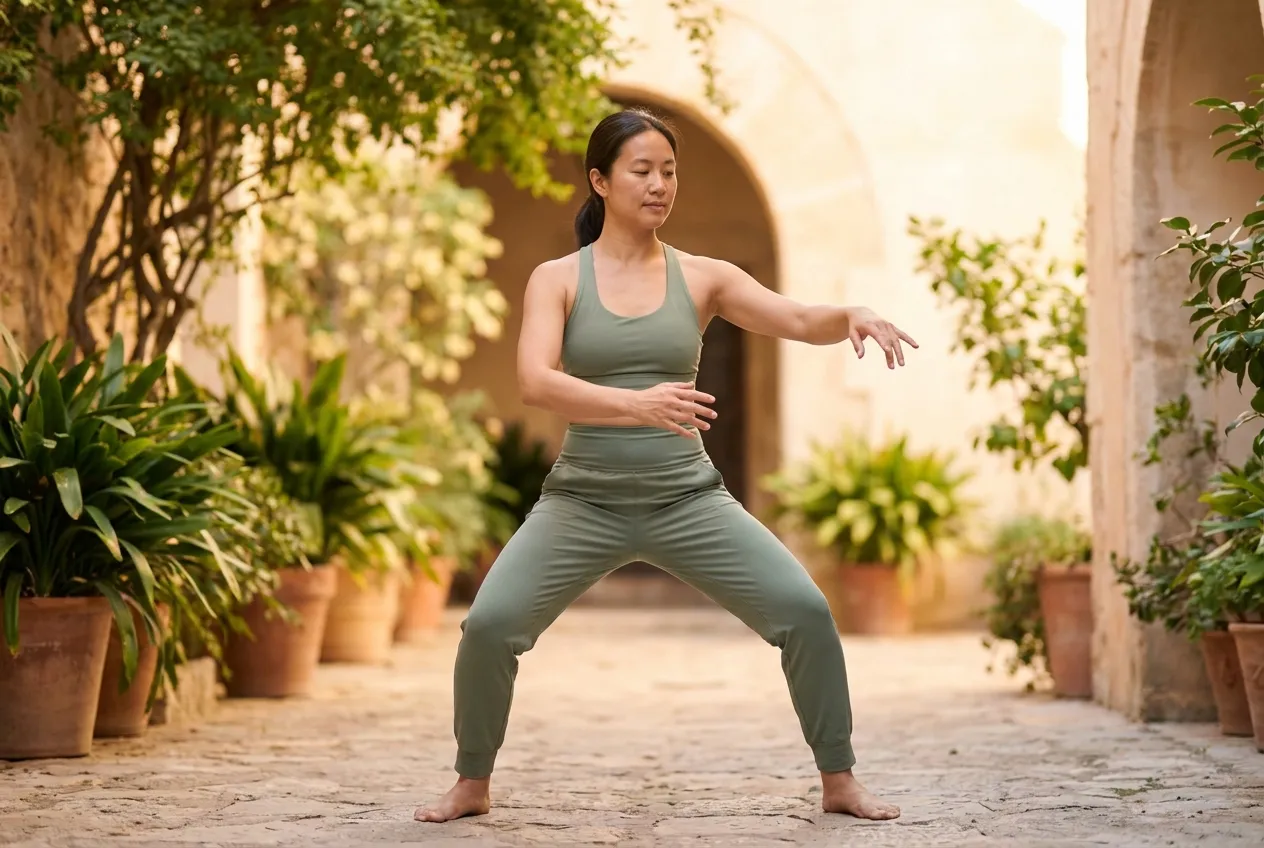
Tai chi has its strongest evidence for balance and falls prevention in older adults, where it is among the best-supported interventions of any kind. It also has good evidence for blood pressure, knee osteoarthritis, fibromyalgia, and Parkinson’s-related postural stability, and reasonable evidence for anxiety, depression, and sleep. The health benefits overview covers the research in detail.
Yoga has stronger evidence for chronic low back pain — it is recommended in several clinical guidelines for that specific indication — and comparable evidence for anxiety, depression, and stress. It also has research support for flexibility outcomes, which is not surprising, and for quality of life in various chronic conditions.
Where the two overlap, results tend to be similar, which is what you would expect given that both are moderate mind-body movement practices. Where they differ, they differ in the direction their physical emphasis suggests.
For an older adult worried about falling, tai chi is the better-evidenced choice. For someone with chronic back pain and reasonable mobility, yoga has the edge.
Practical Considerations
Availability. Yoga wins decisively. Almost every gym and town has yoga classes; tai chi is far patchier, and finding a good teacher can require travelling.
Cost. Comparable, though tai chi community classes are often cheaper and yoga studios can be expensive.
Equipment. Yoga needs a mat and possibly blocks and straps. Tai chi needs nothing at all — flat shoes and clothes you can move in.
Space. Yoga needs the area of a mat. Tai chi needs a few square metres to step around in, which is a real constraint in small flats.
Practising alone. Yoga is easier to follow from video, since you can be shown a posture and copy it. Tai chi from video works less well because sequence and continuity are hard to absorb without correction.
Age of typical practitioners. Yoga classes skew younger; tai chi classes skew considerably older. Neither should decide anything, but walking into a room where everyone is thirty years older or younger than you does affect how comfortable people feel.
Injury risk. Low for both, lower for tai chi. Yoga’s injury profile is concentrated in wrists, shoulders, hamstrings, and lower backs pushed too far too fast. Tai chi’s is mostly knees, from stances that are too deep or twisting incorrectly.
Can You Do Both?
Yes, and the combination is genuinely complementary — more so than most pairings of two practices.
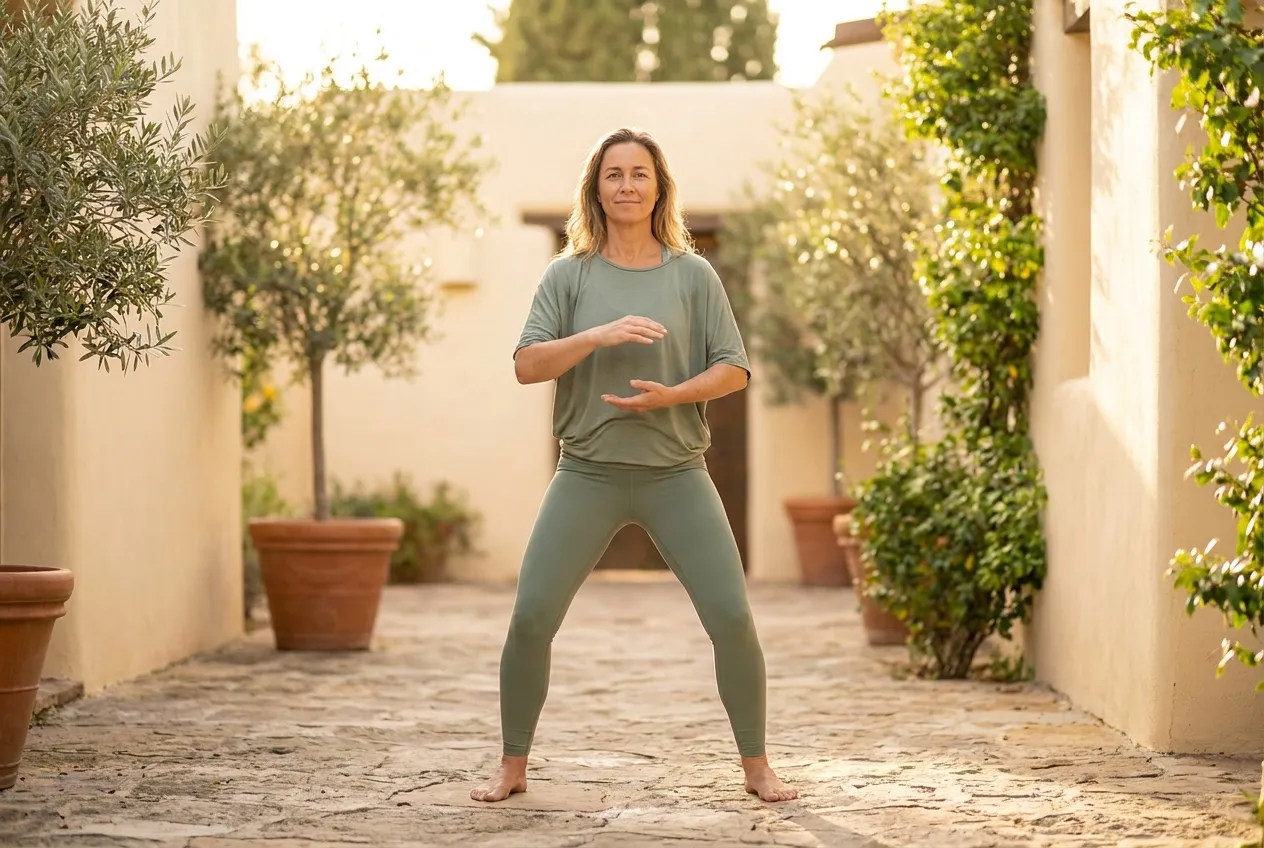
Yoga provides the flexibility and end-range work tai chi omits entirely. Tai chi provides the dynamic balance and continuous movement that held postures do not train. The breathing approaches differ but do not conflict — yoga tends to work with specific pranayama techniques, while tai chi breathing is a slow abdominal pattern coordinated with movement — and the mental component is similar enough that neither feels like a contradiction.
A practical split for someone with limited time: tai chi more frequently, since it benefits from daily short sessions, and yoga once or twice a week for the flexibility work. Or simply alternate.
The main cost of doing both is the learning load. Both take time to learn, and dividing attention early slows progress in each. Starting one, getting past the beginner stage, then adding the other is easier than starting both at once.
How to Decide
Pick tai chi if balance, falls prevention, or joint-friendly movement is your priority; you are over sixty; you have arthritis or joint problems that make weight-bearing postures painful; you want something you can do anywhere without equipment; or the martial and philosophical background appeals.
Pick yoga if flexibility is what you want; you have chronic low back pain; you want visible progress in the first month; you value the availability of classes; or you want the option of a physically demanding session.
Pick whichever is taught well near you if you are genuinely undecided. Instruction quality matters more than the choice between two good practices, and the practice you attend is worth more than the one you theoretically prefer.
The introduction to tai chi covers what the practice involves if you want to look further, and the tai chi versus qigong comparison covers the other practice tai chi is most often confused with. More guidance for people starting out is in the beginners section.
Frequently Asked Questions
Which burns more calories, tai chi or yoga?
Vigorous yoga styles — power, ashtanga, hot yoga — burn more, reaching genuinely moderate intensity. Tai chi and gentle or restorative yoga are comparable, at roughly the level of a slow walk. Neither is an efficient choice if calorie expenditure is the goal.
Is tai chi or yoga better for back pain?
Yoga has the stronger evidence base for chronic low back pain specifically, and is recommended in several clinical guidelines for it. Tai chi also has supportive evidence, and may be preferable for people who find floor-based postures difficult or who have balance concerns alongside back pain.
Which is better for anxiety and stress?
The evidence is comparable, and both work through similar mechanisms — slow breathing, attentional focus, and parasympathetic activation. Choose on preference. People who find stillness uncomfortable often do better with tai chi’s continuous movement; people who find sequence-learning frustrating often prefer yoga.
Is tai chi easier than yoga?
Physically, generally yes — it makes fewer demands on flexibility and strength, and involves no floor work. Mentally, no: the memorisation and coordination burden is higher, and progress is slower to feel.
Can older adults do yoga, or is tai chi the better choice?
Both are practised by older adults, and chair yoga and gentle yoga classes are widely available. Tai chi has the stronger specific evidence for falls prevention, which is usually the main concern in this group, and its upright, weight-bearing nature is closer to the demands of everyday movement. For someone worried about falling, tai chi is the more targeted choice.
Do I need to be flexible to start tai chi?
No. Tai chi requires almost no flexibility beyond what everyday movement demands, which is one of its practical advantages. Yoga does not require flexibility to start either, contrary to a persistent myth, but it does ask you to work at the edge of your range from the first class.