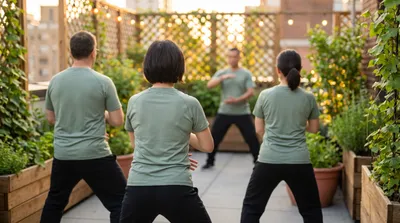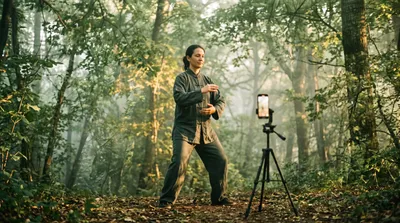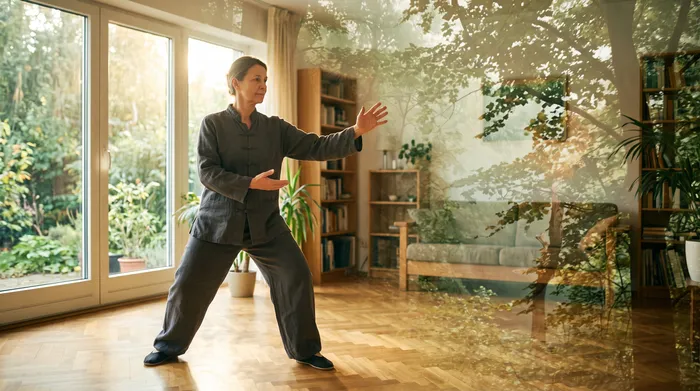
The first time I tried practising tai chi at home, I cleared the furniture out of the living room, put on the form, and immediately started second-guessing every transition. Without an instructor in the room or a group to watch, I kept stopping, backtracking, and losing track of where I was. It took a few sessions before I realised the problem wasn’t the form — it was that I hadn’t thought about how home practice is different from class practice, and hadn’t set up either the space or the structure to support it properly.
Home practice is one of the most valuable things you can build as a tai chi practitioner. It’s where the form becomes yours — where repetition, without the social pressure of a class, allows a different kind of attention and depth. But it requires a bit of thought to set up well, and a lot of practitioners abandon it early because the conditions aren’t right. This guide covers everything: space, surface, clothing, equipment, and how to structure a session that actually develops your practice rather than just going through the motions.
How Much Space Do You Actually Need?
The most common reason people think they can’t practise tai chi at home is space. The form looks large and sweeping when you see it demonstrated in a park or a studio. Surely you’d need a vast open room?
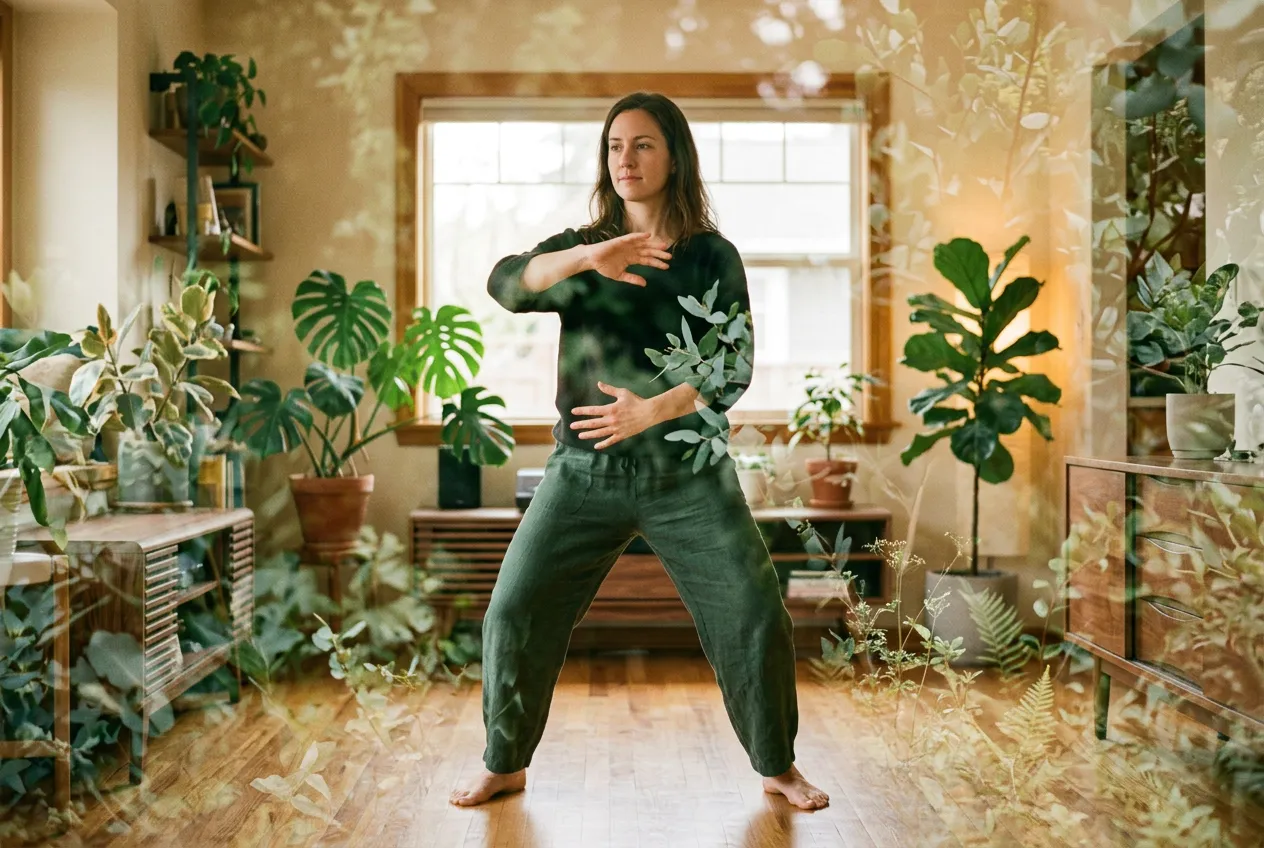
You don’t. The Yang-style 24 form — the most widely practiced form in the world — can be performed in a rectangle approximately 6 feet wide by 10 feet long. Some practitioners manage it in slightly less by adapting the amplitude of their steps. A living room cleared of its coffee table and with furniture pushed to the edges provides this easily in most homes.
For shorter forms and qigong sets, even less space is needed. Many qigong exercises — including standing sequences and seated chair practice — can be done in a 4 x 4 foot area. If you live in a small flat, this matters: you probably have enough space.
The more important spatial requirement isn’t floor area — it’s clearance above and around you. Tai chi involves arms sweeping overhead and out to the sides. Check for low ceilings, light fixtures, and shelving before you begin. Practising outdoors is an excellent option when space is genuinely limited indoors.
When I first set up my home practice space, I was surprised that my study — a medium-sized room — worked perfectly once I moved the desk chair and cleared the centre. The furniture didn’t even need to leave the room, just be pushed back a metre. For most people, home space is less of an obstacle than it appears.
Can You Do Tai Chi at Home If You’re Renting?
Yes — renting doesn’t meaningfully limit home tai chi practice, since nothing about the form requires permanent changes to the space. I practised tai chi in three different rented apartments before buying a home, and the only adjustment I ever made was rearranging furniture I already owned, never anything structural. The main renter-specific consideration is floor protection: if your rental agreement is strict about marking floors, a thin yoga mat under bare feet or socks solves it without needing landlord approval for anything.
Surface Considerations
The surface you practise on matters more than most beginners anticipate. Tai chi involves continuous weight transfer, single-leg balance, and slow pivoting movements — all of which interact directly with what’s underfoot.
Hardwood or laminate floors are generally excellent for tai chi. They’re flat, even, and provide good proprioceptive feedback — you can feel your foot through the floor, which aids balance. The slight slip of a wooden floor also makes pivoting easier and reduces the stress on the knee during turning movements.
Carpet can work, but thick carpet creates a few problems. The pile catches at the foot during pivots, which can put torque through the knee. Thick carpet also reduces proprioceptive feedback — the foot feels less of the ground — which makes finding a stable root harder. Thin carpet or a firm yoga mat on carpet is generally fine.
Tile or stone is fine for practice but can be cold on bare feet in winter. Non-slip tile is preferable. Slippery polished stone is a genuine risk — either wear flat-soled shoes or use a yoga mat.
Outdoor surfaces are ideal when the weather allows. Grass provides natural cushioning and that outdoor quality that the practice was historically associated with. Even concrete or paving is fine for tai chi — the movements are low-impact enough that hard outdoor surfaces don’t create the joint stress they would for running or jumping.
The key principle across all surfaces: avoid anything that catches or grips unpredictably during pivoting movements. Predictable, even surfaces — whether hard or soft — allow you to focus on the practice rather than your footing.
What to Wear for Home Practice
Clothing for tai chi is simpler than for many physical disciplines. You don’t need specialist equipment. The requirements are:
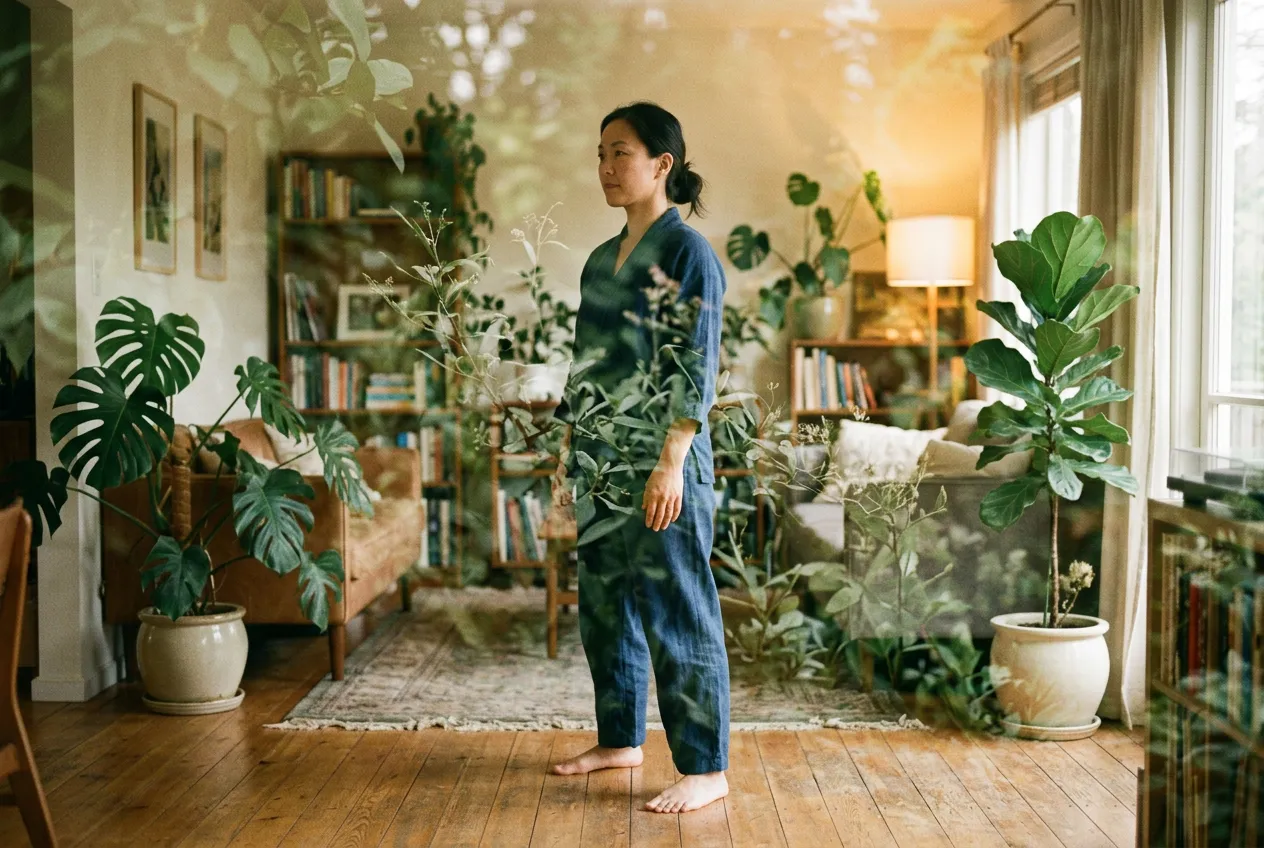
Loose, comfortable trousers. Tai chi involves deep stances, hip rotation, and knee bends. Jeans, tight workout leggings, or fitted trousers all restrict these movements. Loose cotton or linen trousers, yoga pants with genuine stretch, or traditional tai chi trousers (available affordably online) all work well.
A comfortable upper layer. A loose t-shirt or a light cotton top is ideal. You’re not going to get significantly warm — tai chi doesn’t elevate the heart rate the way yoga flows or aerobics would — but you don’t want anything that restricts shoulder rotation or arm extension.
Appropriate footwear — or bare feet. Flat-soled shoes designed for martial arts practice (kung fu shoes) are ideal: flat, thin-soled, with minimal grip, which allows for smooth pivoting. Regular trainers or running shoes are not recommended — their thick, grippy soles interfere with the feel of the ground and can catch during turns. Bare feet on a smooth, clean floor are an excellent option, especially for shorter sessions.
At home, the freedom to practise in whatever you find comfortable is one of the genuine advantages over a class setting. You can wear what helps your practice rather than what’s socially appropriate for a shared space.
Structuring a Home Practice Session
This is where many home practitioners get unstuck. In class, the structure is provided for you. At home, you provide it yourself, and the absence of structure is the single most common reason home practice either becomes inconsistent or devolves into aimless repetition.
A complete home session doesn’t need to be long. Twenty to thirty minutes is enough for a meaningful, structured practice. Here’s a framework that works:
Five to eight minutes: warm-up. Joint mobility work from the neck down to the ankles — neck rolls, shoulder circles, spinal rotation, hip circles, knee and ankle warm-up. This isn’t optional. Cold joints in tai chi means stiffer movement and less proprioceptive accuracy. The warm-up also bridges the mental gap from ordinary life to practice attention.
One to two minutes: standing meditation (Zhan Zhuang). Stand in relaxed Wuji posture — feet shoulder-width apart, knees soft, arms hanging naturally — and settle the breath. This is the transition from warm-up to the form itself. Let the breath deepen and the mind quiet. A minute is enough; two is better.
Ten to fifteen minutes: form practice. Run the form through one to three times depending on your current pace and level of familiarity. Don’t rush. If you find yourself losing clarity on a transition, slow down further rather than pushing through. Quality of attention matters more than number of repetitions.
Three to five minutes: closing. Return to standing meditation to allow the breath to settle. Finish with a few gentle stretches if any areas feel tight. Don’t leap immediately from the form to the next task — let the practice close.
In my own practice, I’ve found the opening standing meditation to be the element that most consistently separates good sessions from perfunctory ones. It’s the easiest thing to skip when time is short, and the most costly to skip. Two minutes of quiet standing changes the quality of everything that follows.
Using Guided Practice to Keep Form Consistent
One of the genuine challenges of solo home practice is that there’s no external check on form. In class, an instructor corrects weight transfer, posture, and timing. Practising alone, it’s entirely possible to reinforce errors without noticing.
Guided video practice is the most practical solution for most home practitioners. Following a skilled instructor on video gives you a pacing reference, a visual model, and a structure that prevents the session from drifting.
TaiChiApp.com offers structured follow-along practice sessions designed specifically for home practitioners — classes you can run at your own pace, pausing and rewinding as needed. This is particularly useful for learners still working to establish the sequence, and for experienced practitioners who want to maintain form quality between classes.
The guide to online tai chi classes covers the full range of options available, from apps to YouTube channels to live-streamed classes, with guidance on choosing what fits your practice level and learning style.
What’s the Best Way to Learn Tai Chi at Home?
The best way to learn tai chi at home is to pair a video program with a fixed daily structure, rather than relying on video alone. When I’m coaching someone who’s only ever practised at home, the sessions that stick are the ones where they treat the video as a pacing guide rather than something to passively follow — pausing to actually feel a weight transfer instead of just moving on to keep up with the screen. The specific video source matters less than treating every session as active practice rather than passive viewing.
Common Home Practice Challenges and How to Address Them
Forgetting the sequence. This is the most common early obstacle in home practice. It’s not a sign of failure — the sequence of even a short form is genuinely complex to memorise. Two approaches work: practice a shorter section (five to eight movements) repeatedly until it’s solid, then add the next section; or follow a video for the full form while building memory gradually. Trying to memorise the whole form at once before you can practice at home is unnecessary.
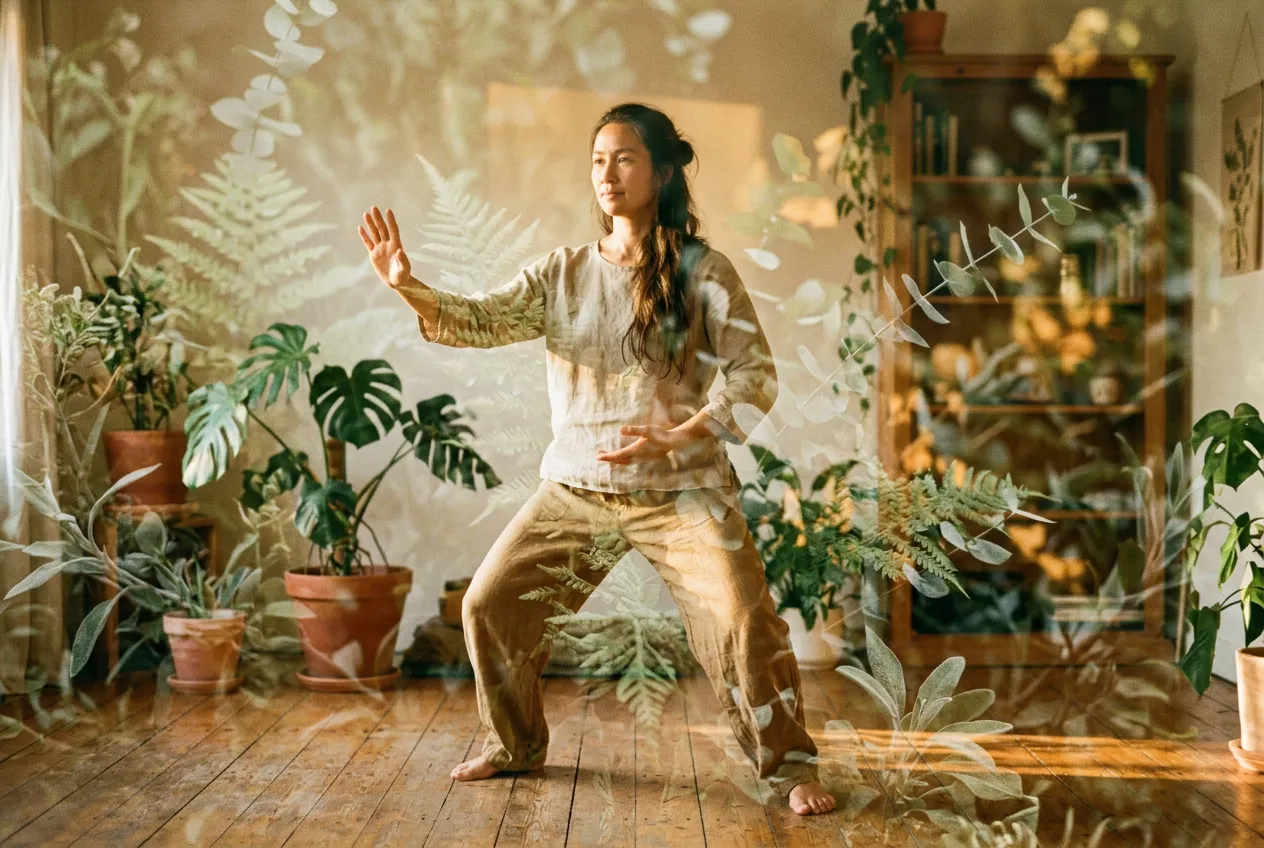
Losing motivation. Class practice has social accountability built in. Home practice relies entirely on internal motivation, which fluctuates. A few strategies that help: practice at the same time every day so it becomes habitual rather than decided; keep the bar low (even ten minutes counts); and give yourself a defined structure so sessions don’t start with the low-energy decision of “what should I do today?”
Feeling uncertain about whether you’re doing it right. This is a real tension in solo practice. Some uncertainty is inevitable and even useful — questioning your form is part of how it develops. But excessive uncertainty can become paralysing. If possible, maintain some connection to a class or instructor, even monthly, as a corrective reference. Video comparison — recording yourself and watching it back — is also surprisingly effective.
Distraction and interruption. Home practice happens in a domestic environment with competing demands. The simplest approach: close the door, turn off notifications, and treat the practice window as genuinely protected time. Even fifteen minutes of undivided attention is more valuable than thirty minutes of interrupted, distracted practice.
The Long-Term Case for Home Practice
Building a home practice alongside class attendance is how most tai chi practitioners deepen their practice over time. Class gives you instruction, correction, and community. Home practice gives you repetition, ownership, and the quiet space to let what you’ve learned settle into the body.
The two work together. What you learn in class on Saturday needs to be practised through the week for it to genuinely integrate. Home practice is where that integration happens.
Is There an Intermediate-Level Tai Chi Routine You Can Do at Home?
Yes — once the basic form is solid, home practice is exactly where intermediate development happens, through longer sessions, more repetitions, and attention to details a beginner routine doesn’t ask for yet. In my own practice, the shift from beginner to intermediate at home wasn’t a different routine so much as the same 20–30 minute session structure covered above, held to a stricter standard — slower transitions, deeper stances, and noticing details I used to skip past entirely. If you’re past the beginner stage, the same warm-up, standing meditation, form, and closing structure in this guide still applies; what changes is how demanding you make each part.
For guidance on building a sustainable daily routine — including how frequently to practise and how to maintain motivation over months and years — see the daily tai chi practice routine guide. For those just beginning the journey, the complete beginner’s guide to tai chi provides the broader context for where home practice fits in your overall learning.
Explore all our practice guides in the tai chi practice section — everything from warm-up routines to breathing techniques to the specific qigong sets that complement form practice.