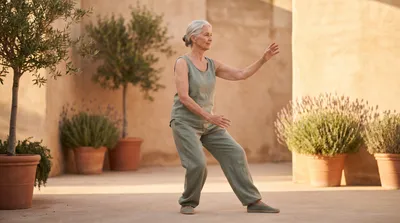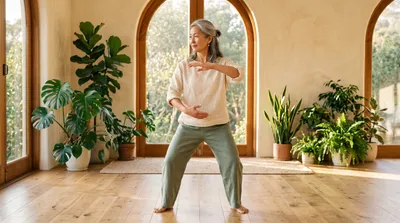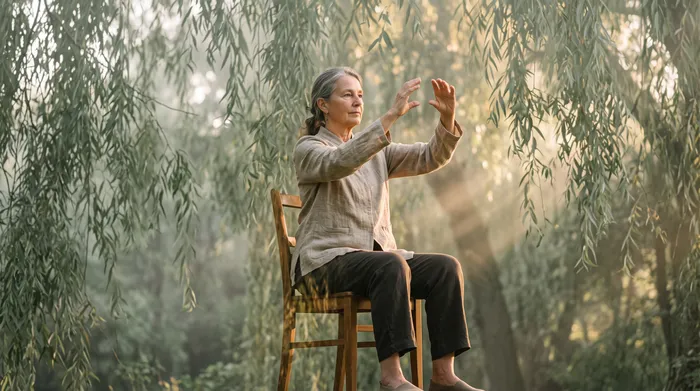
Qigong does not require standing. The practice of coordinating breath, gentle movement, and mental attention can be performed entirely from a chair — and for many people, the seated version is not a compromise but a genuinely appropriate approach.
Seated qigong is well-suited to people recovering from illness or surgery, older adults with balance concerns, wheelchair users, people with chronic pain affecting the lower body, and anyone who finds standing practice uncomfortable for extended periods. The movements described in this guide work with what the body can do rather than around what it cannot.
Video guidance makes a significant difference when learning seated qigong — seeing the timing and quality of movement is much easier than reading about it. TaiChiApp.com includes seated practice sessions designed specifically for this purpose. Including a here for a guided seated qigong session.
How to Set Up for Seated Practice
The chair matters. Use a firm, upright chair rather than a soft sofa or recliner — the practice requires the spine to be actively upright rather than passively supported. The seat height should allow the feet to rest flat on the floor with the knees at approximately 90 degrees. If the chair is too high, place a folded blanket under the feet.
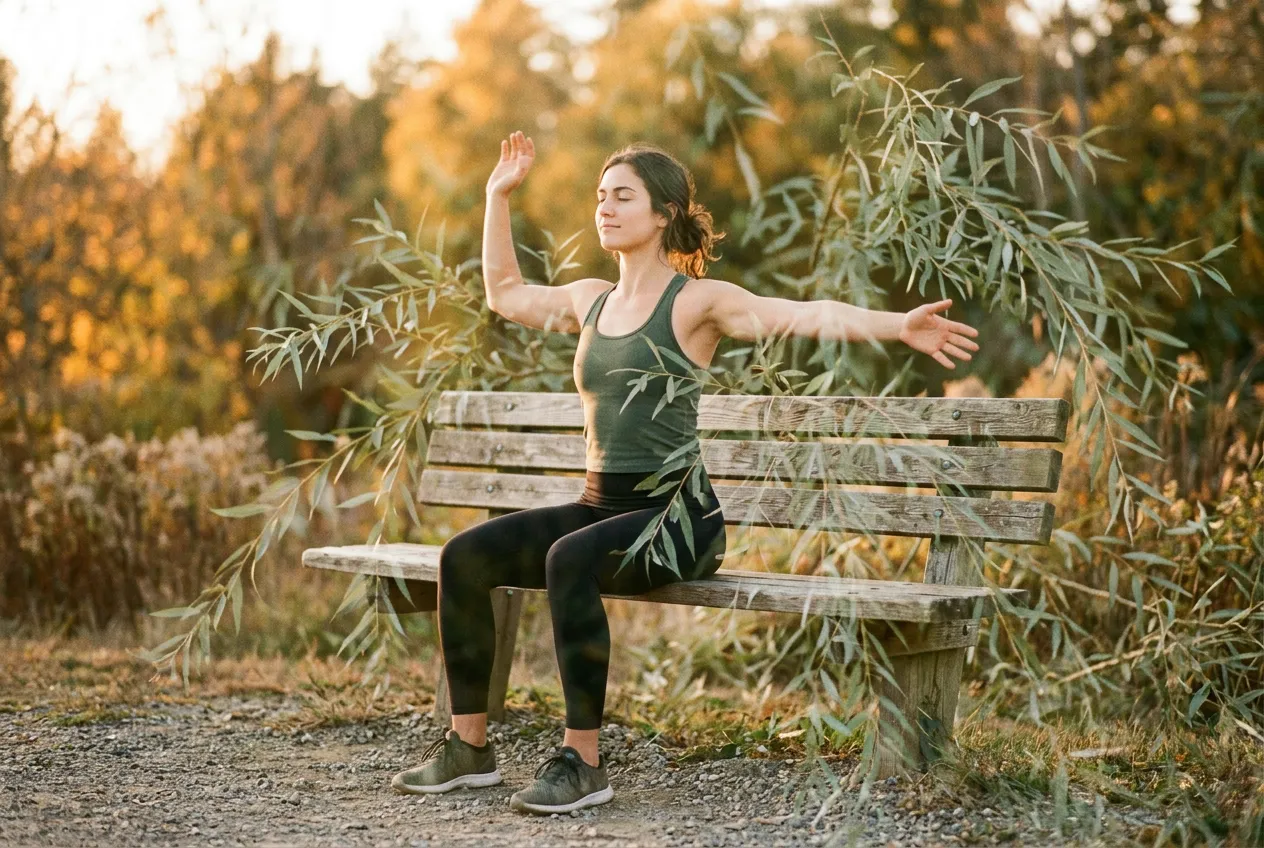
Sit toward the front third of the seat rather than leaning back against the backrest. This allows the spine to find its natural upright position and the hips to rotate freely. Think of the sitting posture as the seated equivalent of the standing qigong stance: grounded, upright, relaxed but not collapsed.
For wheelchair users, the same principles apply. Position the hands comfortably on the armrests or lap between movements, and adapt any movement that is limited by the wheelchair’s structure.
Breath as the Foundation
Before beginning any movement, establish the breath. Seated qigong is largely breath-led — the movements follow the breath rather than the breath following the movements.
Begin with three to five slow abdominal breaths:
- On the inhalation, allow the abdomen to expand outward (not just the chest)
- On the exhalation, let the abdomen gently draw back toward the spine
- Keep the breath nasal, quiet, and unhurried
This abdominal breathing pattern, called dantian breathing in traditional qigong, activates the lower abdominal region and draws the attention inward. Even five minutes of quiet abdominal breathing in a comfortable chair has measurable calming effects — it is a practice in itself, not just preparation.
In my experience, newcomers to qigong often find the breath coordination the most challenging part initially — not because it is difficult, but because it requires a quality of attention that most people rarely give to breathing. Give yourself permission to spend entire sessions simply breathing before adding any movement.
Upper Body Movements
Shoulder Rolls and Neck Circles
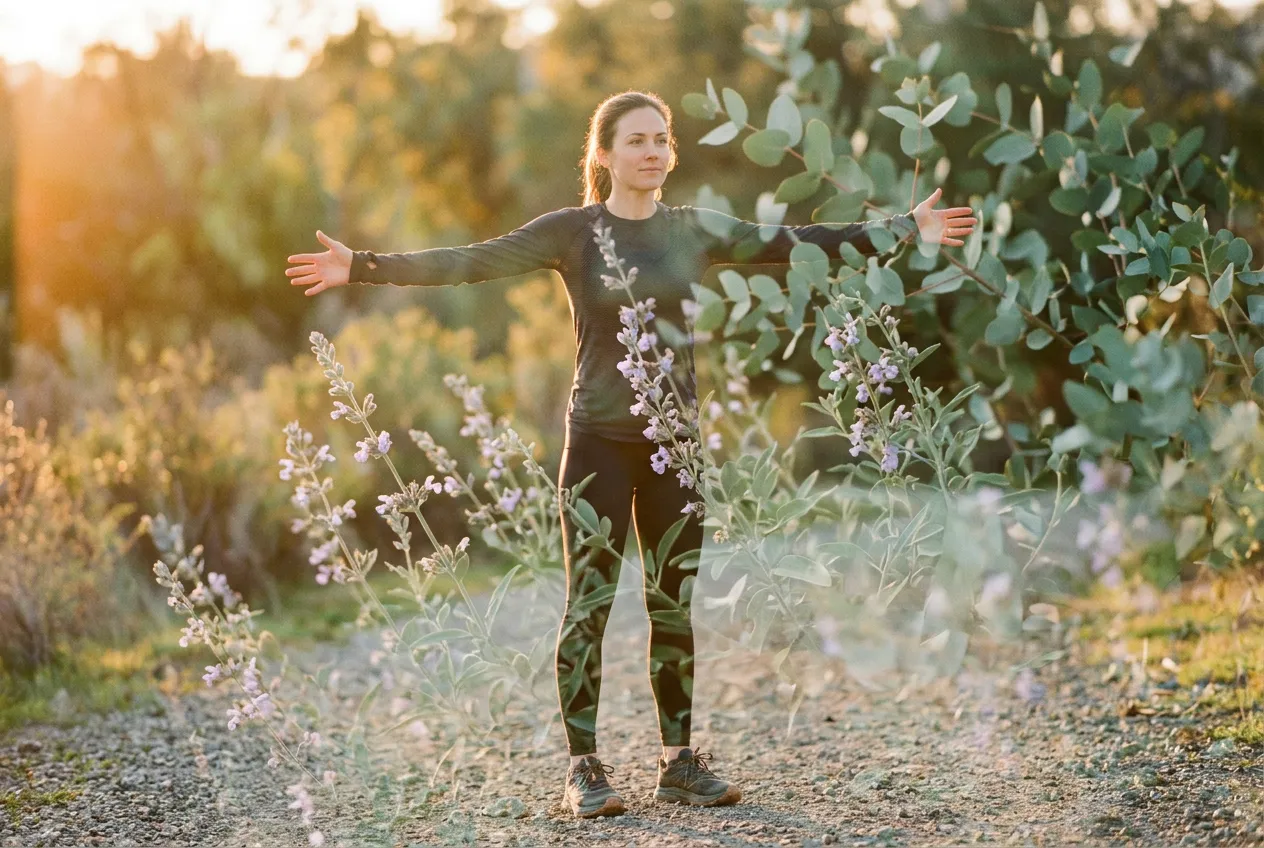
Begin with the neck. Slowly drop the right ear toward the right shoulder, hold for two breaths, then return to centre and repeat on the left. Move to gentle neck rotations — turning the head slowly to the right, pausing, returning through centre, and continuing to the left. Keep the chin level; do not let the head tilt forward as it turns.
Follow with shoulder rolls: raise both shoulders toward the ears on an inhalation, then roll them back and down on the exhalation. Feel the shoulder blades gliding down the back. Repeat five to eight times. Then reverse direction.
These opening movements address the most common areas of held tension for seated people — the neck and upper trapezius. They are a useful beginning regardless of what follows.
Opening and Closing the Chest
Raise both arms to chest height with the elbows soft and the palms facing each other, as if holding a ball. On an inhalation, slowly open the arms outward to the sides, drawing the shoulder blades together and expanding the chest. On the exhalation, bring the arms back to the ball-holding position, rounding the upper back slightly.
This seated adaptation of one of the core qigong chest openers works the same muscles and creates the same sense of expansion as the standing version. The breath coordination is identical. The only difference is that the postural stability comes from the sitting position rather than a rooted standing stance.
Perform 6–8 cycles, keeping each movement slow and continuous.
The Rising Sun
From a relaxed position with hands resting on the thighs, slowly float both arms upward in front of you — the palms face upward as if carrying the rising sun — until the arms reach head height. Pause for a breath, then slowly lower the arms back to the thighs on the exhalation.
This movement creates length through the upper spine and activates the shoulder girdle in a gentle, functional way. For people who spend significant time with their arms in a restricted position (wheelchair users, for example), the freedom of upward arm movement provides both physical and psychological relief.
If raising both arms simultaneously is difficult, alternate arms — raise the right while the left rests, then switch.
Wave Hands (Modified Cloud Hands)
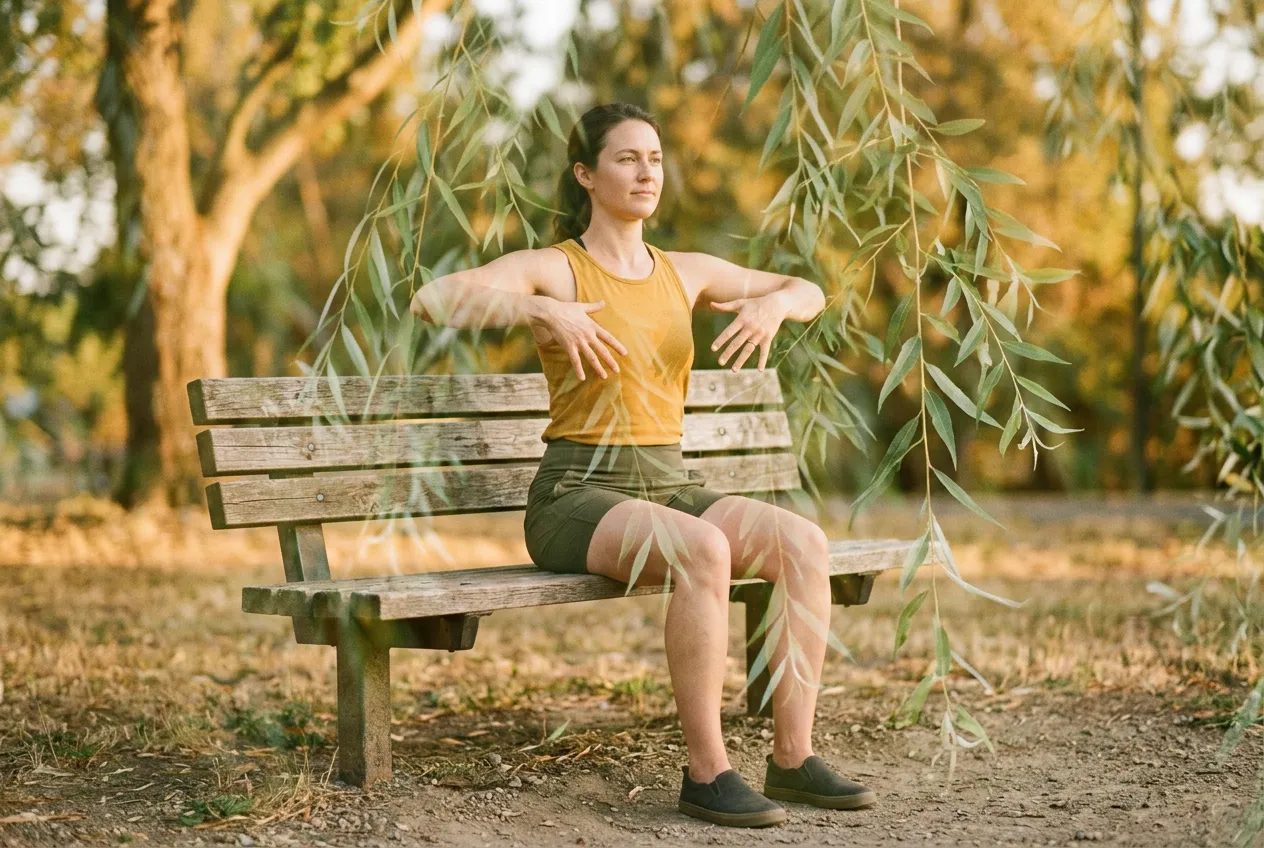
This is a seated adaptation of the tai chi Cloud Hands movement. Rest both hands at waist height, palms facing downward. Slowly wave the right hand outward to the right in a gentle arc while the left hand draws inward — then reverse, the left hand waving outward while the right draws in. The torso turns slightly with each wave, following the leading hand.
The movement is unhurried and continuous, like seaweed moving in gentle current. Coordinate so that the inhalation accompanies one direction and the exhalation accompanies the return.
For context on how this movement works in full standing form, see the Eight Brocades qigong guide for related upper body movement principles.
Wrist and Hand Work
The hands and wrists hold a surprising amount of tension, and qigong tradition places significant importance on keeping them free and alive. Spend two to three minutes on hand work:
- Rotate the wrists slowly in both directions
- Gently shake the hands from the wrist joint, as if flicking water from the fingertips
- Open and close the hands slowly, feeling each finger extend and curl
- Press the palms together and push one hand against the other, then release
These movements improve circulation to the extremities and develop the sensitivity in the hands that tai chi and qigong practitioners cultivate over years.
Breathing Exercises
Abdominal Breathing Continuation
Return to the abdominal breathing established at the start. Spend three to five minutes with eyes closed or softly focused on the floor, simply attending to the breath. As thoughts arise, let them pass without engaging, and return attention to the physical sensation of breathing.
This is the contemplative core of seated qigong. It is not merely preparation or cool-down — it is the practice. The physical movements prepare the body to be still; the breathing practice is where the deeper benefits of qigong are cultivated.
Counting Breaths
For practitioners who find the mind wandering during breathing practice, counting breaths is a simple anchor. Count each exhalation from one to ten, then start again. If you lose count, simply return to one. The goal is not to reach ten — the goal is the process of returning attention when it wanders.
This practice has direct parallels to mindfulness meditation techniques and produces similar benefits: reduced mental agitation, improved focus, and a deepening sense of calm.
A Complete Seated Session
A 20-minute seated session might look like this:
- Abdominal breathing — 3 minutes
- Shoulder rolls and neck work — 3 minutes
- Chest openers — 3 minutes
- Rising sun — 2 minutes
- Wave hands — 3 minutes
- Wrist and hand work — 2 minutes
- Closing breathing meditation — 4 minutes
This sequence is a guideline, not a rigid prescription. Spend more time on what benefits you most, and less time on what feels less relevant. The principle is continuous, breath-led movement followed by quiet attention.
For those interested in related standing qigong practices as a complement or future progression, the tai chi health benefits overview and the tai chi for seniors guide provide relevant context on both the physical benefits and safe approaches for older adults.
Regular Practice Makes the Difference
The benefits of seated qigong are cumulative. A single session produces relaxation and improved circulation. Consistent practice over weeks and months produces changes in posture, breath quality, mental calm, and physical comfort that a single session cannot.
For people who are largely sedentary due to mobility limitations, even a 15-minute seated qigong session three to four times a week represents a meaningful improvement in physical activity that has real health implications. This is not a minor claim — for wheelchair users or those recovering from significant health events, consistent gentle movement and breath practice matters.
Browse all resources in the tai chi practice section for related guides on qigong, form practice, and building a sustainable practice at any level.