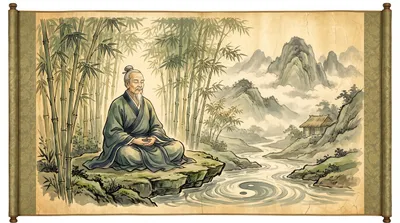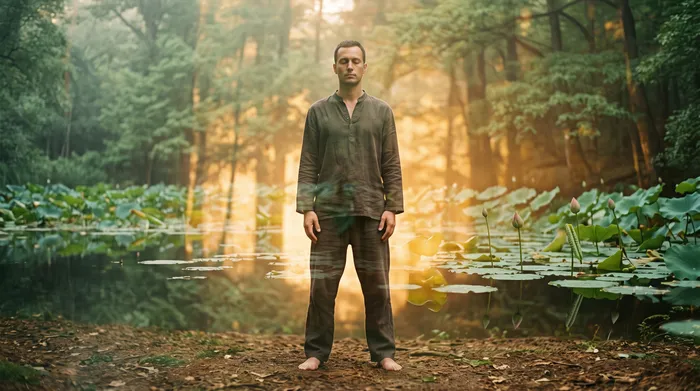
Tai chi is regularly described as “moving meditation,” but that phrase often slides past without sticking. What does it actually mean to meditate while moving? And how is it different from sitting quietly on a cushion with your eyes closed?
The short answer: seated meditation trains the mind to settle in stillness. Tai chi trains the mind to settle in motion. Both develop the same quality of attention — present, non-grasping, aware — but the moving form provides something seated practice cannot: it trains that quality under the conditions you actually inhabit most of your day.
What Makes Tai Chi Meditative
The meditative quality of tai chi does not come from moving slowly, though slowness helps. It comes from something more specific: the sustained application of yi — intention — to every movement.
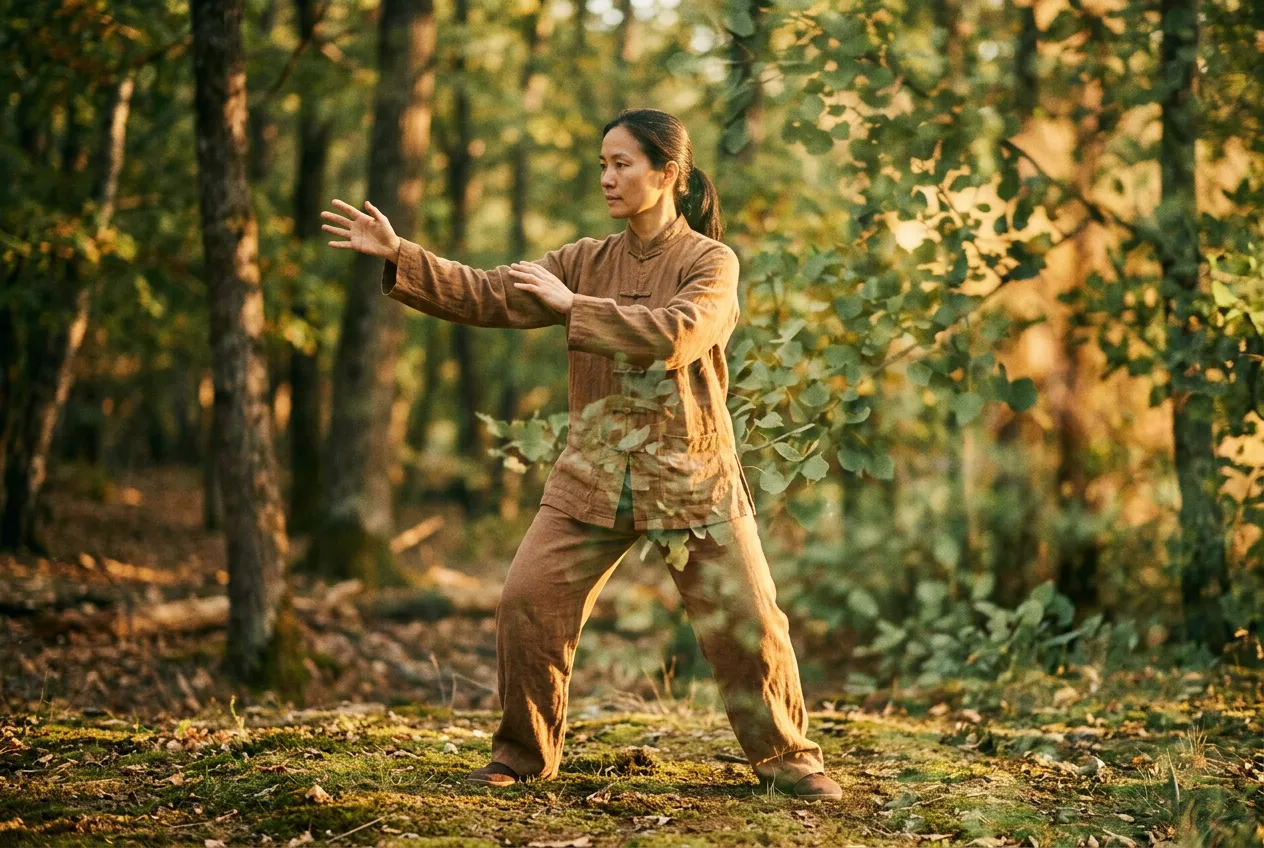
Yi (意) is the Chinese term for directed mental attention or intention. In tai chi practice, the idea is that where the mind directs attention, the qi (vital energy) follows, and movement follows qi. Whatever your view on the metaphysics, the practical consequence is precise: every part of every movement has an intended quality, direction, and result. The practitioner is not just doing movements. They are meaning every movement.
This requirement to mean what you do changes the cognitive character of practice completely. Unlike exercise where the mind can wander to the weekend or tomorrow’s emails while the body mechanically performs, tai chi with yi demands continuous mental presence. The moment attention drifts, the quality of movement changes — you can feel it. That immediate feedback loop between attention and movement is what creates the meditative absorption.
In my own practice, the clearest sign that I’ve entered a genuinely meditative state is when I stop thinking in words. The internal commentary — “okay now the left arm comes up, watch the knee angle” — drops away, and there’s just the movement and the awareness of it. It doesn’t happen in every session, and it doesn’t happen from the first movement. But when it does, the practice feels qualitatively different.
How Tai Chi Differs from Seated Meditation
Seated meditation practices — whether Buddhist mindfulness, Vipassana, Zen zazen, or Transcendental Meditation — train attention against a stable background. The body is still. The breath becomes the primary object of attention. The instructions are essentially: keep returning your attention here, whenever it wanders.
Tai chi shares the core instruction (keep returning attention here) but changes the “here” to something that is itself constantly changing. The weight is always shifting. The arms are always moving. The whole body is in continuous, patterned flux. You are not just watching your breath — you are guiding your entire physical structure through a sequence that requires both mechanical correctness and intentional quality.
This creates a different cognitive challenge. Seated meditation is hard because stillness exposes how restless the mind is. Tai chi is hard because movement requires enough attention to shape the form while simultaneously maintaining a quality of broad, non-grasping awareness. Too much analytical focus (“is my knee over my toe?”) collapses the meditative quality into problem-solving. Too little loses the form entirely.
Getting that balance right — engaged enough to be present, relaxed enough not to grip — is a skill that develops slowly. Most practitioners find it takes a few years before the form is sufficiently embodied that the meditative absorption becomes accessible during the form rather than only in glimpses.
That said, even beginning practitioners report mental benefits from tai chi that have a meditative flavour: reduced rumination after practice, a sense of calm that outlasts the session, better sleep. The research on tai chi and mental health backs this up. These effects don’t require access to deep meditative states — they emerge from the qualities of slow rhythmic movement, focused attention, and regulated breathing that are present even in early practice.
The Role of Intention (Yi) in Practice
Yi is not the same as concentration. Concentration narrows attention like a spotlight — it excludes everything peripheral to the focal point. Yi, in the tai chi sense, is more like a whole-body attunement: you are directing the quality of your movement by holding an intention, but the intention doesn’t block out awareness of everything else.
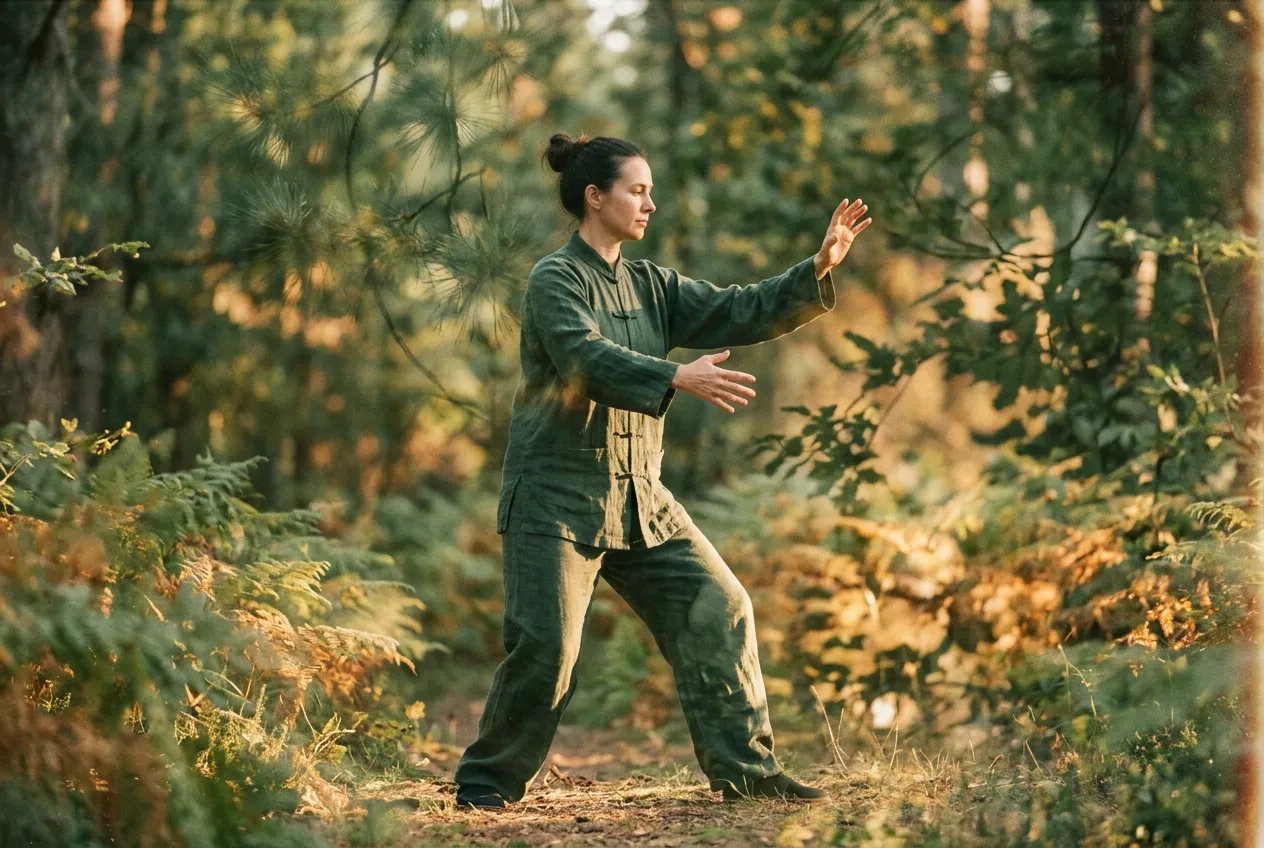
The classic teaching is: “The mind is the commander, the body is the soldier.” But a better metaphor might be a conductor. The conductor doesn’t play every instrument — they create conditions that allow the whole ensemble to play well together. Yi in tai chi creates conditions in which the body moves with coherence, alignment, and ease.
In practical terms, developing yi in practice means learning to hold an internal image or felt sense of a movement before and during performing it. Before a weight shift, you feel where the weight is going. Before an arm sweeps, there is a quality of intention that the arm is following. This is not intellectually constructed in real time — that would be too slow. It develops through repeated practice until the intention and the movement become simultaneous.
When I first started practising the Yang-style 24 form, all my attention was occupied by remembering the sequence. There was no room for anything else. Yi was entirely absent — I was executing a checklist, not practising. This is normal and expected. The sequence becomes a vehicle for yi only once the sequence itself becomes automatic. That is one reason experienced teachers often say the real practice begins once you know the form — the years of learning the sequence are essentially the price of admission.
Mindfulness During Movement
Modern mindfulness practice often separates mindfulness from movement — you sit, you breathe, you observe. But mindfulness as a quality of attention is not restricted to formal seated practice. It can be cultivated in any activity that receives it.
Tai chi creates unusually favourable conditions for movement-based mindfulness. The pace is slow enough to actually feel what is happening — weight distribution, muscular engagement, joint alignment. The form is complex enough to require genuine attention, unlike walking, which most people do on near-autopilot. The movements are continuous and patterned, creating a rhythmic anchor similar to the role of the breath in seated practice.
Mindfulness in tai chi also has a distinct flavour compared to the pure observation of seated practice. There is an active, guiding quality to the attention — you are not just watching what the body does, you are participating in shaping it. This active-receptive balance is described in classical tai chi texts as the relationship between song (loosening, releasing) and yi — you release unnecessary tension while directing the movement’s quality.
For practitioners who find seated meditation difficult — particularly those with busy minds who find stillness frustrating — tai chi often provides an accessible entry point to meditative experience. The movement gives the restless mind something to do while simultaneously training the very attentional capacities that make meditation effective.
Connecting Tai Chi Practice to Mental Health Benefits
The mental health research on tai chi is consistent and well-documented. Multiple systematic reviews have found significant reductions in anxiety and depression scores among regular tai chi practitioners. The full evidence review at the tai chi mental health article covers the research in detail.
The mechanisms are probably multiple. The rhythmic physical movement activates the parasympathetic nervous system, reducing cortisol and activating the body’s rest-digest response. The attentional demands of practice interrupt rumination — the repetitive negative thought loops associated with anxiety and depression. The breath regulation involved in tai chi practice has direct effects on autonomic nervous system tone.
But beyond the neurophysiology, there is something less easily quantified: practice creates a protected period in which the self-evaluative mental noise quietens. Whether you call it meditation or flow or simply absorption, the quality is recognisable. An hour of genuine tai chi practice often feels, at the end, as though a weight has been set down.
One thing I’ve noticed over years of practice is that the benefit accumulates differently than I expected. It’s not that each session is transcendent. Many sessions are effortful and unremarkable. The cumulative effect is more like building a skill in returning — each time attention wanders, you return it to the movement. Thousands of those small returns seem to create a genuine change in the default state of the mind, outside of practice as well as within it.
Building a Meditative Tai Chi Practice
The meditative quality of tai chi is not automatic — it requires deliberate cultivation. Some practical suggestions for developing it:
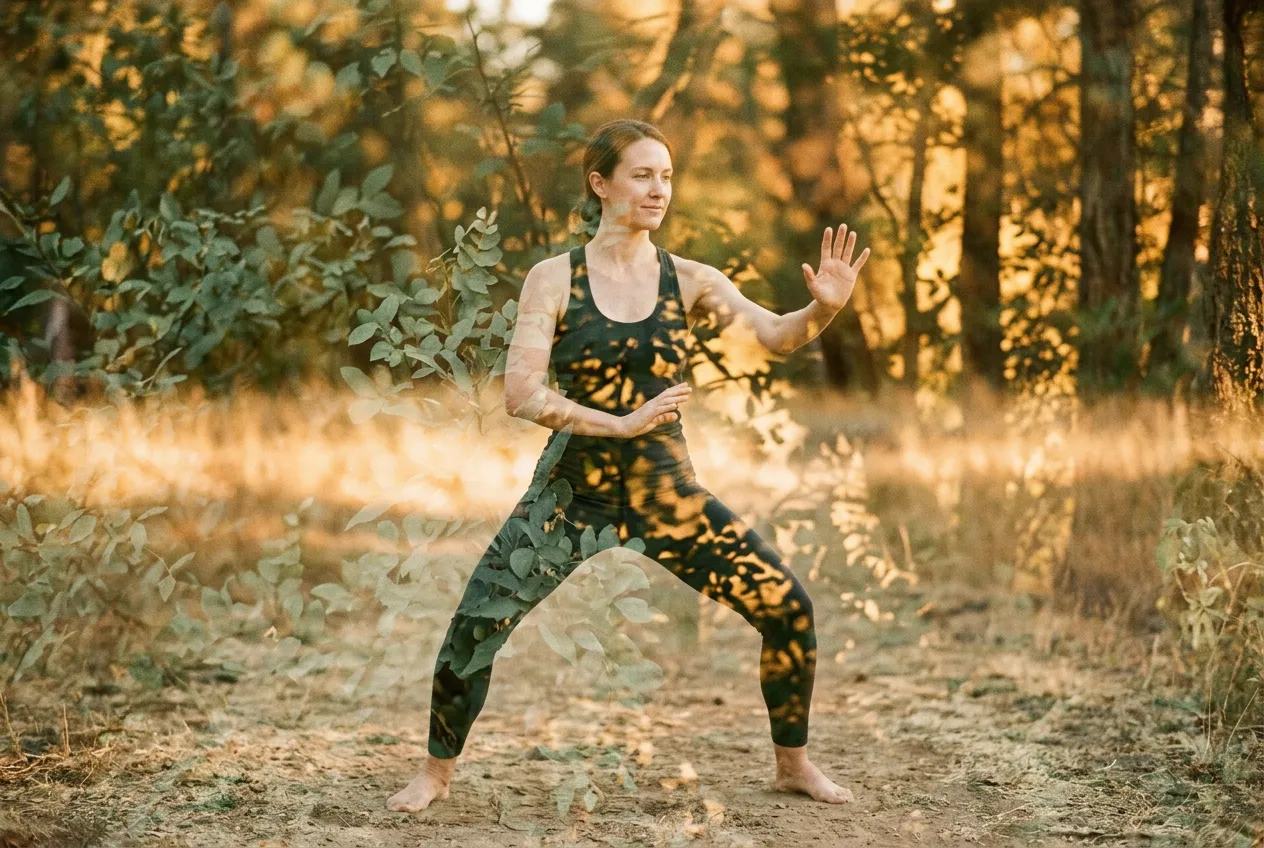
Slow down further than you think necessary. The single most common obstacle to meditative absorption in tai chi is practicing too fast. When the pace increases, the mind shifts to execution mode. True meditative practice requires a pace where you can feel each transition.
Work with the breath. Coordinating movement with breath is one of the most direct routes to meditative absorption. The tai chi breathing techniques guide covers breath-movement coordination in detail. Even a rough coordination — exhale on receiving, inhale on issuing — provides a rhythmic anchor for attention.
Practice consistently, not occasionally. Meditative depth in tai chi requires the form to be sufficiently embodied that it doesn’t demand conscious construction. This requires repetition across weeks and months.
Let performance goals go. A practice session focused on “doing the form correctly” is in problem-solving mode, not meditative mode. Both modes are valuable at different stages, but meditative practice requires releasing the performance agenda.
Connect to the philosophical context. Understanding the Taoist roots of tai chi practice — the ideas of wu wei (non-forcing), song (releasing), and the dynamic balance of opposites — enriches the practice. The tai chi philosophy and Taoism article covers this ground if you want to go deeper.
The meditative dimension of tai chi is what separates it from functional exercise. The physical benefits — balance, strength, flexibility — are real and significant. But they are, in some ways, byproducts of the deeper practice of training attention through movement. Browse the full range of guides in the tai chi practice section for related approaches to deepening your practice.
Frequently Asked Questions
Is tai chi a form of meditation? Yes, in the broad sense — tai chi cultivates the same attentional qualities as seated meditation (present-moment awareness, non-grasping attention, return from distraction) through the medium of movement rather than stillness. Whether it is “as good as” seated meditation depends on what you are training for. As a practice of mindfulness in motion, it is arguably superior; as a practice of stillness and non-movement, seated meditation has no substitute.
Do I need to meditate separately if I practise tai chi? Not necessarily. Many practitioners find tai chi practice sufficient as their primary contemplative practice. Others combine tai chi with seated meditation and find the two practices reinforce each other. There is no requirement to do both, but there is no conflict either.
How long does it take to experience tai chi as meditative? Most practitioners report some meditative quality — reduced mental noise, increased calm — from early in their practice. The deeper meditative absorption, where the form becomes a genuine vehicle for sustained non-conceptual attention, typically develops after the form is well-embodied — which takes at least a year of regular practice for most people.
Does the style of tai chi matter for meditative practice? All styles of tai chi can be practised meditatively. Yang-style, being slow and expansive, is the most commonly taught and perhaps the most immediately accessible for meditative practice. Chen-style includes explosive movements (fajin) that require a different quality of attention. The meditative capacity is in the practitioner, not the style.
Can I practise tai chi meditation even as a beginner? Yes — beginners can bring attentional quality to whatever portion of the form they know. Even practising a single movement slowly and with full attention has meditative value. The limitation is that the mind must simultaneously manage learning (remembering what comes next) and presence. This balance shifts over time as the form becomes more automatic.