Tai Chi Health Benefits

Tai Chi for Anxiety and Mental Health: What Research Shows

12 min read
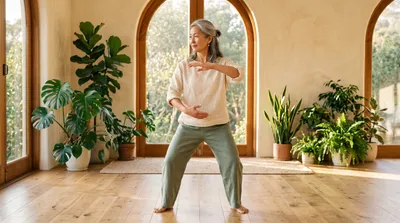
Person practicing tai chi with eyes closed in a peaceful sunlit studio with green plants

The question “can tai chi help with anxiety?” gets searched a thousand times a month, and the people searching it are usually not academic researchers — they’re people who are stressed, anxious, or struggling with depression, and they’re looking for something that might actually help without another prescription or another waiting list.

The honest answer: tai chi won’t replace professional mental health care, and no responsible article should suggest otherwise. But the evidence that tai chi has real, measurable effects on stress hormones, anxiety symptoms, and mood is more solid than most people realise. This article covers that evidence clearly, explains why the mechanism makes sense, and offers practical starting points for anyone interested in incorporating tai chi into a mental health support strategy.

The Stress Response and Why Movement Matters

Before looking at tai chi specifically, it helps to understand why movement-based practices can influence mental health at all.

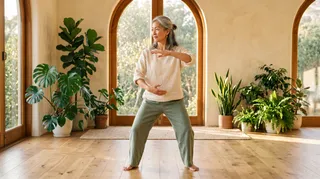
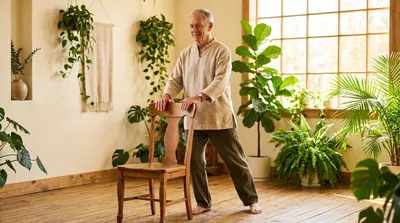
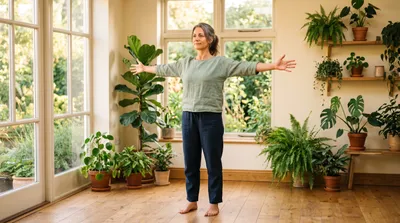
The Stress Response and Why Movement Matters — tai chi health illustration

Chronic stress triggers sustained activation of the sympathetic nervous system — the “fight or flight” response. Cortisol and adrenaline stay elevated, sleep suffers, attention fragments, and anxiety becomes the baseline rather than the exception. The physiological burden of sustained stress is well-established. What is also increasingly well-established is that certain movement practices can help restore balance to that system.

Mindful, rhythmic movement appears to activate the parasympathetic nervous system — the counterbalancing “rest and digest” system — more effectively than either exercise alone or relaxation alone. Tai chi sits precisely at the intersection of movement and mindfulness. It requires focused attention, controlled breathing, and deliberate physical action simultaneously. That combination seems to be important.

When I first started practising tai chi seriously, I noticed fairly quickly that my mental state during practice was qualitatively different from either going for a run or sitting still trying to meditate. The movement kept the mind engaged enough to stop it from spiralling; the slowness and breathwork kept the body from going into full exertion mode. Something in between was happening. The research suggests that something is neurologically meaningful.

What the Research Shows for Anxiety

Several meta-analyses and systematic reviews now cover tai chi’s effects on anxiety. The picture that emerges is consistent, if not dramatic in effect size.

A meta-analysis published in JAMA Internal Medicine examined the evidence for tai chi across multiple health outcomes and found evidence supporting anxiety reduction as one of the more consistent benefits. The review noted that tai chi produced statistically significant anxiety reductions compared to inactive controls, though effect sizes were generally moderate.

A systematic review in the British Journal of Sports Medicine examining mindfulness-based exercise interventions — a category that includes tai chi and qigong — found these practices were associated with significant reductions in anxiety and depression symptoms, with the mindfulness component being a key mediating factor.

What this means practically: tai chi is not a treatment for clinical anxiety disorders. It is a complementary practice that may meaningfully reduce anxiety symptom burden when used alongside other support strategies. People with diagnosable anxiety disorders should continue working with healthcare providers. Tai chi can be one part of a broader support approach.

The Role of Cortisol

Research published in the Journal of Alternative and Complementary Medicine found that tai chi practice was associated with reduced salivary cortisol levels — a direct marker of stress response activation — in older adults. This is not just a subjective report of feeling calmer. It is a measurable physiological change in a stress hormone. The mechanism appears to involve the combination of rhythmic movement, controlled breathing, and focused attention.

That said, a single study on cortisol in older adults should not be over-extrapolated. The research on cortisol is more limited than research on self-reported anxiety outcomes, and the evidence for cortisol specifically is preliminary rather than established.

Tai Chi and Depression

The evidence for depression is somewhat more mixed than for anxiety, but it still points in a consistent direction.

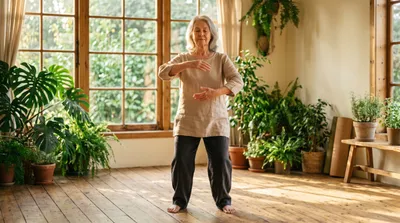
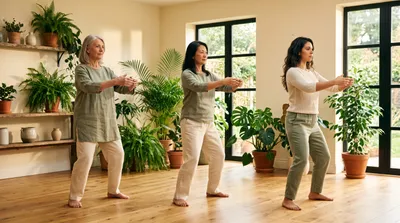
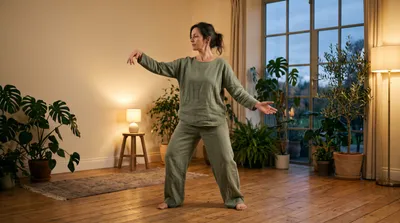
Tai Chi and Depression — tai chi health illustration

A systematic review published in BMC Complementary and Alternative Medicine reviewed 11 randomised controlled trials examining tai chi for depression and found that tai chi was associated with reduced depressive symptoms compared to control conditions, with several high-quality studies showing statistically significant effects.

Depression and anxiety often co-occur, and the mechanisms by which tai chi may help are probably overlapping: reduced physiological stress response, improved sleep quality, increased physical activity, social engagement through group classes, and the mindful attention that interrupts rumination.

The social element deserves mention. Depression frequently involves withdrawal from social engagement. A tai chi class — which requires showing up, moving in proximity to others, following a shared routine — provides structured social contact without the pressure of conversation-heavy social situations. For some people with depression, this balance of connection without demand is easier to maintain than more conventional social activities.

As someone who has spent years in group practice settings, I can say the shared, non-verbal quality of practising a form together has a distinct quality to it. You are doing something alongside people without needing to perform or explain yourself. It is quieter than most social settings, and that quietness can be a relief.

Breathing, Attention, and the Relaxation Response

One mechanism worth examining in detail is tai chi’s breathing component and how it interacts with the relaxation response.

Tai chi practice coordinates movement with diaphragmatic breathing — deep, slow breaths that engage the diaphragm rather than the chest. Slow, deliberate diaphragmatic breathing is one of the most studied and well-supported interventions for activating the parasympathetic nervous system. This is the basis for all breath-based anxiety management techniques. Tai chi integrates this not as a separate exercise but as the foundation of the practice itself.

The attention required by tai chi — following the sequence, maintaining proper posture, coordinating limbs with breath — also functions as a form of mindfulness meditation. It is not passive mindfulness (watching thoughts arise and pass). It is active, directed attention. For people who find seated meditation difficult or frustrating, tai chi can offer a more accessible entry point to the mental benefits of mindful attention. Our article on tai chi breathing techniques covers the specifics of breathing mechanics if you want to go deeper on this.

Stress Reduction: The Evidence and the Caveats

“Tai chi reduces stress” is a statement you’ll see everywhere. The evidence supports it — but the statement deserves more precision.

Most research measures stress through self-reported scales (such as the Perceived Stress Scale) and sometimes through physiological markers like cortisol or heart rate variability. Results are generally positive but vary by population and intervention design. The effect is not massive in most studies. It is more accurate to say that regular tai chi practice is associated with modest but meaningful reductions in perceived stress and stress-related physiological markers.

This is actually what you’d expect from a practice that takes time to learn and that produces effects through regular engagement rather than acute intervention. Tai chi is not a stress management emergency tool — it is a chronic stress management practice. The benefit accrues over weeks and months of regular practice, not in a single session.

The tai chi health benefits article covers how tai chi’s stress-reduction evidence compares to its other health benefit evidence — see tai chi health benefits for that broader context.

Tai Chi as Complementary to Professional Mental Health Care

This point deserves its own section, because it is both important and sometimes mishandled by wellness content.

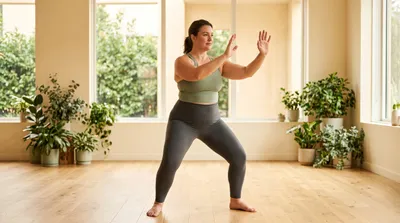
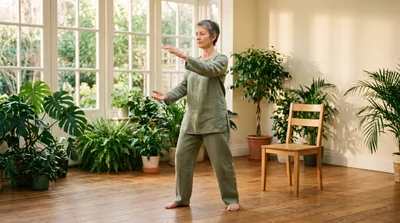
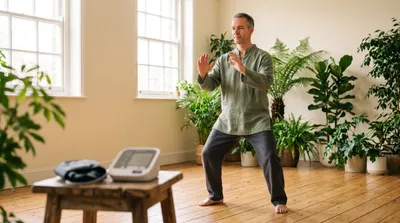
Tai Chi as Complementary to Professional Mental Health Care — tai chi health illustration

Tai chi is a complementary practice. It is not a treatment. People experiencing clinical depression, generalised anxiety disorder, panic disorder, PTSD, or any other diagnosable mental health condition should be working with qualified healthcare providers — therapists, psychiatrists, psychologists, or their GP/PCP. No exercise practice, however well-researched, replaces evidence-based clinical care for these conditions.

What tai chi can do is support that care. Regular practice may reduce symptom burden, improve sleep, provide a consistent structure for the day, and create a sense of physical competence and embodied calm. These things complement therapy and medication; they do not replace them.

If you are in crisis or experiencing suicidal thoughts, please reach out to a mental health professional or crisis line immediately. The National Alliance on Mental Illness (NAMI) provides crisis resources and mental health support information for anyone in the United States.

Getting Started with Tai Chi for Mental Health

If you are interested in exploring tai chi for its mental health effects, here are some practical starting points.

Consistency matters more than duration. Most research showing meaningful mental health benefits involved regular practice of 30-60 minutes, two or more times per week. Shorter daily sessions (15-20 minutes) may be just as beneficial for stress reduction, though this is less well-studied. What matters is showing up regularly.

Group practice may offer additional benefit. Several studies specifically examine group tai chi rather than individual practice, and the social contact element appears to add value for mental health outcomes beyond the physical practice alone. A class provides accountability, structure, and social connection simultaneously.

Beginners often underestimate how much attention tai chi requires. New students sometimes expect tai chi to be relaxing immediately. In practice, the early weeks involve a lot of cognitive effort — learning sequences, coordinating movements, trying to remember what comes next. This is actually beneficial (cognitively engaging practice is stimulating) but it means that the deep, flowing state associated with experienced practice takes time to develop. Give it at least 8-12 weeks before assessing whether it is working for you.

Pair it with what already works. Tai chi is not a replacement for therapy, medication, journaling, good sleep habits, or any other evidence-supported mental health strategy. It is an addition to your toolkit. People who integrate tai chi alongside other practices tend to report greater benefit than those who try to use it as their sole intervention.

The tai chi meditation article explores the mindfulness and moving meditation aspects of tai chi in more depth — particularly relevant for those approaching tai chi specifically for its meditative qualities.

What Distinguishes Tai Chi from Other Exercise for Mental Health

Any exercise has some evidence for mental health benefit. What distinguishes tai chi?

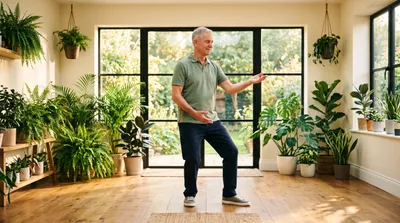
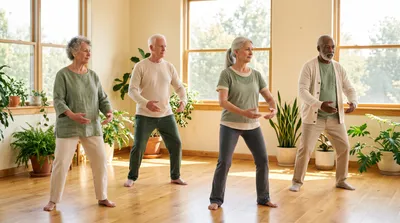
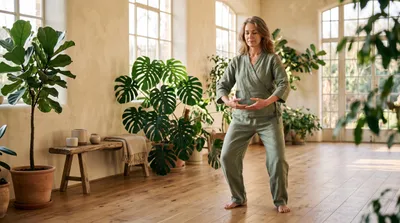
What Distinguishes Tai Chi from Other Exercise for Mental Health — tai chi health illustration

The mindfulness component appears to be key. General aerobic exercise reduces anxiety and improves mood — this is well-established. But the effect sizes are comparable to tai chi despite tai chi being much lower in aerobic intensity. This suggests the mental health benefit of tai chi is not primarily from cardiovascular exertion, but from the meditative attention, breath coordination, and the quality of presence the practice requires.

Yoga shares many of these features and has comparable evidence for anxiety and stress reduction. The key differences are practical: tai chi is generally performed standing and uses flowing movement sequences rather than static poses, making it accessible to people who cannot get down to a floor mat, and it has specific evidence in populations (older adults, fall-risk individuals) where yoga may be less appropriate.

Frequently Asked Questions

Is tai chi better than meditation for anxiety?

They are different practices with overlapping benefits. Seated meditation has robust evidence for anxiety reduction, particularly through mindfulness-based approaches. Tai chi has comparable evidence and may be more accessible for people who find stillness difficult or who prefer movement-based practice. For many people, the ideal is both — tai chi as active mindfulness and brief seated meditation as a separate daily practice. The practices complement each other well.

How quickly can I expect to notice mental health benefits from tai chi?

Most research programmes that showed significant results ran for 10-16 weeks. However, many practitioners report noticing a subjective shift — feeling calmer after sessions, sleeping better, being less reactive to stressors — within the first few weeks. The acute effect of a single session (feeling calmer immediately after) is distinct from the chronic effect that builds over months. Both appear to be real, with the chronic effect being more clinically significant.

Can tai chi help with panic attacks?

Tai chi is not a treatment for panic disorder and should not be positioned as one. However, the diaphragmatic breathing and parasympathetic activation that tai chi trains can be valuable skills for people with panic disorder when used as part of a broader treatment approach. Learning to breathe slowly and deeply from the diaphragm — which tai chi makes automatic through practice — is a skill that can be drawn on during moments of high anxiety. Discuss any use of complementary practices with your mental health provider.

Is there specific research on tai chi for post-traumatic stress?

Research on tai chi specifically for PTSD is limited compared to its evidence base for general anxiety and depression. Some small studies have shown promising results, particularly for veterans, but the evidence is preliminary. If you have a trauma history, please discuss any complementary practices with your healthcare provider — trauma-sensitive guidance matters when introducing body-based practices.

I find it hard to be present in my own body. Can I still practise tai chi?

This is a genuinely important question, and the answer is usually yes — with appropriate support. Difficulty with embodied presence is common in people with trauma, anxiety, and dissociation. The externally directed nature of tai chi (following a form, coordinating with a group) can actually make it more accessible than practices that direct intense internal attention to the body. Moving at your own pace, with the option to stay at the back of a class and follow others, can be a gentler re-entry into physical awareness than more inwardly focused practices. Many practitioners with complex histories find tai chi more accessible than yoga or body-scan meditation, precisely because the attention is partly directed outward.

Related Articles