Yang style tai chi is the most widely practised tai chi system in the world. By some estimates, over 80% of all tai chi practitioners globally practise some version of Yang style. It’s the system most beginners encounter first, the style used in most clinical research on tai chi’s health benefits, and the tradition from which the famous 24-form sequence was derived.
Understanding what Yang style is — where it came from, what makes it distinctive, and how it relates to other tai chi systems — is useful context whether you’re deciding where to start or deepening an existing practice.
Origins: Yang Luchan and the Development of a Style
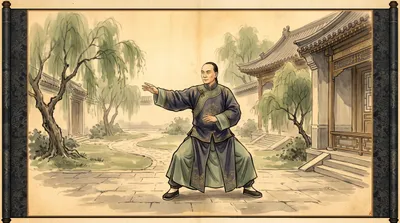
Yang style tai chi was founded by Yang Luchan (1799–1872), who studied Chen-style tai chi at Chenjiagou (Chen Village) in Henan Province for several years before developing his own system. The traditional account holds that Yang Luchan learned from Chen Changxing, one of the great Chen-style masters of the era.
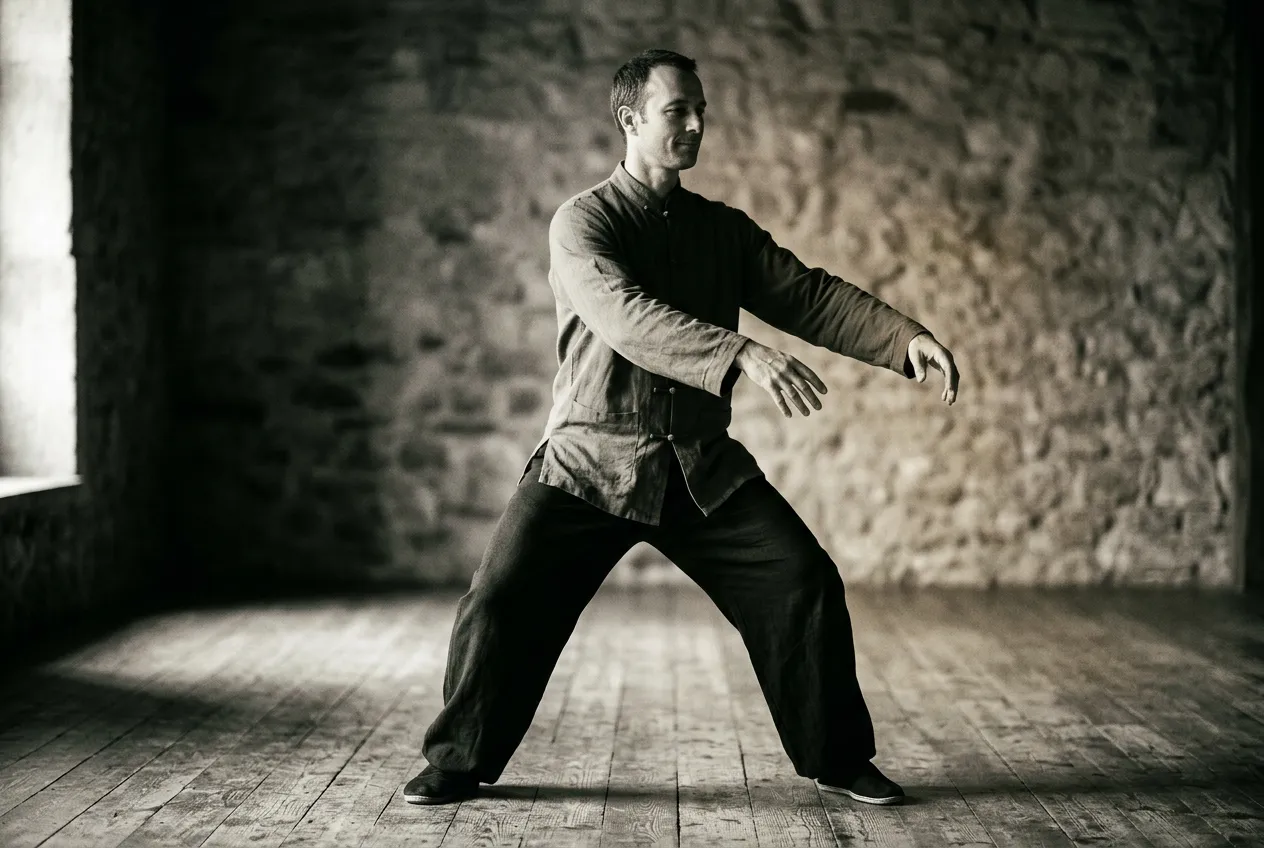
What makes Yang Luchan’s contribution significant is not just that he learned and transmitted Chen-style movements, but that he adapted and evolved the practice into something distinctive. The explosive fa-jin (sudden energy release) movements of Chen style were softened and smoothed. The lower, more physically demanding stances were raised. The resulting system was more accessible — easier to learn for a wider population, including those without the martial arts conditioning that Chen-style demands.
Yang Luchan’s skill became so renowned that he was appointed to teach martial arts to the Imperial Guard in Beijing. This royal patronage was culturally significant: it elevated tai chi from a village martial art to an established practice with institutional prestige.
The style was further developed and refined by Yang Luchan’s son, Yang Banhou (1837–1892), and especially by his grandson, Yang Chengfu (1883–1936), who is often credited with standardising the Yang style into its modern form. Yang Chengfu’s large-frame style — expansive, open, balanced — is what virtually all Yang-style practitioners trace their lineage to today.
Yang Chengfu also trained the teachers who spread Yang style throughout China and internationally: Fu Zhongwen, Dong Yingjie, Cheng Man-ching, and others who would establish Yang style as the dominant tai chi tradition worldwide.
Characteristics: What Makes Yang Style Distinctive
Having practised Yang style for over a decade, the qualities that most define it become very clear through sustained practice — some of them aren’t obvious from watching from the outside.
Large frame, open movements. Yang style is characterised by expansive, open postures with movements that extend to full arm length. The large frame means the movements are visible and learnable in ways that more compact styles can obscure. This makes it pedagogically excellent — what you’re doing is clear, and corrections are visible to a teacher.
Even, consistent tempo. Yang style moves at a consistent, moderate pace throughout a form. There’s no sudden acceleration or dramatic pause (unlike Chen style, where explosive movements interrupt the slow sections). This evenness allows a meditative quality to develop — the mind can settle into the rhythm.
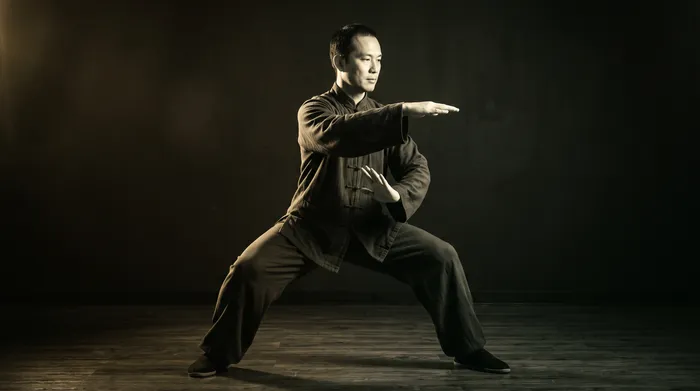
Upright, balanced posture. The spine is upright, the head erect, the knees moderately bent. Yang style doesn’t demand the very low stances of some Chen-style forms. This makes it accessible to older practitioners and people with knee concerns who couldn’t sustain deep horse stances.
Silk reeling expressed through continuous flow. The spiral, silk-reeling energy (chan si jin) that characterises all tai chi is present in Yang style, expressed through the circular, continuous quality of transitions rather than the overt spiralling visible in Chen style.
Softness (rou) as the primary expression. The foundational principle of Yang style is softness overcoming hardness — using minimal force, redirecting rather than resisting. This is philosophically rooted in Taoist principles and practically expressed in every weight shift and arm movement.
Major Yang Style Forms
Yang style has produced several major forms, each with different histories and purposes. Understanding which form is which is useful context for any Yang-style practitioner.
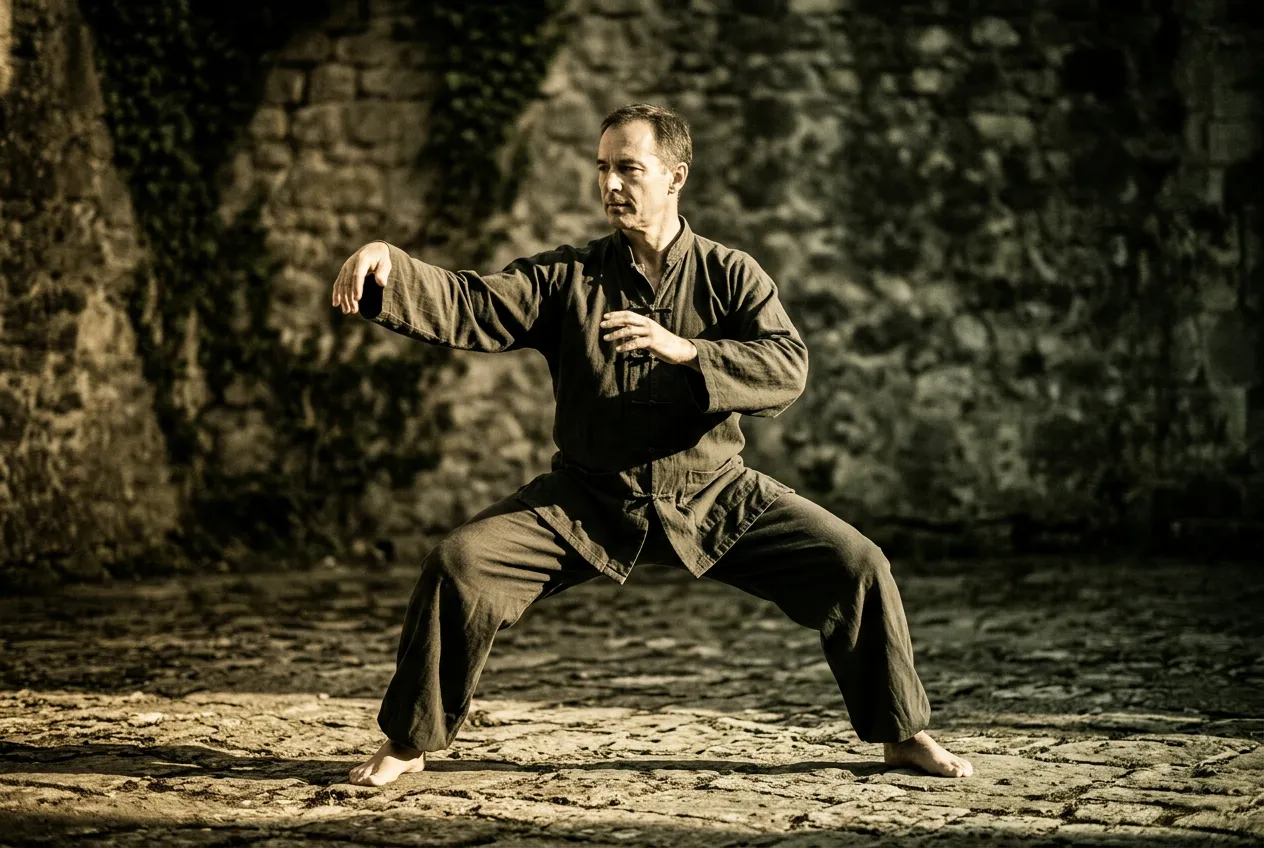
The Yang family long form (traditional): The original Yang-style form as transmitted by Yang Chengfu consists of 108 movements (sometimes counted differently depending on the lineage). This is the form that Yang-style master teachers primarily teach. A complete run-through takes 20–40 minutes depending on tempo. It’s the deepest Yang-style practice but a significant undertaking to learn from scratch.
Yang 24 form (simplified short form): Developed by the Chinese Sports Commission in 1956 as an accessible introduction to tai chi for the general public, the Yang 24 form guide covers this sequence comprehensively. It selects 24 representative movements from the Yang-style long form and arranges them in a well-paced sequence that takes 5–8 minutes to complete. This is the form recommended for beginners and the form used in most clinical research.
Yang 48 form: A middle-ground between the 24 form and the long form, the 48 incorporates movements from multiple styles (not just Yang). Created by the Chinese Sports Commission in 1976, it’s widely practised as an intermediate step.
Cheng Man-ching short form: Master Cheng Man-ching, one of Yang Chengfu’s students, developed a shortened 37-movement form that became widely taught in the West through Cheng’s school in New York. It’s a distinct branch that emphasises even greater softness and minimal movement. Many practitioners in North America and Europe learned tai chi through this lineage.
Competition forms (Taolu): Standardised competition versions of Yang style are used in wushu competitions internationally. These are more performance-oriented than the traditional practice forms.
Yang Style vs Chen Style: The Key Differences
Chen style is the origin of all tai chi styles, including Yang. The relationship is genealogical — Yang Luchan’s foundational training was in Chen style, and the influences are visible to experienced practitioners. But the two systems are now quite distinct.
The most significant difference is in the expression of power. Chen style includes explicit fa-jin — sudden explosive releases of energy within the form. Yang style subdues this quality significantly; the explosive content is more latent than expressed. For beginners, this means Chen style is more physically demanding and often more intimidating. Yang style’s consistent, even quality is easier to approach.
Chen style also uses lower stances and includes more jumping and kicking movements in traditional forms. The physical demands on the knees are substantially greater. This is a practical consideration for older adults or people with joint concerns.
The comparison of Chen and Yang styles goes into more detail on the philosophical and practical differences. If you’re choosing between them as a starting point, Yang style’s accessibility and the breadth of available instruction make it the more practical choice for most people.
Health Research and Yang Style
Yang style dominates the clinical research literature on tai chi’s health benefits. Most of the trials that have generated tai chi’s evidence base used Yang-style forms — predominantly the 24 form, or Sun style (which is derived partly from Yang style).
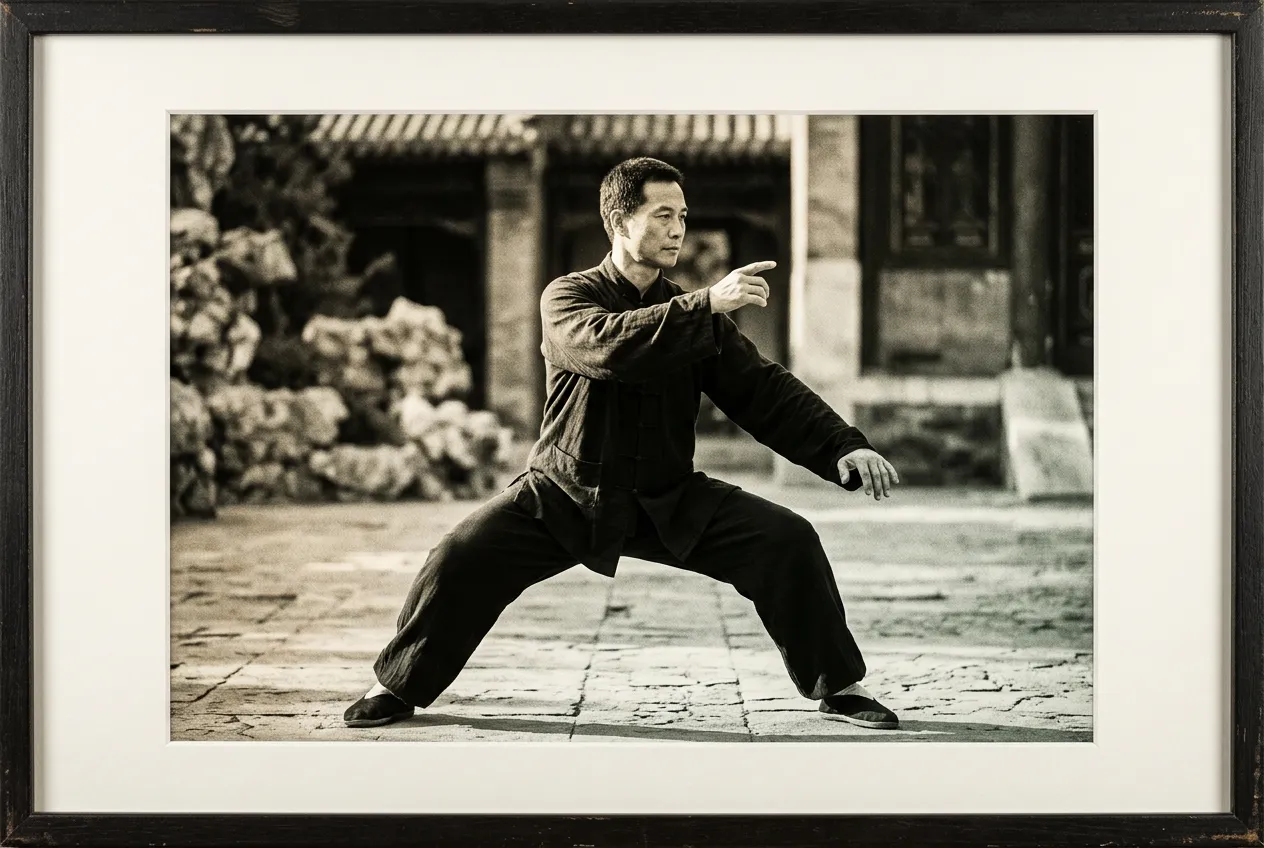
This has a practical implication: when you read research on tai chi improving balance, reducing fall risk, or helping with arthritis, the intervention being studied is almost always Yang style or a Yang-derived form. The evidence supports the practice that beginners are most likely to encounter.
Sun style (created by Sun Lutang) has been prominent in arthritis research specifically, including some of the most widely cited trials. Sun style draws on both Yang and Wu styles in its development.
Finding Yang Style Instruction
Yang style is the most available tai chi style for instruction in most Western countries. Community centres, park and recreation programmes, hospital wellness departments, and martial arts schools that include internal arts are all likely places to find Yang-style instruction.
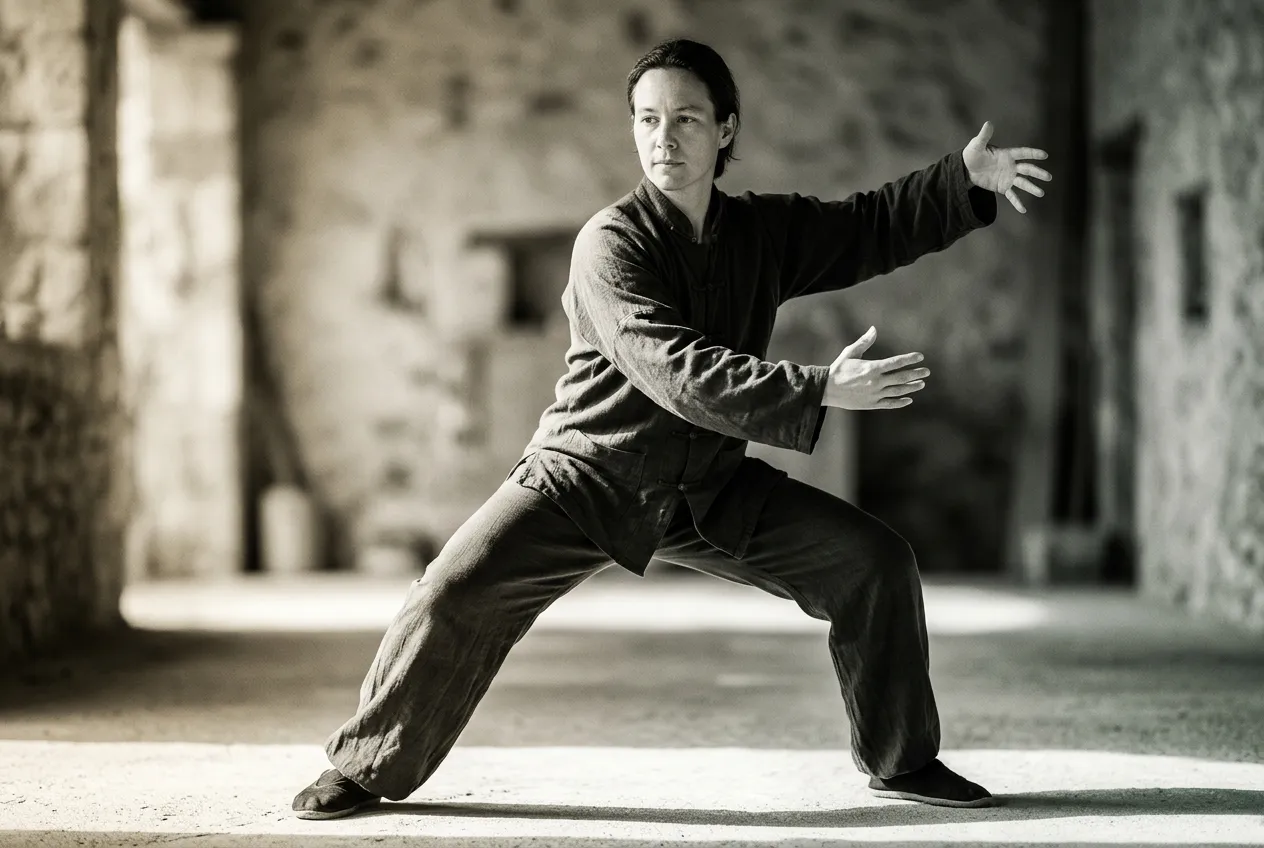
For online instruction, Yang style has the most well-developed resources of any tai chi style — both free (YouTube) and paid. Quality varies significantly. Look for instructors who:
- Trace their lineage clearly to recognised Yang-style teachers
- Demonstrate understanding of the principles, not just the movements
- Teach in a structured, progressive sequence rather than jumping between movements
For an overview of what to look for in any tai chi teacher or class format, the complete beginner’s guide to tai chi has a section on this specifically.
As someone who’s been in the Yang-style tradition throughout my practice, I’ve found the depth of the style consistently rewarding. The apparent simplicity of the movements conceals significant subtlety — after ten years, I’m still finding new details in movements I’ve practised thousands of times. That’s not a complaint; it’s the nature of a genuine practice tradition.
Explore the full range of tai chi forms guides to learn more about the broader landscape of tai chi styles and sequences.
Frequently Asked Questions
Is Yang style tai chi good for beginners?
Yes — Yang style is specifically recommended for beginners. Its consistent tempo, upright postures, and large open movements are easier to see and learn than more compact or explosive styles. The most widely recommended beginner form (the Yang 24) is a Yang-style sequence. Most qualified instructors teaching beginners teach Yang style.
What is the difference between Yang style and other tai chi styles?
Yang style is distinguished by its large, open movements, consistent moderate tempo, and emphasis on softness and even flow. Chen style (the origin of all styles) is more dynamic, with explosive movements and lower stances. Wu style is more compact with a slight forward lean. Sun style is upright with added open-close stepping. Yang style is the most widely practised and the most accessible for beginners.
Who founded Yang style tai chi?
Yang Luchan (1799–1872) founded Yang style after learning Chen-style tai chi at Chen Village. His grandson Yang Chengfu (1883–1936) standardised the large-frame Yang style that most practitioners today inherit. Yang Chengfu’s students — including Fu Zhongwen, Dong Yingjie, and Cheng Man-ching — spread the style widely.
What is the Yang 24 form?
The Yang 24 form (also called the simplified tai chi 24 or Beijing short form) is a 24-movement sequence developed by the Chinese Sports Commission in 1956 to make tai chi accessible to the general public. It takes approximately 5–8 minutes to complete and is the most commonly recommended starting form for beginners worldwide. It’s derived from Yang Chengfu’s large-frame form.
How long does it take to learn Yang style tai chi?
Learning the Yang 24 form to an independent practice level typically takes 3–6 months of regular practice. The complete Yang long form (108 movements) takes considerably longer — typically 1–2 years to learn, and many more years to refine. Yang style rewards long-term practice; practitioners commonly note new insights in forms they’ve practised for decades.