The Yang family’s contribution to tai chi cannot be overstated. They did not invent the art — that distinction goes to the Chen family of Henan Province. But the Yang family transformed a closely held martial art into the most widely practised form of tai chi in the world.
Understanding the Yang lineage is not just a history exercise. If you practise Yang-style tai chi — or the simplified Yang-24 form — you are practising what three generations of the Yang family refined over roughly 100 years of teaching. Knowing who they were and what they contributed gives the practice a depth it otherwise lacks.
In my decade-plus of practice, learning that the slow, flowing form I practise has a precise documented lineage — real people, real dates, verifiable history — was one of the things that transformed tai chi from “an interesting movement practice” to something I felt genuinely connected to.
Yang Luchan: The Outsider Who Changed Everything
Yang Luchan (楊露禪, 1799–1872) was born in Yongnian County, Hebei Province, and is the foundational figure of the Yang lineage. His story begins in Chen Village — Chenjiagou — where he reportedly learned Chen-style tai chi under Chen Changxing (陳長興, 1771–1853).
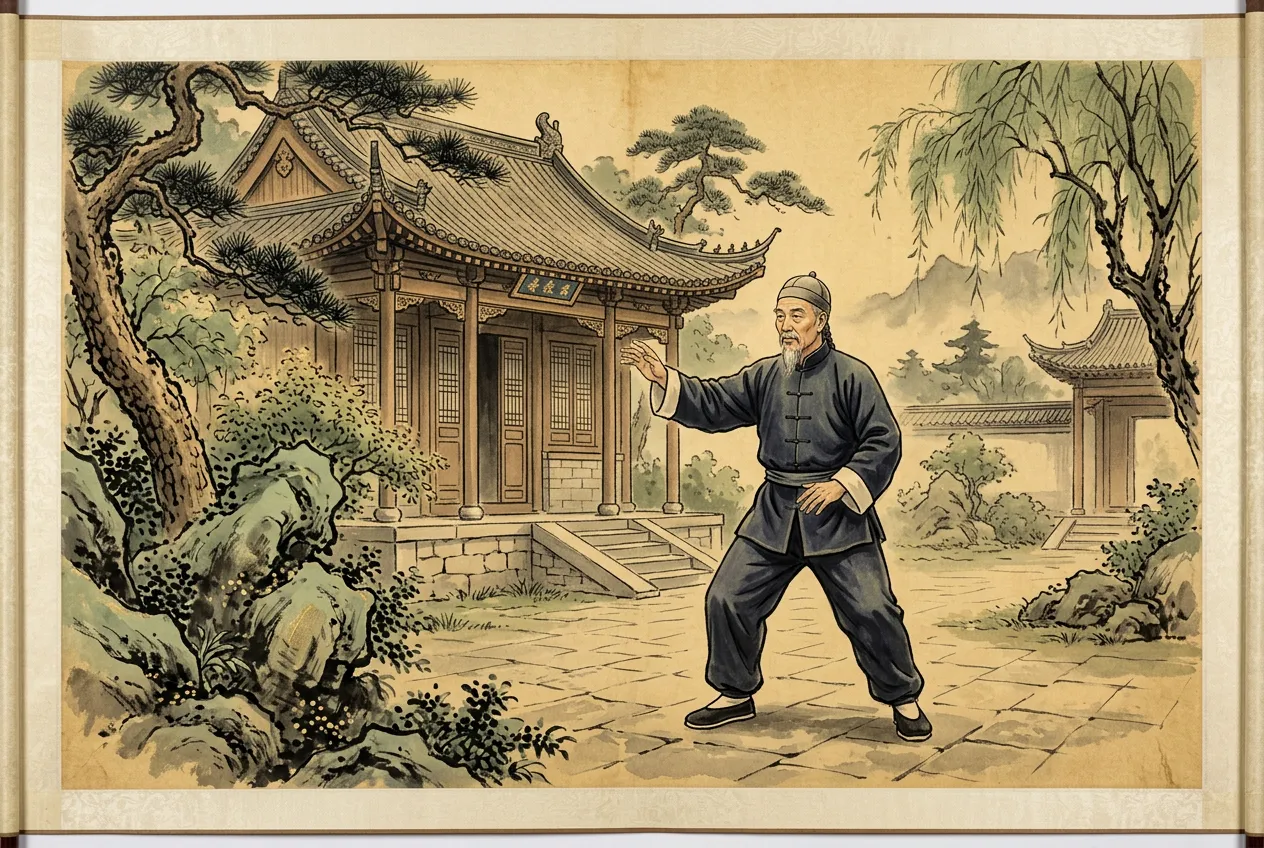
The circumstances of Yang Luchan’s training have passed into near-legend. The standard account holds that Yang Luchan, having somehow gained access to the Chen household (accounts vary on whether he worked there or arrived as a student), proved himself so diligent and capable that Chen Changxing taught him the full system — making him the first non-Chen-family member in recorded history to receive this transmission.
What is historically documented is the outcome: Yang Luchan brought what he learned back to Yongnian, then to Beijing, where he taught tai chi to members of the imperial household and the Manchu bannermen. Wikipedia’s article on Yang Luchan notes he was appointed martial arts instructor to the Chinese imperial household guards and earned the nickname “Yang Wudi” (楊無敵) — Yang the Invincible — for his fighting reputation.
In Beijing, Yang Luchan adapted what he had learned from Chen Village into a form more accessible to a broader population. The explosive power (fa jin), low stances, and fast-slow alternations of Chen style were smoothed and raised — making the form less physically demanding while preserving its core principles. This was not simplification for its own sake. Yang Luchan was teaching large numbers of students, including older and less physically robust members of the imperial court. The adaptation was pedagogically sensible.
This adapted form became the first expression of what we now call Yang-style tai chi.
The Second Generation: Yang Banhou and Yang Jianhou
Yang Luchan had two sons who carried the lineage forward, though in very different directions.
Yang Banhou (楊班侯, 1837–1892) was known as a fierce martial artist with an uncompromising approach to teaching. He is described in historical accounts as technically brilliant but personally difficult — his teaching style reportedly drove many students away. Yang Banhou taught a smaller-frame, more compact version of the form with more emphasis on martial application. He did not produce many students, but one of his notable students — Wu Quanyou — founded the separate Wu-style lineage.
Yang Jianhou (楊健侯, 1839–1917) took the opposite approach. Where his brother was demanding and difficult, Yang Jianhou was approachable and taught widely. He is credited with further developing the large-frame style that Yang Luchan had begun, making the movements larger, rounder, and more accessible. Yang Jianhou taught many students, and through his son Yang Chengfu, his approach became the dominant transmission of Yang-style tai chi.
The contrasting characters of these two brothers shaped how the lineage developed: the fierce, technically demanding approach of Yang Banhou versus the accessible, broadly teachable approach of Yang Jianhou. It is Yang Jianhou’s branch that became Yang-style as we know it today.
Yang Chengfu: The Standardiser
Yang Chengfu (楊澄甫, 1883–1936) is arguably the most historically significant figure in 20th-century tai chi. He is the person who took Yang-style tai chi from a family art practised in Beijing to a nationally and ultimately internationally known practice.
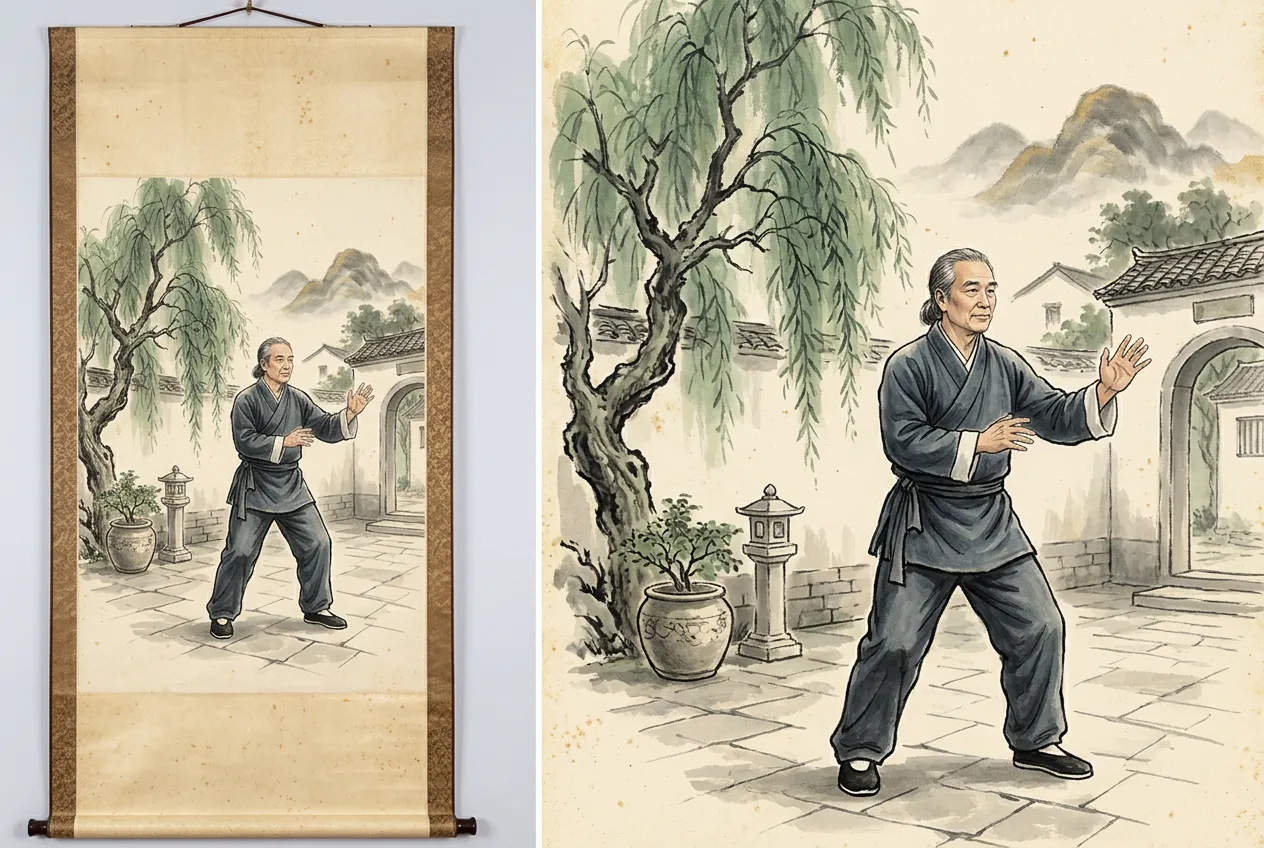
Yang Chengfu was the third son of Yang Jianhou and studied extensively under both his father and, for a period, his uncle Yang Banhou. He became the head of the Yang family tai chi system and began teaching widely in Beijing in the 1910s.
His key contributions to the form as we practise it today include:
- Standardisation of the large frame: Yang Chengfu finalised what is called the “Yang style large frame” — characterised by large, expansive movements, high and medium stances, and slow, even pacing throughout the form. This is the form that became the basis for all subsequent Yang-style teaching.
- Elimination of fa jin from the standard form: Unlike earlier Yang-style practice (and unlike Chen style), Yang Chengfu’s standardised form removed the explosive fast techniques and stamping movements. The standard form is entirely slow and flowing. This made it dramatically more accessible to a general population.
- Written publication: In 1934, Yang Chengfu published The Complete Principles and Practice of Tai Chi Chuan (太極拳體用全書), one of the first systematic published texts on Yang-style tai chi. This gave the form a written transmission that could travel beyond direct teacher-student relationships.
- National teaching: Yang Chengfu taught in Shanghai, Guangzhou, Hankou, and elsewhere across China, training students who then became teachers themselves. He created a generation of teachers who dispersed the art across China and eventually abroad.
Yang Chengfu’s physical form is well documented: he was a large man, and his own practice exemplified the expansive, open quality of the form he taught. Photographs of Yang Chengfu in practice postures remain valuable references for Yang-style practitioners today.
He died in 1936 at the age of 52 — relatively young — leaving his form well established but his family’s transmission to be continued by his sons and his students.
Yang Chengfu’s Students: The Dispersal
Yang Chengfu’s most prominent students became major figures in tai chi history in their own right, and it is through them that Yang-style reached the world.
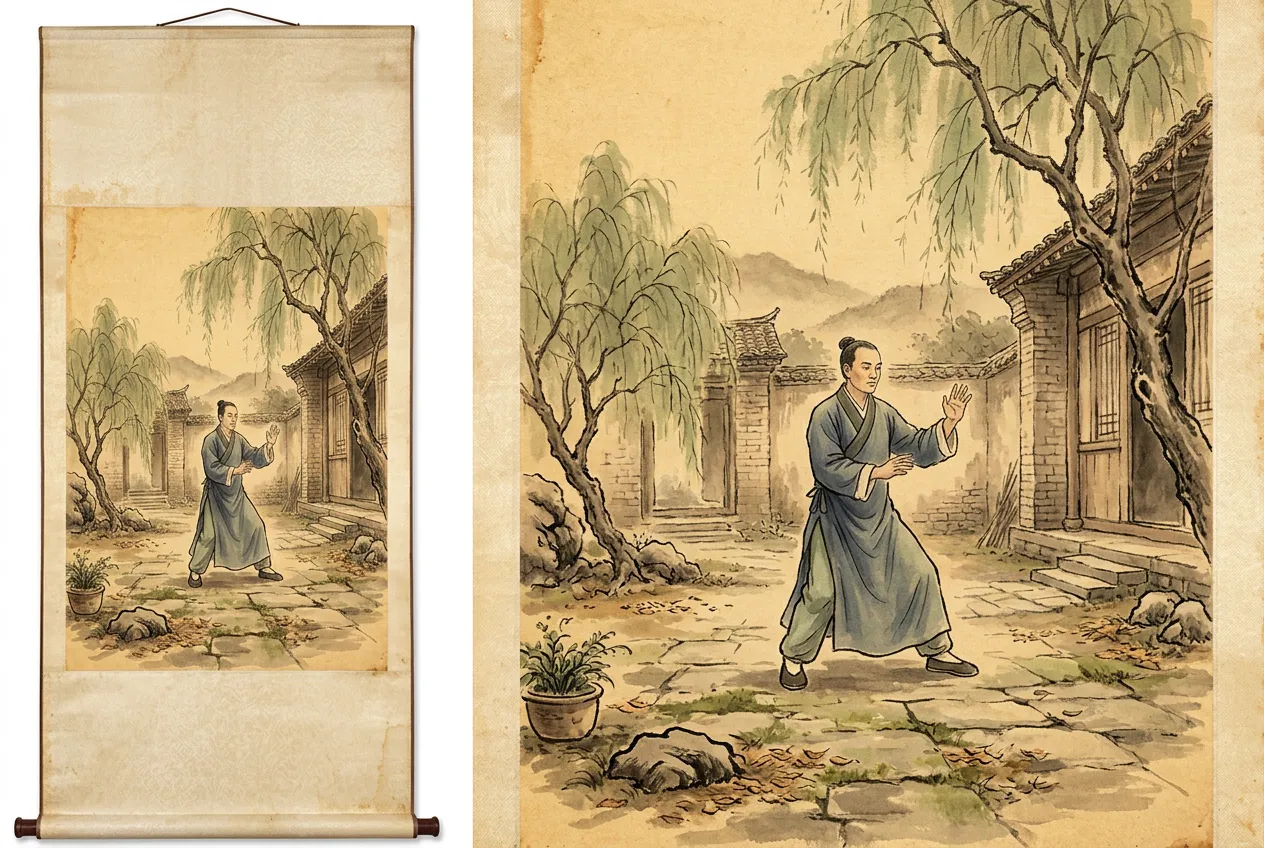
Cheng Man-Ching (鄭曼青, 1902–1975) studied with Yang Chengfu and later emigrated to the United States, where he taught in New York from the 1960s. He developed a shortened 37-posture form and is widely credited as the person who made tai chi accessible to Western students. His teaching lineage now spans the United States and Europe.
Dong Yingjie (董英傑, 1897–1961) was one of Yang Chengfu’s senior students and emigrated to Hong Kong, where he established a major teaching lineage. His descendants and students teach widely across Southeast Asia.
Fu Zhongwen (傅鍾文, 1903–1994) was Yang Chengfu’s nephew-in-law and among his most devoted students. Fu Zhongwen’s 1963 book on Yang-style tai chi became a standard reference. He taught extensively in Shanghai and created a teaching lineage that continues to the present day.
These are a few of the more visible threads. Yang Chengfu trained dozens of students who went on to teach, and the network of Yang-style practitioners globally traces through this generation.
The Yang Family’s Continued Role
Yang Chengfu’s sons continued the family transmission into the post-1949 period, though the Cultural Revolution (1966–1976) disrupted tai chi teaching in mainland China significantly. Yang Zhenduo (楊振鐸, b. 1926), Yang Chengfu’s third son, became one of the most prominent family representatives in the reform era and continues to teach and promote Yang-style tai chi from Taiyuan, where the Yang family association is based.
The Yang Family Tai Chi Chuan International Association is one of the main organisations representing the direct family transmission today.
What the Lineage Means for Practice
The Yang family created something remarkable: they took a martial art that was, for generations, a closely held family secret, and turned it into a practice that hundreds of millions of people do every morning in parks around the world.
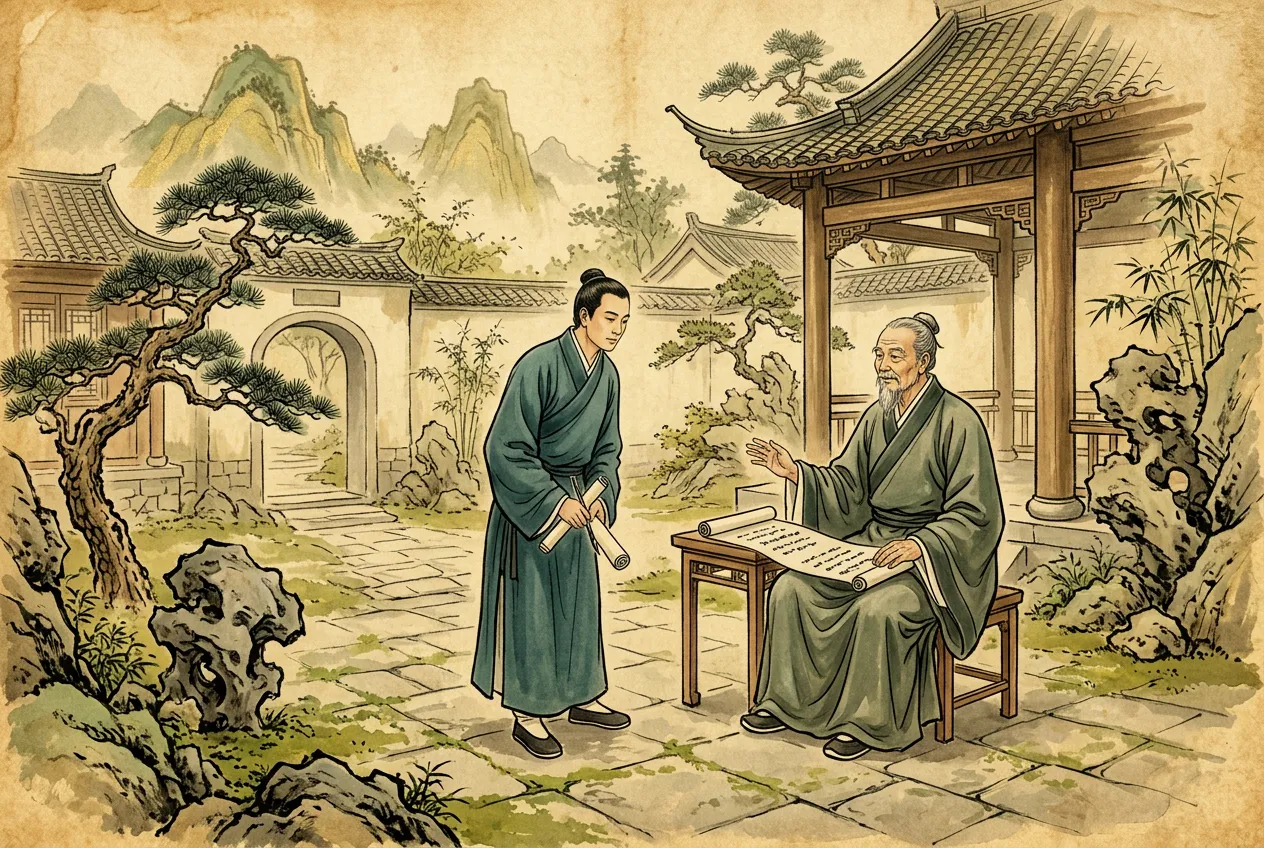
That transformation required more than good martial skills. It required pedagogical intelligence — the ability to modify, standardise, and teach a complex embodied practice to people with varying abilities, ages, and motivations. Yang Luchan adapted Chen style for the Beijing court. Yang Jianhou opened it up further. Yang Chengfu standardised it for national and eventually global transmission.
The 1956 Yang-24 form, created by the Chinese Sports Commission as a simplified accessible version of Yang Chengfu’s form, is the final step in that democratisation. It is the form most people practise when they begin tai chi today — and its lineage runs directly through the Yang family to Chen Wangting in 17th-century Chen Village.
For the broader history of how tai chi developed before the Yang family, see our history of tai chi origins.
For a detailed look at Yang-style tai chi as a practice, including its key characteristics and what to expect when learning it, see our Yang-style tai chi overview.
Browse all history and lineage articles at our tai chi history section.