Tai chi is worth doing. I’ve practised it for over ten years and the benefits are real — the research supports them and so does my experience. But an honest account of tai chi has to acknowledge its genuine limitations.
If you’re considering taking up tai chi, the enthusiastic endorsements are easy to find. The critical perspective is harder to come by. This article is an attempt to give you that.
Slow Fitness Results
The most common reason people stop tai chi within the first few months is that it doesn’t feel like it’s doing anything. The movements are slow, the effort is low, and the progress in learning takes weeks before it’s visible even to yourself.
If you start tai chi expecting the kind of tangible fitness progress you’d get from a new strength training program or a running plan — measurable improvements week over week — you’ll likely be frustrated. Tai chi accumulates benefit over months and years, not weeks. The balance improvements, the proprioceptive gains, the stress reduction effects: these are real, but they emerge slowly.
This isn’t unique to tai chi among mind-body practices, but it’s worth naming clearly. If you need short-term feedback loops to stay motivated, tai chi may not suit your learning style, or you may need to pair it with an activity that gives quicker returns.
When I first started, I almost quit after six weeks because I couldn’t perceive any improvement. What kept me going was a class structure with a good instructor who could point out subtle changes I wasn’t noticing myself.
Cardiovascular and Strength Limitations
Tai chi is not a substitute for aerobic exercise or resistance training. A typical tai chi session raises your heart rate modestly — roughly equivalent to gentle walking. That’s not nothing, but it doesn’t meet the cardiovascular stimulus threshold that most health guidelines recommend for heart health improvements.
Similarly, tai chi provides minimal resistance training stimulus. The semi-squat posture does work the legs to some degree, but it’s far below what you’d need to meaningfully build or preserve muscle mass.
Research on tai chi’s health benefits is substantial, but it clusters around balance, stress, and joint health — not cardiovascular conditioning or muscle hypertrophy. If your primary goal is either of those, tai chi should be a complement to other activities, not a replacement.
The Instruction Quality Problem
This is probably the most significant practical disadvantage of tai chi: the quality of instruction varies enormously, and low-quality instruction produces low-quality tai chi.
Unlike many fitness disciplines where a poorly designed class still produces some physical results, tai chi taught badly can produce very little. The subtle mechanics of weight transfer, joint alignment, and the coordination of breath with movement require an instructor who understands them well enough to teach them.
There is no universally enforced qualification standard for tai chi instruction in most countries. Someone can call themselves a tai chi teacher after completing a weekend course. At the other end, experienced instructors have trained for decades in specific lineages with rigorous quality standards.
The World Tai Chi and Qigong Day organisation and established tai chi associations provide directories of instructors, which is a better starting point than a general internet search. When evaluating an instructor, ask about their lineage, how long they have practised, and who they trained with.
Having practised with several different instructors over the years, I’ve noticed that the difference between a mediocre and an excellent instructor is not subtle — it shows in what students actually learn and in how quickly they progress.
Risk of Injury With Poor Form
Tai chi has a reputation as injury-proof. This is not quite accurate.
Practised correctly, tai chi is very low injury risk — lower than almost any other physical activity. But practised with poor form, specific injuries do occur. The most common are:
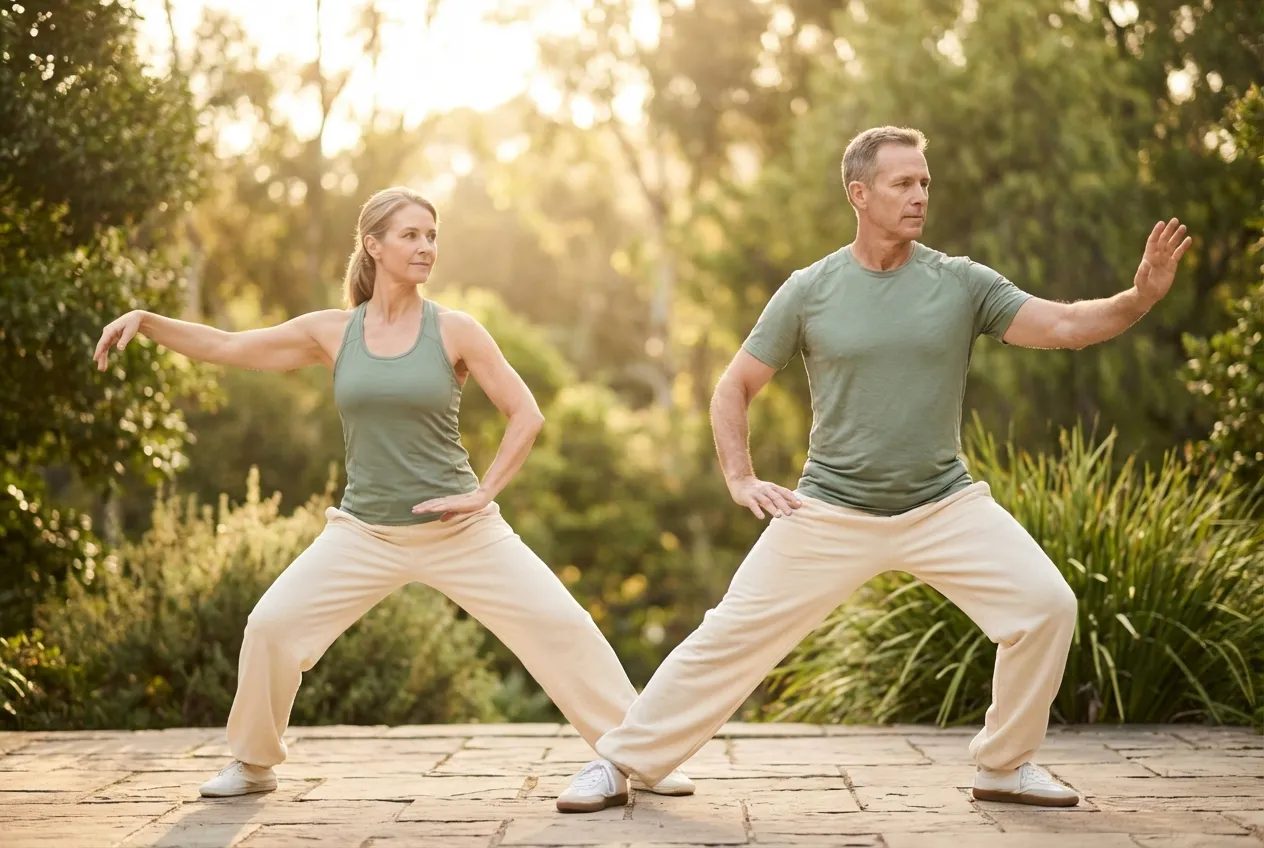
Knee injuries: Tai chi’s semi-squat posture and weight-shifting movements can stress the knees if alignment is poor. Knees that track inward, twist under load, or are held rigidly are vulnerable. A good instructor watches for this constantly. An inattentive one may not notice it for months.
Lower back issues: The turning movements of tai chi require hip rotation. Students who substitute lower back rotation — a common compensation — can develop back discomfort over time.
Shoulder discomfort: Tension in the shoulders and upper body is a frequent beginner error that can cause soreness, particularly in the neck and upper trapezius.
None of these are serious or common injuries — they’re correctable errors. But they do happen, particularly when learners practise without adequate supervision or push through discomfort rather than adjusting form.
The Slow Learning Curve Can Be Off-Putting
The depth of tai chi is also its barrier. Learning even a short form takes months. Learning it well takes years. This is genuinely enjoyable for people who appreciate slow-burn mastery, and genuinely frustrating for people who want to feel capable quickly.

The complete beginner’s guide to tai chi covers what the learning journey looks like in practice. It’s worth reading before you start to calibrate your expectations.
There is no shortcut to this. Videos and apps can help, but the foundational period — where you’re still consciously tracking every limb while trying not to fall over — lasts at least several weeks for most people. Some find that period engaging. Others find it demoralising.
Who Tai Chi May Not Be Right For
This is an honest list, not a warning:
- People who need high-intensity output to feel like exercise is “working” — the low perceived effort of tai chi will feel insufficient
- People with certain balance conditions where the standing challenges of tai chi create genuine fall risk — chair-based alternatives exist, but may not deliver the full benefit
- People who need to see fast measurable progress — the six-week feedback loop that most fitness activities provide doesn’t apply to tai chi
- People without access to good instruction — self-teaching from video is possible but significantly reduces early progress and increases injury risk from uncorrected form errors
A Balanced Verdict
Tai chi’s disadvantages are real but not damning. Most of them are practical challenges — finding good instruction, sustaining motivation through the slow learning curve, calibrating expectations — rather than fundamental limitations of the practice itself.
What is tai chi as a practice is genuinely distinctive. The combination of balance training, joint mobility work, stress reduction, and cognitive engagement is hard to replicate elsewhere. These are worth the disadvantages for many people.
But it matters to go in with accurate expectations. Tai chi is a long game. It delivers results that are real and lasting, but it does not deliver them quickly, it requires good instruction to unlock, and it doesn’t cover every fitness need.
Explore the full tai chi for beginners section to understand what’s involved before committing.
Frequently Asked Questions
Is tai chi dangerous?
Practised correctly, tai chi is among the safest physical activities available. The injury risk is low and the movements are gentle. The main risks — knee and back discomfort from poor alignment — are associated with inadequate instruction rather than inherent danger. Inform your instructor of any existing joint or balance conditions so they can modify your practice appropriately.
Can I learn tai chi on my own from videos?
You can learn tai chi from videos, but you’ll progress more slowly and risk developing form errors that can take years to unlearn. Video instruction is a useful supplement to in-person learning, and it’s better than nothing if no local instruction is available. It’s not an equivalent substitute, particularly in the early months when body feedback and instructor correction matter most.
Is tai chi a real workout?
Yes, but not in the cardiovascular or strength sense. Tai chi provides genuine physical work — balance challenge, proprioceptive training, joint mobility — that produces measurable health benefits. It does not provide significant aerobic or resistance training stimulus. Think of it as a different category of physical activity rather than a less intense version of conventional exercise.