Tai chi requires less equipment than almost any other physical practice. No mat, no weights, no membership, no specialist kit. For your first class, the honest answer to what you should wear is whatever loose clothing you already own and the flattest shoes in your cupboard.
That said, one item genuinely matters, and it is not the one people expect. This guide covers footwear first, because it is the only choice that meaningfully affects your practice, then clothing, then the various things you can buy and mostly should not.
Shoes: The One Thing That Matters
Tai chi is a practice of weight transfer, and weight transfer depends on feeling the ground. Anything that comes between your foot and the floor interferes with that.
The requirements for a tai chi shoe are simple:
Thin sole. You need to feel the floor through it. Thick cushioning insulates you from exactly the information the practice depends on.
Flat, with no heel drop. Running shoes are built with the heel noticeably raised above the forefoot, which tilts your whole posture forward and undermines the alignment tai chi is trying to build.
Flexible. The sole should bend easily. A stiff shoe prevents the foot from articulating as it rolls through the step.
A sole that turns. Tai chi involves pivoting on the ball or heel of the foot. A grippy rubber outsole can catch on the floor mid-turn, and torque that should be released through the shoe goes into the knee instead. This is the mechanism behind a fair proportion of tai chi knee complaints.
A secure but not tight fit. The foot should not slide inside the shoe.
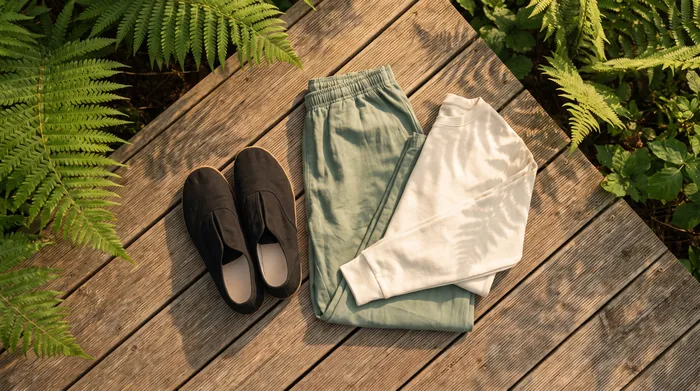
The traditional option is the cotton Chinese martial arts slipper, often sold as tai chi shoes or kung fu shoes — thin canvas upper, thin rubber sole, usually inexpensive. They are near-perfect for the purpose and cost very little. Their weaknesses are durability and lack of arch support, which matters for some feet.
Reasonable alternatives include minimalist or barefoot-style trainers, thin-soled plimsolls, dance sneakers, and indoor court shoes with a smooth sole. What to avoid: running shoes, walking boots, anything with a raised heel, and anything with aggressive tread.
Switching from cushioned trainers to thin-soled shoes was the single change that most improved my sense of the ground, and it took a few weeks for my feet to adjust — mild foot fatigue at first, then nothing.
Barefoot and Socks
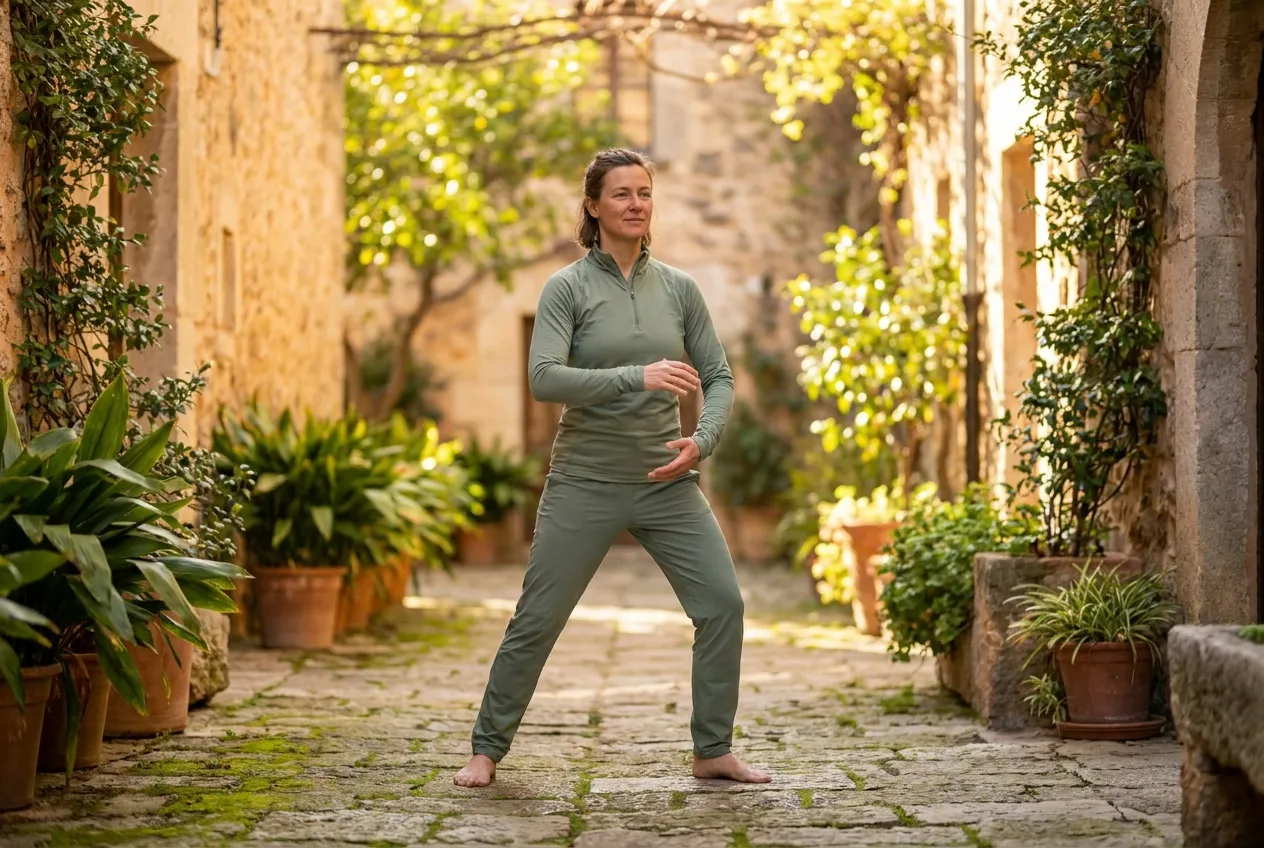
Barefoot practice is fine on a clean, non-slippery surface, and it gives the best possible ground feedback. The caveats are hygiene in shared halls, cold floors, and — importantly — that anyone with diabetes, neuropathy, or reduced foot sensation should not practise barefoot, because unnoticed cuts and blisters are how serious foot problems start.
Socks alone are a bad idea on most floors. They slide during turns, which is precisely when you least want to slide.
Clothing
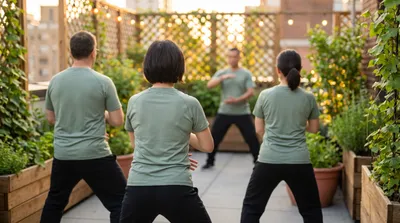
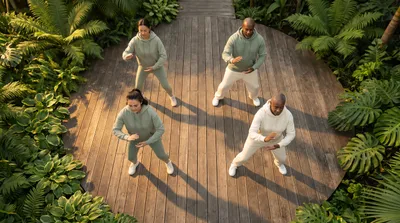
The requirements here are genuinely minimal: nothing that restricts movement, nothing that makes you conscious of it.
Trousers should allow you to squat and step widely. Loose cotton trousers, tracksuit bottoms, or wide-legged leggings all work. Jeans do not — the restriction across the hips and knees is immediately obvious.
Tops should let the arms rise overhead and rotate freely. A t-shirt or a loose long-sleeved top is fine.
Layers are worth thinking about, because tai chi warms you up gradually rather than immediately. You will often start a session feeling cool and finish comfortably warm, particularly outdoors. Something you can remove halfway is more useful than a single warm garment. The outdoor practice guide covers this in more detail.
Avoid anything tight at the waist, since tai chi movement comes from the waist and a restrictive waistband works directly against it. Belts, structured jeans, and anything that digs in when you turn are worth changing out of.
What About the Silk Uniform?
The satin or silk tai chi uniform — usually white, black, or blue, with frog fastenings and wide sleeves — is what a search for tai chi clothing will show you. Some observations.
It is genuinely traditional in the sense that Chinese martial arts uniforms of this cut have a long history, and the wide sleeves and loose cut serve a purpose: they exaggerate the movement, making it visible from a distance, which is useful for demonstration and teaching.
It is also, for most practitioners, unnecessary. The great majority of people in ordinary classes wear ordinary clothes. Nobody will think less of you for it, and turning up to a community hall class in full silk when everyone else is in tracksuit bottoms is more likely to feel awkward than authentic.
Where uniforms make sense: formal demonstrations, competition, some traditional schools that expect them, and group performance where visual uniformity is part of the point. If your school has a dress expectation, they will tell you.
Things You Do Not Need
A mat. Tai chi is practised standing, on the floor. Mats interfere with pivoting and give a soft, unstable surface, which is the opposite of what you want.
Weights or resistance equipment. Weighted rings and similar products are sometimes sold as tai chi accessories. They are not part of any traditional practice and add load in a way the movement is not designed for.
Special breathing aids or props. Nothing in tai chi requires them.
A sword, at least not yet. Weapons come after the empty-hand form is established, and buying one early is a common enthusiasm that usually ends up in a cupboard.
Music equipment. Practising to music is optional and a matter of preference rather than requirement.
For Outdoor Practice
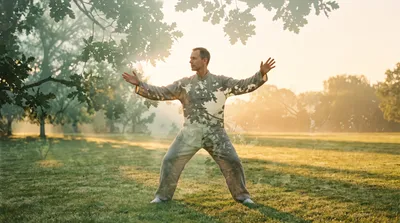
If you practise outside, a few additions become worthwhile. Shoes with a slightly more textured sole help on grass and uneven ground, though the same warning about grip and pivoting applies. Layers matter more, since standing practice in cold weather chills you quickly. And in cold conditions, keeping the lower back and kidneys covered is traditional advice that also happens to be sensible — a longer top or a base layer that stays tucked in.
If You Only Buy One Thing
If a full kit list feels like one more barrier to getting started, ignore all of it except the shoes. When I switched to thin-soled slippers I noticed the difference inside a single session, which is not something I can say about any other piece of equipment I have bought for tai chi since.
A pair of thin-soled cotton martial arts slippers costs less than a takeaway. Everything else on this page — the clothing adjustments, the uniform question, the outdoor extras — can wait until you already know whether you are sticking with the practice.
The complete beginners guide covers what to expect from a first class and how to start, the introduction to what tai chi is covers the practice itself, and more starting-out guidance is collected in the beginners section.