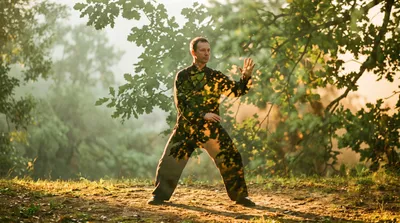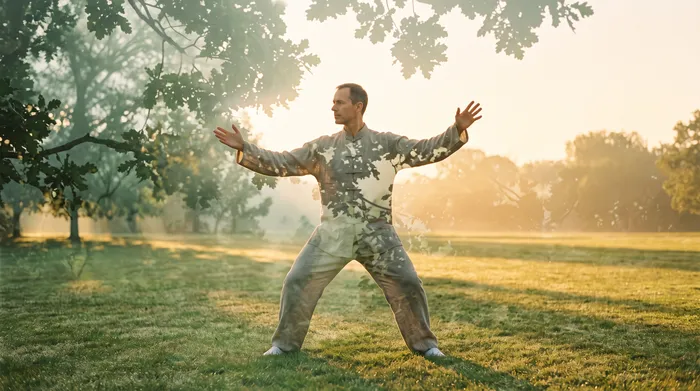
The image most people carry of tai chi is outdoors: a park at dawn, a group moving slowly under trees. That image is accurate. In China, park practice is the normal setting, and it has been for as long as the art has been publicly taught.
There are good reasons for it beyond tradition, and there are practical obstacles that mostly go undiscussed. This covers both.
Why Outdoors Is Different
Uneven ground trains balance. Indoor floors are flat and predictable. Grass, packed earth, and gravel are not, and practising on them requires continuous small adjustments that a level floor never demands. This is closer to the balance challenges of ordinary life, which is the point.
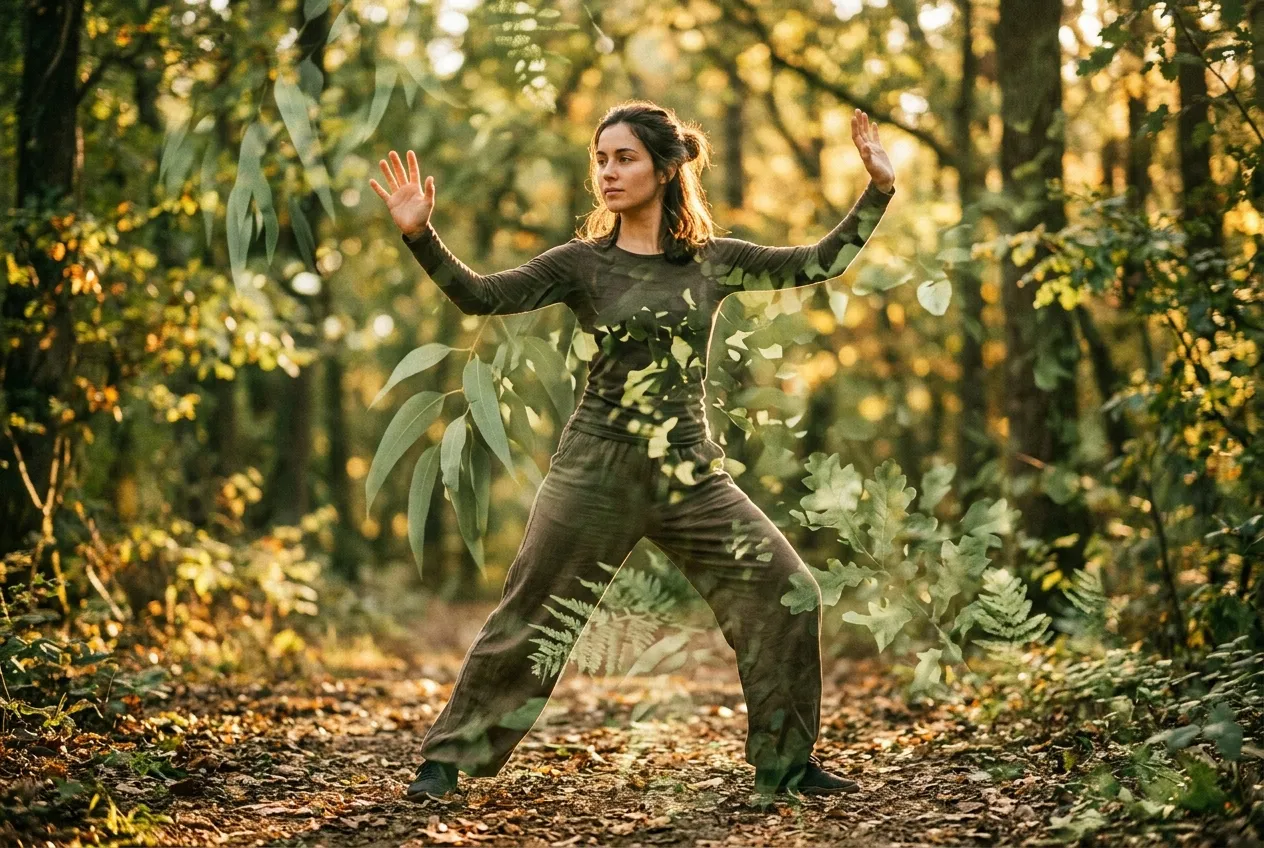
Space removes constraints. Most tai chi forms travel, and most rooms do not allow them to. Practising a full form at its intended dimensions changes how the stepping feels.
Natural light affects the practice. Morning light in particular has a physiological effect on circadian rhythm and alertness that is independent of the movement.
The sensory environment adds something. Air moving on the skin, birdsong, the smell of grass — practitioners consistently report that outdoor practice feels more absorbing, and the most likely explanation is simply that there is more to be aware of.
It is harder to cut short. Having gone to the trouble of getting there, people tend to complete the session. Home practice ends when the phone rings.
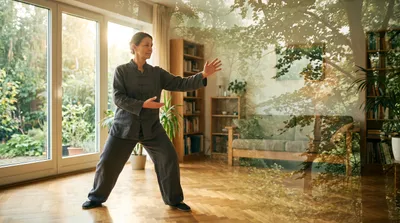
I practise outdoors whenever the weather allows, and the difference is not subtle. The same form done in a park and in a living room feel like different activities, and only one of them makes me want to do it again tomorrow.
Choosing a Place
Ground. Level grass is ideal — enough give to be comfortable, enough irregularity to be interesting. Packed earth and short grass are both good. Avoid long grass, which hides holes, and loose gravel, which slides under a pivot.
Space. Enough to take four or five steps in any direction. A short form needs less than people assume, but a long form travelling in one direction can cover a surprising distance.
Shelter from wind. Wind is the most disruptive weather condition for practice — more than cold or light rain. A spot with trees or a wall on the prevailing side makes a substantial difference.
Level enough. A slight slope is workable and can be useful. A noticeable one distorts the weight distribution and is worth avoiding until you know the form well.
Quiet, or at least consistent. Traffic noise is tolerable if steady. Unpredictable noise is more disruptive than loud noise.
Some privacy. Not because anyone will bother you, but because self-consciousness genuinely affects practice quality until you get past it.
Parks, quiet corners of playing fields, gardens, beaches at low tide, and forest clearings all work. Car parks and hard courts work if nothing else is available, though the surface gives nothing back.
The Self-Consciousness Problem
This deserves direct treatment because it stops more people from practising outdoors than weather does.
Practising tai chi in public feels conspicuous. The movements are unusual, slow, and unmistakable, and there is a period at the beginning where you are aware of every passer-by.
Some things that help. Early morning has fewer people and the ones who are out are generally exercising themselves. A less central spot — the edge of a park rather than the middle — reduces foot traffic without much loss. Facing away from paths helps more than it should. And practising with even one other person removes almost all of it, because a group reads as an activity rather than as an individual behaving oddly.
The more useful observation is that it fades. After a few weeks the awareness of onlookers largely disappears, and what remains is the occasional person who stops to watch, who is almost always interested rather than amused. In my experience the most common interaction by far is someone asking what it is and whether there is a class nearby.
Weather
Cold. Practise in layers, extend the warm-up considerably, and keep the lower back covered. Cold muscles and stiff joints make the transitions riskier, and standing practice in cold weather chills you faster than moving practice. The clothing guide covers what works.
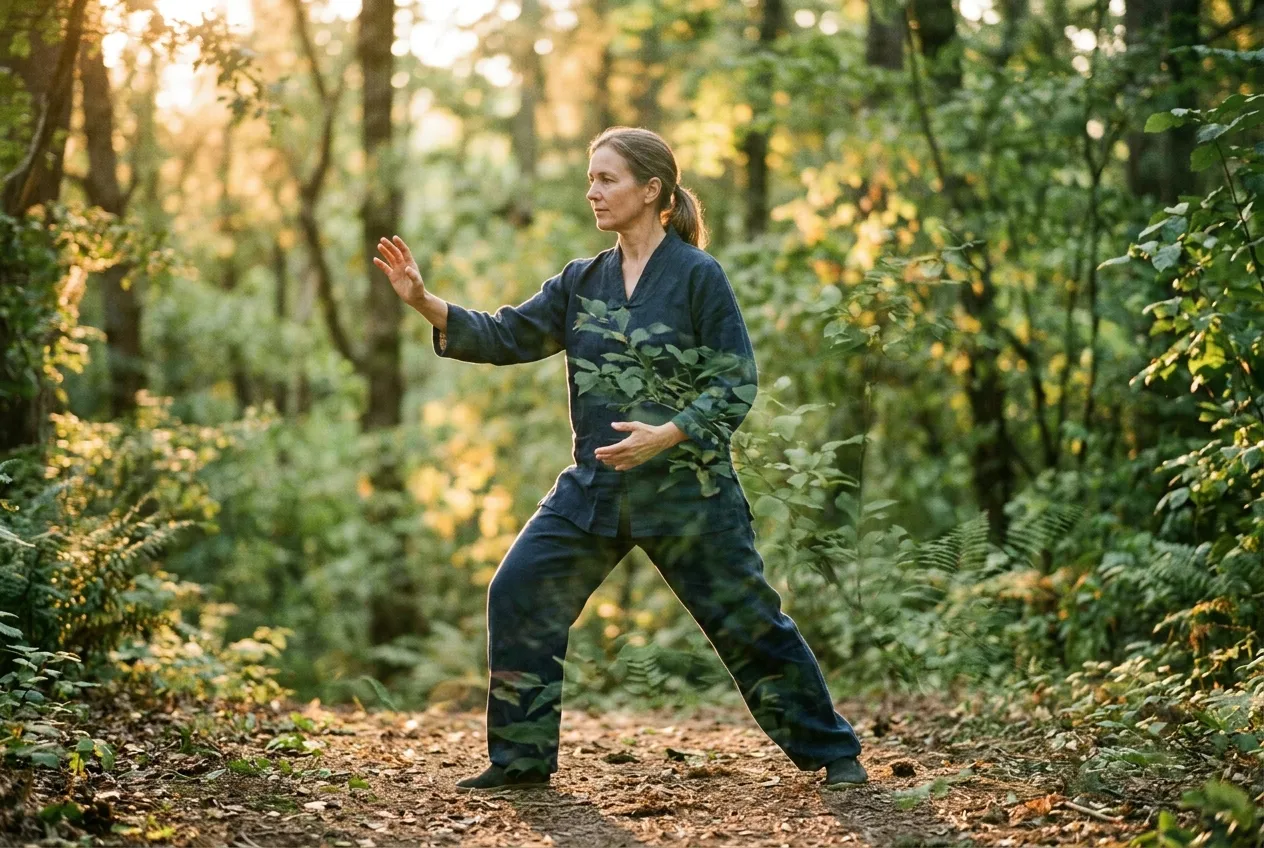
Rain. Light rain is fine and, on grass, produces no real hazard. Heavy rain makes grass slippery and hard surfaces treacherous.
Ice and frost. Do not. Balance training on ice is not balance training.
Heat. Practise early, find shade, and drink. Tai chi is low intensity but standing in direct summer sun for forty minutes is still heat exposure.
Wind. Reduce the arm movements slightly and accept that the practice will feel less settled. A sheltered spot is worth walking to.
The traditional Chinese practice of going out in almost any weather is a real cultural norm and is not entirely a matter of toughness — practitioners generally report that the conditions become part of the practice rather than an obstacle to it. That said, nobody needs to prove anything to a frozen park.
Practical Details Worth Sorting Out
Small things that make outdoor practice easier once resolved.
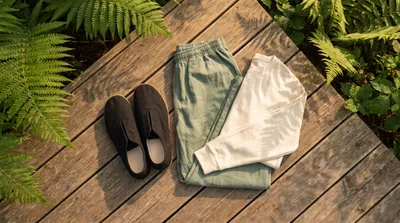
Footwear. Thin-soled shoes still apply outdoors, but a slightly more textured sole helps on damp grass. The caution about grippy soles catching during a pivot matters more on grass than on a smooth floor, where the shoe can slide harmlessly.
Where to put your things. A jacket and keys on a bench, or in a small bag at the edge of your practice area. It sounds trivial; having to think about it every session is exactly the kind of friction that erodes a habit.
Dogs. In public parks, expect the occasional loose dog to find slow-moving arms interesting. It is more comic than problematic, and moving away from the main paths largely solves it.
Insects. Standing still in a summer evening in some places is an invitation. Mornings are generally better.
Orientation. Traditionally, practitioners face east at dawn. Whether or not that appeals, having a fixed facing direction is genuinely useful — it makes it obvious when your form has drifted off its line, which it will.
Making It a Habit
The obstacle with outdoor practice is not the practice but the getting there.
A few things that help. Choose somewhere within a ten-minute walk, because anything further introduces a decision point. Go at the same time daily, since a fixed time removes the need to decide. Keep the barrier low — practise in what you are wearing, do not require a change of clothes. And have an indoor fallback for genuinely bad days, so a missed session does not break the routine entirely; the home practice guide covers making a small indoor space work.
Some people find groups essential and others find them intrusive. Public park groups exist in most cities and are usually welcoming, and the accountability of expecting to see the same people helps a great deal with consistency.
The daily practice routine guide covers structuring the sessions themselves, and more practice material is collected in the tai chi practice section.