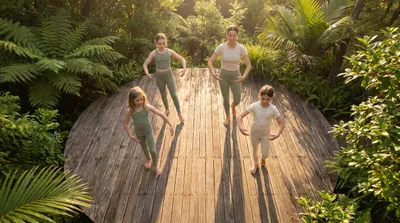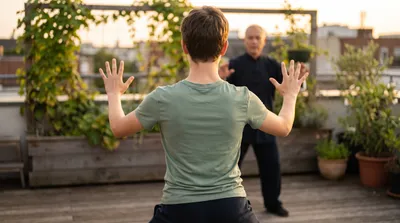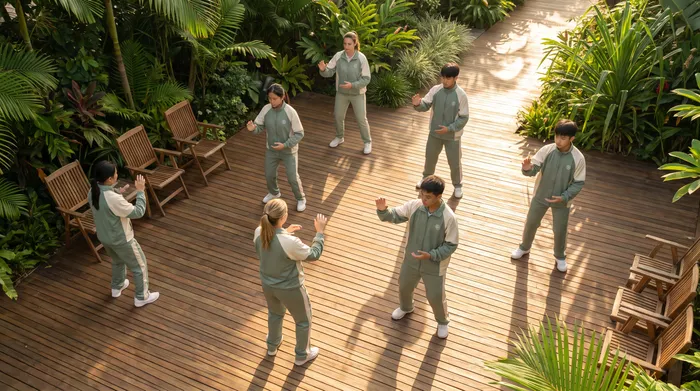
Tai chi turns up in schools more often than people expect — in PE lessons looking for alternatives to competitive sport, in wellbeing programmes, in special educational settings, and in before-school calm-down routines. It is never going to displace football, and it should not try. What it offers is something the standard PE curriculum mostly lacks: a physical practice built around self-regulation rather than competition.
This article covers what tai chi realistically offers in an educational setting, how schools actually use it, and what teachers or parents who want to introduce it need to know.
Why Schools Reach for It
The case rests on a few practical properties rather than on any grand claim.
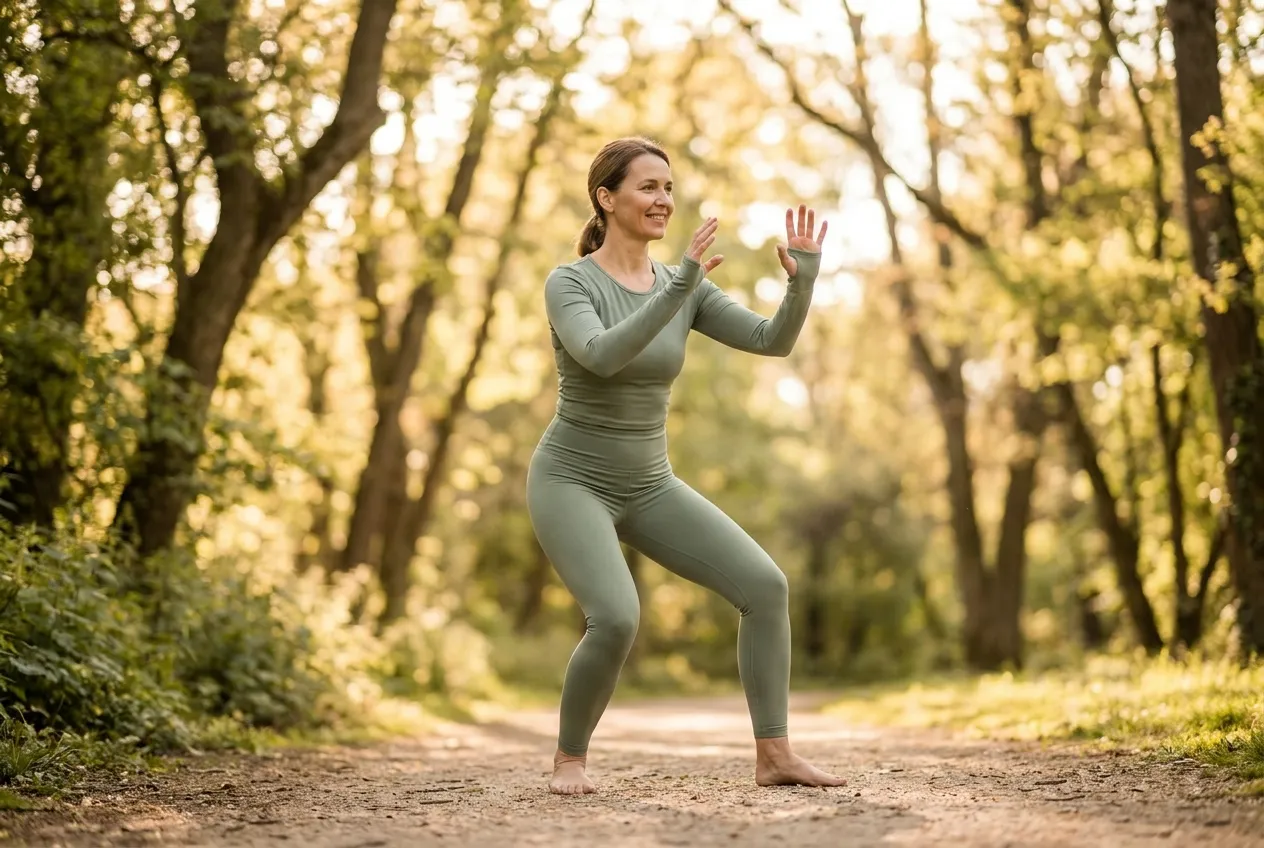
It requires nothing. No equipment, no special space, no kit to forget. A classroom with the chairs pushed back is enough, which makes it one of the few physical activities that survives contact with a real school timetable.
It includes everyone. No one is picked last, no one is eliminated, nobody’s lack of speed or size is exposed. For the substantial minority of children alienated by competitive PE — often exactly the children who most need a route into physical activity — this is the whole argument. The same reasoning applies to students with physical disabilities or coordination difficulties, since every movement scales and seated versions exist.
It is a self-regulation tool disguised as movement. Slow movement with slow breathing downshifts the nervous system. Teachers who use short tai chi or qigong breaks report using them exactly that way — after lunch, before exams, when a class comes in wired. The mental health evidence behind that observation is covered elsewhere on this site; in a school context the honest claim is more modest: it reliably calms a room, and it gives students a technique they can reuse under pressure.
It trains attention. Following a slow movement sequence is sustained, embodied concentration practice — a scarce commodity, and one that transfers.
It carries almost no injury risk. A PE activity with essentially zero casualty rate is an easier sell to a head teacher than most.
The research base specifically on school tai chi programmes is thin — small studies, mostly positive, mostly measuring wellbeing and behaviour rather than academic outcomes. Anyone implementing it should pitch it as low-cost and plausibly beneficial rather than evidence-mandated, because that is where the literature honestly sits.
How It’s Actually Used
Four patterns cover most of what happens in practice.
Short regulation breaks. Five to ten minutes of simple movements — arm swinging, slow raising and lowering with the breath, a balance challenge — used at transitions in the day. This is the lowest-cost, highest-uptake format, and it requires only that the class teacher learn a handful of movements themselves.
A PE block. A half-term module of weekly sessions inside the PE curriculum, usually delivered by a visiting instructor, teaching basic movements and a very short sequence. Works best with older primary and secondary students; the approach differs sharply by age, and younger children need it delivered as imagery and games rather than as form instruction.
Clubs. Lunchtime or after-school, self-selecting, and typically the format where genuinely interested students — often the quiet ones — get furthest. For teenagers specifically, the framing matters enormously, and the guide to tai chi for teens covers why leading with the martial art rather than the relaxation gets better uptake.
Special settings. Tai chi and qigong appear regularly in SEND schools, alternative provision, and behavioural support units, where the regulation benefits are the explicit point and sessions are adapted heavily — shorter, more repetitive, often seated.
For Schools: Making It Work
A few things separate the programmes that stick from the ones that fade after a term.
Train a staff member rather than renting an instructor forever. Visiting specialists launch a programme well, but the schools where tai chi persists are the ones where a PE teacher or classroom teacher learned enough to run the short formats themselves. The material needed for regulation breaks is learnable in a day’s CPD.
Keep sessions short and frequent. Ten minutes daily beats an hour weekly for every outcome a school cares about.
Use the imagery, drop the jargon. Crane, bear, pushing clouds, holding the ball — children respond to images. Meridians and qi cosmology have no place in a school session, both because they lose the room and because presenting them as fact is not defensible in an educational setting.
Frame it as skill, not therapy. Students — teenagers especially — engage with “this is a martial art that trains balance and control” and disengage from “this will help you feel calm”. The calm arrives either way.
Vet external instructors normally. Background checks, insurance, and references, exactly as for any visiting provider. Instructors experienced with the relevant age group matter more than lineage credentials.
A Ten-Minute Classroom Sequence
Something concrete for any teacher who wants to try the short-break format tomorrow. No experience needed beyond reading this and trying it once at home — I ran through this exact sequence myself before writing it up, and the thing worth knowing in advance is that minutes three and four feel slightly silly until minute five, when the slow overhead lift asks for real attention and the room usually goes quiet on its own.
Minute 1-2: Arrive. Standing beside desks, feet shoulder-width, hands resting on the belly. Three slow breaths, feeling the belly move. This alone changes the room’s volume.
Minutes 3-4: Swing. Turn the waist left and right, arms completely loose, hands tapping the sides. Let it be slightly fun; it is meant to be.
Minutes 5-6: Lift the sky. Hands interlaced, palms pressing slowly overhead on the inhale, floating down on the exhale. Five repetitions, slower each time.
Minutes 7-8: Balance. Stand on one leg, arms out like wings. Count aloud together. Swap sides. A touch of challenge and laughter here is a feature, not a failure.
Minutes 9-10: Settle. Push slow imaginary clouds from side to side, then stand still, hands back on the belly, three final breaths. Sit down quietly.
Run daily for a fortnight, this becomes a routine the class executes on autopilot — which is precisely the point. The regulation tool only works when it is boringly familiar.
For Parents
If your child’s school runs tai chi and your child has taken to it, supporting it at home is straightforward: the movements need no equipment, five minutes counts, and practising alongside them works far better than encouraging from the sofa. If the school does not run it and you think it should, the short-break format is the realistic proposal — it asks for ten minutes a day and one interested teacher, not a curriculum change.
And if your child has met tai chi at school and wants more, the natural next steps are a family-friendly community class or gentle home practice — the beginners section covers both routes, and the kids and teens guides cover the age-specific details.
Watching what actually engages children around this practice, it is rarely the calm — it is competence. Standing on one leg longer than last week, controlling a movement a sibling cannot, knowing what a technique is for. Schools that lead with mastery and let the regulation benefits arrive as a side effect tend to be the ones still running the programme three years later.