Tai Chi Health Benefits

Tai Chi for Fall Prevention: What the Evidence Shows

11 min read
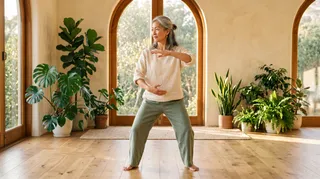
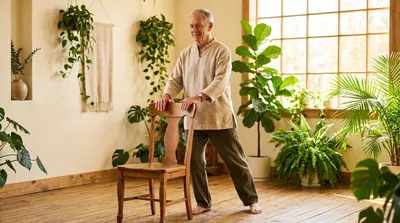
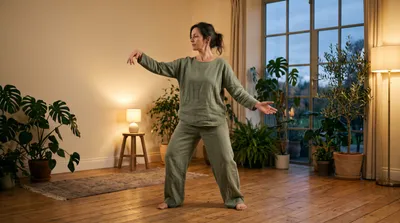
Older adult practicing a tai chi balance pose in a warm bright studio with plants

Falls are the leading cause of injury-related death among older adults in the United States, and the search for effective prevention is ongoing. What makes tai chi interesting — and genuinely worth your attention — is that it keeps showing up in clinical research as one of the more consistent interventions we have. Not a miracle cure, not a marketing claim. Just a practice that has been rigorously studied and that repeatedly demonstrates meaningful results.

I came to tai chi from a martial arts background, and fall prevention wasn’t what drew me in. But the more I practised, the more I understood why it works. The slow, deliberate weight transfers, the attention to where your centre of gravity sits, the constant low-level demand on your proprioceptive system — these things add up. This article walks through what the evidence actually says and how you can use that evidence to make an informed decision about whether tai chi belongs in your (or a loved one’s) life.

Why Falls Are a Serious Health Risk

Falls aren’t just painful. Among adults aged 65 and over, falls are the leading cause of both fatal and non-fatal injuries. According to the Centers for Disease Control and Prevention (CDC), about 36 million falls are reported among older adults each year in the United States, resulting in more than 32,000 deaths. Beyond the statistics, the fear of falling itself can reduce activity levels and social engagement, which creates a compounding cycle of weakness and isolation.

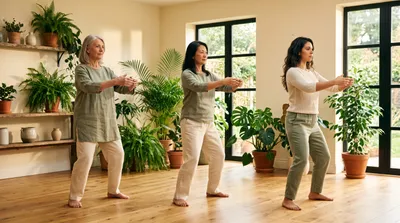
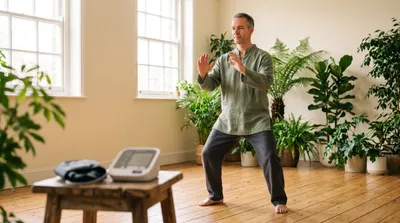
Why Falls Are a Serious Health Risk — tai chi health illustration

The physical factors that increase fall risk — reduced muscle strength, impaired proprioception, slower reaction time, poor balance control — don’t have a single pharmaceutical fix. This is part of why exercise interventions, and tai chi specifically, have attracted serious research attention. They address multiple risk factors simultaneously.

When I first started thinking seriously about tai chi’s health applications, the fall prevention literature is where I kept landing. The body of evidence here is more substantial than for almost any other tai chi health claim.

The Risk Factors Tai Chi Directly Addresses

Tai chi is not a general fitness programme. It is a specific movement practice that happens to target several of the most important fall-risk variables:

  • Proprioception: Your body’s sense of its own position in space. Tai chi’s slow, continuous weight shifts actively train proprioceptive awareness in the ankles, knees, and hips.
  • Reaction time: The ability to respond quickly to a loss of balance. The reactive posture adjustments in tai chi — recovering from slightly overextended positions — build this.
  • Muscle endurance: Particularly in the legs. The semi-squat stance maintained through most of the form builds sustained muscular engagement without high impact.
  • Dual-task capacity: The ability to maintain balance while doing something else — thinking, talking, navigating obstacles. The mindful attention required in tai chi practice specifically trains this divided-attention balance.

What the Research Actually Says

This is where it matters to be precise. I am not going to tell you tai chi “prevents all falls” or is “proven to eliminate fall risk.” That is not what the research says. What it says is more specific — and more credible because of that specificity.

A systematic review and meta-analysis published in the BMJ in 2019 examined 108 randomised trials involving over 23,000 participants across multiple exercise interventions. Tai chi appeared as one of the interventions most consistently associated with reduced fall rates and fall-related injuries, particularly among community-dwelling older adults.

Earlier landmark research from the National Institute on Aging-funded FICSIT trials in the 1990s found that participants who practised tai chi over 15 weeks showed a 47% reduction in fall risk compared to control groups. This was one of the first rigorous controlled studies on the topic, and it set the agenda for much of the subsequent research.

More recently, a Cochrane Review on interventions to prevent falls in older people living in the community concluded that tai chi-based programmes likely reduce the rate of falls and the risk of falling, with moderate certainty evidence. “Moderate certainty” in Cochrane terms is meaningful — this is not a category for weak or preliminary findings.

What the research does NOT establish is that tai chi works for all populations equally. The evidence is strongest for community-dwelling older adults without severe balance disorders. People with Parkinson’s disease, stroke survivors, and those with severe osteoporosis may still benefit, but the evidence is less consistent, and they should consult a healthcare provider before starting.

How Long Before You See Results?

Most of the research interventions that showed significant results ran for 12 to 26 weeks, with sessions typically two to three times per week. A 2017 systematic review published in the Journal of Geriatric Physical Therapy found that meaningful improvements in balance and gait were generally detectable after 8 to 12 weeks of regular practice.

In my experience, balance changes from tai chi are subtle at first — you notice them when you catch yourself recovering from a stumble more smoothly than you expected, or when you realise you’ve stopped instinctively grabbing for support when reaching overhead.

How Tai Chi Improves Balance Mechanically

Understanding the mechanism helps you practise more intentionally, which is why I want to spend time on this.

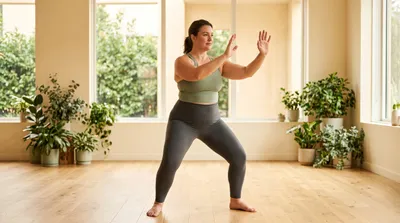
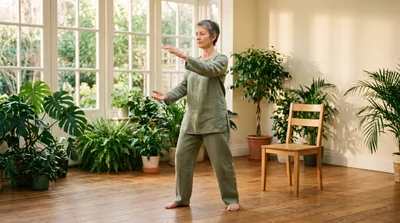
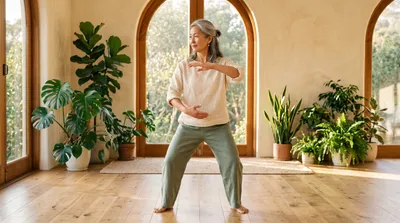
How Tai Chi Improves Balance Mechanically — tai chi health illustration

Single-Leg Balance and Weight Transference

Almost every movement in the Yang-style 24 form involves a complete transfer of weight from one leg to the other. When done correctly, there are moments when 100% of your body weight rests on one leg while the other moves freely. This is demanding single-leg balance work, but performed at a pace slow enough to develop control rather than rely on momentum.

Over time, this builds the neuromuscular pathways — the communication between your nervous system and your leg muscles — that allow rapid, automatic corrective responses when balance is threatened.

Postural Alignment and Centre of Gravity Awareness

Tai chi places constant emphasis on maintaining a vertically aligned spine and a stable, slightly lowered centre of gravity. Practitioners are cued to “sink” the weight, to feel grounded, to avoid locking the knees or over-extending. This translates to real postural improvements that change how the body manages balance challenges day-to-day.

For a deeper exploration of balance as a general topic, our article on tai chi for balance covers the proprioceptive and neuromuscular mechanisms in more detail.

Ankle Stability and Foot Awareness

Tai chi is typically practised barefoot or in thin-soled shoes, and the form involves extensive rolling from heel to toe and back again. This activates the intrinsic foot muscles and builds ankle proprioception — two areas that are critically underdeveloped in people who live in heavily cushioned modern footwear. A stronger, more aware ankle is a faster-responding ankle when the ground surface changes unexpectedly.

Getting Started: Practical Guidance for Fall Risk Reduction

If fall prevention is your primary goal, the following practical points matter.

Choose a style appropriate for your current ability. Yang-style tai chi, with its slow, fluid movements, is the style most studied for fall prevention and is generally considered the most accessible for older adults and beginners. The tai chi for seniors article covers how to select an appropriate class and adapt practice if needed.

Look for certified or experienced instructors. The quality of instruction varies enormously. For fall prevention specifically, look for instructors who understand balance mechanics, who cue proper weight transfer and foot placement, and who can adapt movements for individual limitations. The American Tai Chi and Qigong Association maintains a teacher directory that can help you find qualified instruction in your area.

Two to three sessions per week is the evidence-supported dose. Most effective research programmes ran 60-90 minutes, two or three times weekly. Short daily sessions (15-20 minutes) may also be beneficial, particularly as a supplement to longer weekly sessions, but this is less studied.

Pair tai chi with other fall-prevention strategies. Tai chi is complementary, not exclusive. A home hazard assessment, medication review (certain medications significantly increase fall risk), vision correction, and footwear choices all contribute. Tai chi works best as part of a multi-component strategy.

Start with a health provider consultation if you have balance disorders or fall history. Tai chi is generally very safe, but if you have a history of falls, significant balance impairment, or a neurological condition, talking to a physiotherapist or physician first can help you find the most appropriate programme and identify any specific modifications you may need.

Tai Chi vs. Other Fall-Prevention Exercises

Where does tai chi stand compared to other exercise interventions?

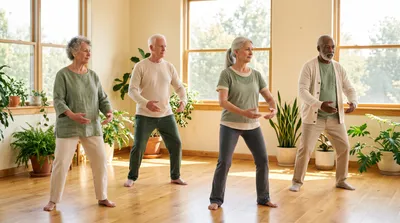
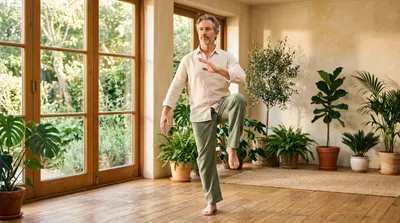
Tai Chi vs. Other Fall-Prevention Exercises — tai chi health illustration

The 2019 BMJ meta-analysis mentioned earlier is informative here. Across 108 trials, it found that various exercise types reduced fall rates — balance and functional exercise, strength training, walking programmes. Tai chi was among the interventions with the most consistent evidence, partly because it addresses multiple risk factors simultaneously (balance, strength, flexibility, dual-task capacity) rather than just one.

Strength training alone does not address the neuromuscular coordination and reactive balance components that tai chi trains. Walking programmes improve cardiovascular fitness but provide less specific balance challenge. Yoga shares some benefits with tai chi (balance, flexibility, body awareness), but typically involves less dynamic weight transfer and fewer of the single-leg stability demands that make tai chi particularly effective for fall prevention.

This does not mean other exercises are less valuable — combining tai chi with strength training, for example, is likely better than either alone. But for people seeking an accessible, enjoyable practice that directly targets fall risk, tai chi’s evidence base is as strong as any single intervention.

Understanding the Limits of the Evidence

I want to be honest about what the research cannot tell us. Most fall prevention trials involve relatively short durations (12-26 weeks) and cannot measure lifetime fall rates. Effect sizes, while meaningful, vary considerably across studies. Population characteristics matter enormously — the results in a community-dwelling 70-year-old are not directly transferable to a frail 90-year-old in a care setting.

Understanding the Limits of the Evidence — tai chi health illustration

The evidence is strong enough to recommend tai chi as a fall-prevention strategy with reasonable confidence. But it is not strong enough to promise specific outcomes for individuals. How much benefit any person receives depends on their starting point, how consistently they practise, the quality of their instruction, and factors that neither tai chi nor any exercise can fully address.

Explore the broader tai chi health benefits if you want to understand the full range of what the evidence supports across different health outcomes.

Frequently Asked Questions

How long does it take for tai chi to reduce fall risk?

Most research programmes that demonstrated significant fall risk reduction ran for 12 to 26 weeks of regular practice. Improvements in balance-related measures (such as the Timed Up and Go test) are often detectable earlier — around 8 to 12 weeks — but whether these early improvements translate to actual fall reduction in real-world settings takes longer to establish. Consistency is the key factor: irregular practice produces irregular results.

Is tai chi safe to practise if I’ve already had a fall?

In most cases, yes — and fall history is actually one of the main reasons tai chi is often recommended. However, if you have had a serious fall-related injury, or if you have significant balance impairment, it is worth talking to a physiotherapist before starting. They can help you identify whether any movements need modification and can advise on appropriate supervision, particularly for the first weeks of practice.

What style of tai chi is best for fall prevention?

Yang style is the most studied for fall prevention and is generally the most accessible, featuring slow, continuous movements performed at low to moderate intensity. Sun style, which incorporates agile stepping patterns, has also shown strong results in some studies and may be particularly appropriate for people with arthritis or limited hip mobility. The specific style matters less than consistent practice with qualified instruction.

Can I practise tai chi at home for fall prevention?

Yes, but with some important caveats. Home practice works well as a supplement to class-based learning, but most research showing fall-reduction benefits involved supervised group or instructor-led sessions. Learning the form and weight-transfer mechanics correctly initially requires good feedback — ideally from a qualified instructor. Once you have a solid foundation, home practice is an excellent way to maintain and build on what you’ve learned.

Does tai chi help with fear of falling, not just the physical risk?

Yes — and this is clinically significant. Fear of falling can be as debilitating as the falls themselves, leading to reduced activity, muscle deconditioning, and social withdrawal. Several studies have found that tai chi practice reduces fear of falling as well as actual fall rates. Developing genuine confidence in your balance, through regular practice that tests and builds it, appears to reduce the anxiety that often accompanies a fall history.

Related Articles