Balance is something most people take for granted until they start losing it. Then it becomes one of the most important things in the world — a basic physical competence that shapes whether you can walk confidently on uneven ground, reach overhead without grabbing the counter, or step off a kerb without hesitation.
Tai chi has an unusually good reputation for improving balance, and that reputation is backed by real evidence. But “tai chi improves balance” is a vague statement. What does that actually mean? Which aspects of balance does it address? How does the mechanism work? And how does it differ from other common balance exercises? Those are the questions this article answers.
Note: if your primary interest is tai chi specifically for fall prevention in older adults, the tai chi fall prevention article covers that more clinical angle directly. This article takes a broader approach — balance as a general physical capability, relevant across all ages and activity levels.
What Balance Actually Is
Balance is not a single ability. It is a complex system involving multiple sensory inputs, continuous neuromuscular adjustments, and coordinated responses from the brain, vestibular system, eyes, joints, and muscles.
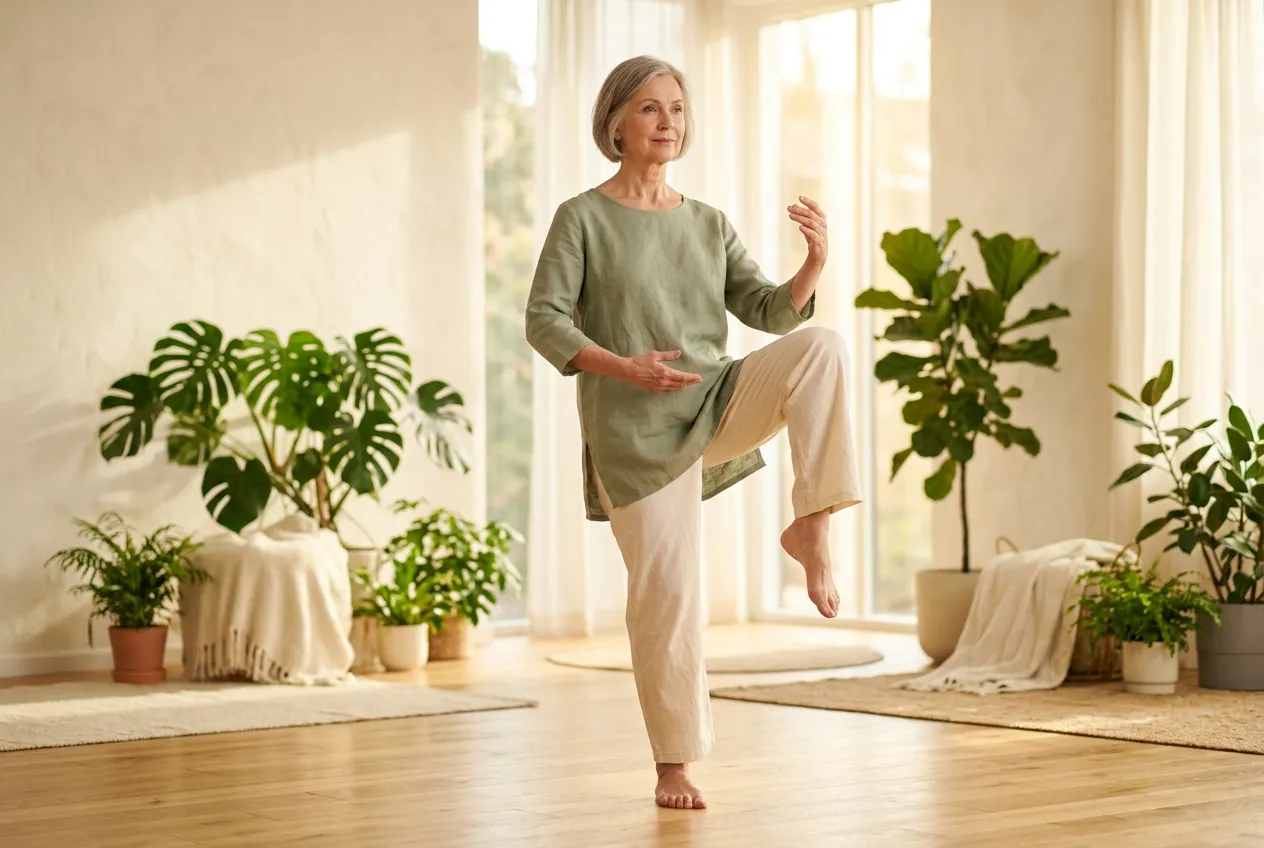
Three sensory systems contribute to balance:
- Vestibular system: The inner ear detects head position and movement, providing information about linear acceleration and rotation.
- Visual system: The eyes provide environmental reference points — what’s level, what’s moving, what’s stable.
- Somatosensory system (proprioception): Sensors in muscles, tendons, and joint capsules provide information about body position, joint angles, and ground contact.
The brain integrates these three inputs and sends continuous micro-adjustments to maintain stability. When the system works well, you don’t notice it. When one input degrades — poor proprioception from age, visual impairment, or vestibular dysfunction — the others have to compensate, and balance becomes less reliable.
Effective balance training should challenge this integrated system, not just one component. This is one reason tai chi is particularly effective: it simultaneously challenges proprioception, demands visual attention, and trains the coordinated muscle responses that allow quick postural adjustment.
The Proprioception Connection
Proprioception — your body’s sense of its own position and movement — is the aspect of balance most directly trained by tai chi, and the one most often overlooked by conventional balance exercises.
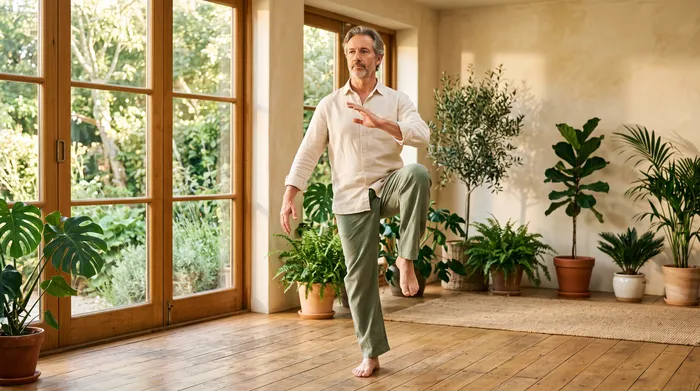
Most balance exercises (standing on one foot, wobble boards, etc.) train static balance: maintaining position with minimal movement. Tai chi trains dynamic balance: maintaining postural control through continuous, controlled movement. Dynamic balance is what you actually use in daily life — walking, turning, reaching, navigating stairs.
I started noticing my proprioceptive improvements from tai chi in ways that surprised me. Walking on uneven ground, I found I was adjusting automatically rather than consciously — my ankles and knees were responding before my conscious attention caught up. That kind of automatic, rapid adjustment is exactly what proprioceptive training develops.
Tai chi develops proprioception through several mechanisms:
Slow movement under load: Moving slowly in semi-squat positions places sustained proprioceptive demand on the ankles, knees, and hips. The joints and muscles are under load while moving, which activates proprioceptive sensors continuously throughout the form.
Thin-soled footwear: Practising in thin-soled shoes (or barefoot) removes the proprioceptive insulation of heavily cushioned modern footwear. The foot can feel the ground more accurately, which improves the quality of the proprioceptive signal reaching the brain.
Attentive internal focus: Tai chi requires practitioners to notice where their weight is, how it’s shifting, and where their limbs are in space. This directed attention enhances the brain’s processing of proprioceptive information.
Muscle Strength and Balance
Strength is a balance component that tends to be underemphasised in discussions of tai chi. The form is not typically described as a strength training practice, but the postural demands of tai chi produce meaningful strength adaptations in the muscles most important for balance maintenance.
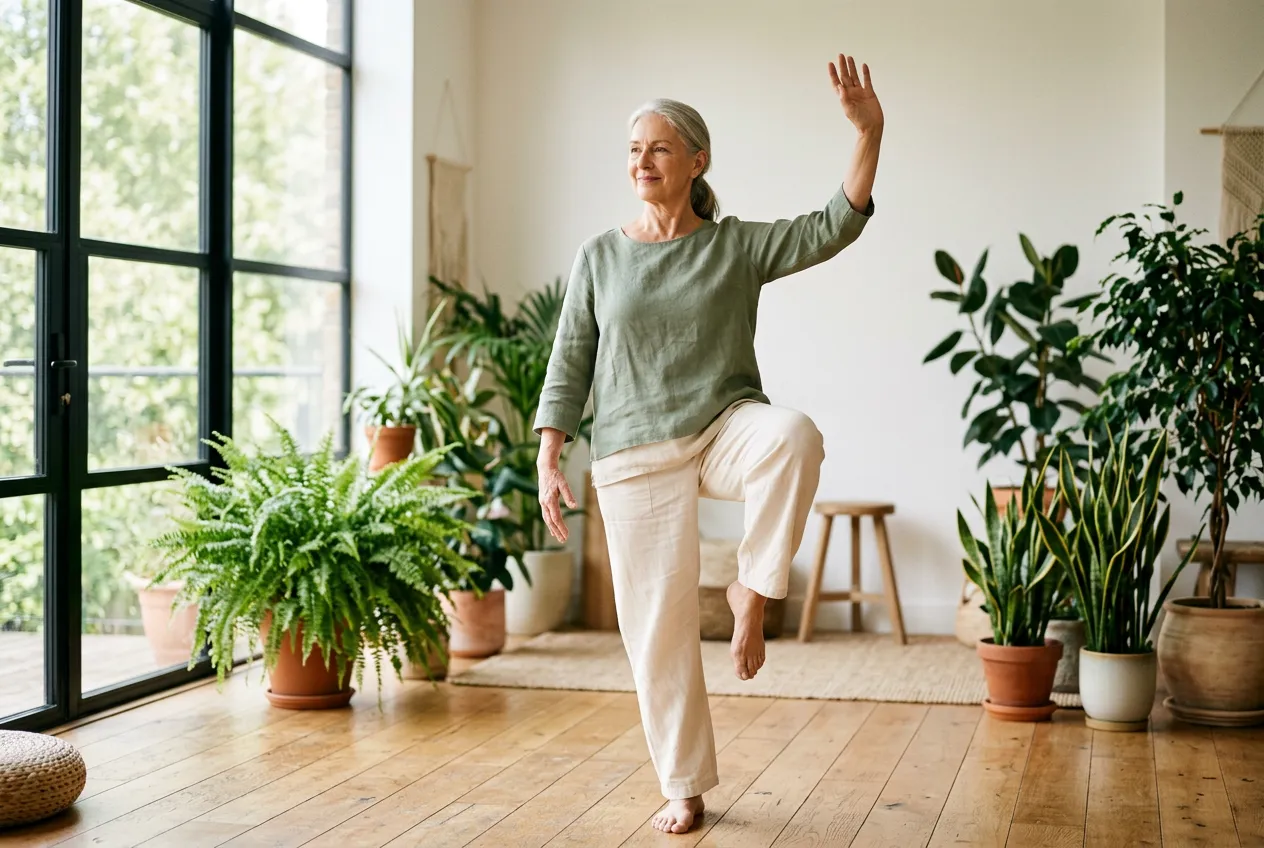
Quadriceps: The front of the thigh. The knee-flexed stance of tai chi maintains sustained eccentric loading of the quadriceps throughout practice. Lower-extremity strength is one of the most important predictors of balance and fall resistance — a systematic review and meta-analysis published in the Journal of the American Geriatrics Society, pooling data from 13 prospective studies, found that lower-extremity muscle weakness was significantly associated with fall risk in older adults (odds ratio 1.76 for any fall, rising to 3.06 for recurrent falls).
Gluteal muscles: The hip extensors and abductors. Single-leg weight-bearing in tai chi demands constant activation of the hip stabilisers, building the lateral hip strength needed to control pelvic position during walking and stepping.
Ankle musculature: The tibialis anterior and calf complex. The heel-to-toe weight transfers in tai chi continuously work these muscles and build ankle strength alongside ankle proprioception.
The combined effect is a form of functional strength training — not high-load, but sustained and specific to the postures and movements most relevant to balance maintenance.
Coordination and Dual-Task Balance
One aspect of balance that is particularly important — and particularly trainable — is what researchers call dual-task balance: the ability to maintain postural stability while simultaneously performing a cognitive or physical task.
When we walk while talking, or navigate a crowded room while thinking about something else, we are performing dual-task balance. This is where many falls actually happen — not when people are focused on movement, but when their attention is divided.
Research has found that tai chi specifically improves dual-task balance performance. A study published in Frontiers in Human Neuroscience compared long-term tai chi practitioners with age- and gender-matched non-practitioners, and found that expert practitioners had significantly lower stride-time variability than non-practitioners specifically while walking and performing a cognitive task at the same time. A companion six-month randomised trial in tai chi-naive older adults found a small improvement in this same dual-task measure with tai chi training, though it did not reach statistical significance against the control group in that smaller sample — the researchers describe dual-task gait variability as a promising, sensitive marker for monitoring tai chi’s effect on fall risk rather than a settled finding.
The training mechanism is direct: tai chi itself is a sustained dual-task activity. Practitioners must remember and execute the form sequence (cognitive task) while maintaining correct posture and balance (physical task) simultaneously. This is more demanding than focusing on movement alone, and that demand produces adaptations in exactly the neural systems that govern dual-task balance.
Having practised tai chi forms for years, I notice that the meditative focus required doesn’t compete with balance — it enhances it. Your attention is on the body, which is where it needs to be. Modern life diverts attention from physical presence; tai chi calls it back.
How Tai Chi Compares to Other Balance Exercises
Understanding what makes tai chi distinctive helps you decide whether it belongs in your exercise approach.
Static balance exercises (standing on one foot, foam pad exercises): Train vestibular and proprioceptive systems, but in static positions. Less transfer to dynamic movement situations. Often performed for short durations, which limits total training time.
Yoga: Shares many balance benefits with tai chi — standing poses train single-leg balance and proprioception, and the mindful attention is comparable. Yoga tends to involve more held static positions and floor-based work. Tai chi involves more continuous dynamic movement and is more accessible for people who cannot easily get to the floor.
Walking: Provides some proprioceptive stimulation and cardiovascular benefit but limited specific balance challenge. Walking on varied terrain is more challenging, but most daily walking is on flat, predictable surfaces.
Strength training: Directly addresses muscle strength components of balance (particularly when it includes single-leg exercises, deadlifts, or similar movements), but does not specifically address proprioception, coordination, or dual-task balance.
Tai chi’s distinctive contribution is that it simultaneously addresses multiple balance components — proprioception, muscle endurance, coordination, and dual-task capacity — in a single, accessible, low-impact practice. This multi-component nature is probably why it consistently appears in systematic reviews as one of the more effective balance interventions.
Research on Tai Chi and Balance Outcomes
The evidence that tai chi improves balance is among the most consistent in the tai chi literature.
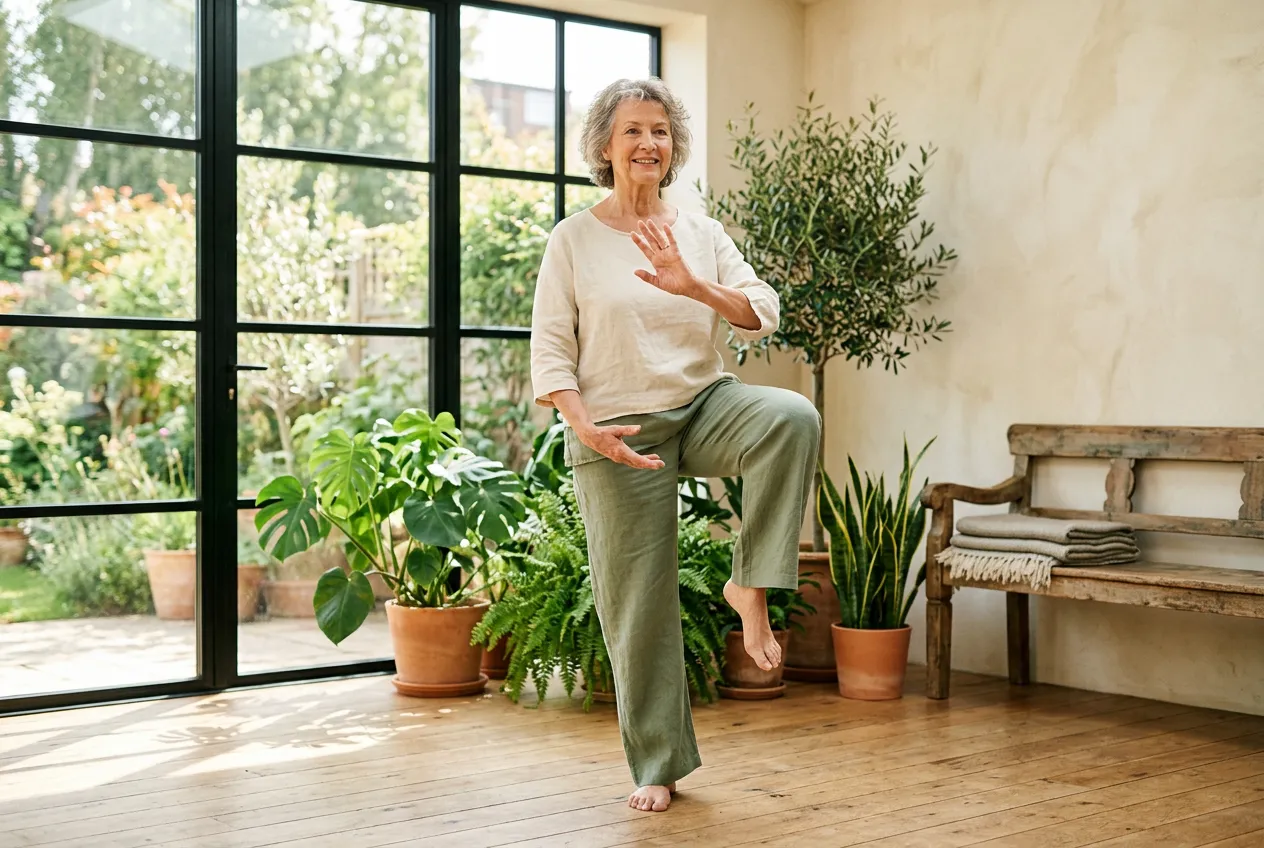
A systematic review published in the Journal of Geriatric Physical Therapy examined 19 prospective studies and found consistent evidence for tai chi improving balance and balance confidence in older adults, with improvements reported on measures including postural sway (posturography), the Timed Up and Go test, and the Berg Balance Scale.
A 2024 systematic review and meta-analysis in Frontiers in Public Health of 28 trials involving 2,000 healthy older adults found that tai chi significantly improved balance performance across standard measures including the Timed Up and Go test, the Functional Reach test, and the Berg Balance Scale.
What the research shows is not that tai chi works for everyone equally, or that it will resolve severe vestibular disorders, or that it is the only effective balance intervention. It shows that regular tai chi practice is associated with meaningful improvements in clinically significant balance measures in most populations studied. That is a credible, proportionate conclusion.
The tai chi health benefits article provides context on how this evidence fits within the broader research landscape.
Practical Guidance: Starting Tai Chi for Balance
If balance improvement is your primary goal, here is how to approach tai chi most effectively.
Yang style as a starting point: Yang style is the most studied and most accessible form for balance work. Its large, flowing movements, slow weight transfers, and clear stance patterns make it ideal for developing the balance-relevant adaptations described in this article.
Consistent frequency over duration: Research showing meaningful balance improvements generally involves practice two to three times per week. A 45-minute session three times per week is more effective for balance development than a single two-hour session. Frequency builds the neuromuscular pathways; intensity matters less for this type of adaptation.
Attend a class rather than learn alone: The postural corrections and weight-transfer guidance from a qualified instructor are particularly valuable for balance training. Balance errors — collapsing the stance, overloading one leg inappropriately, locking the knees — are hard to self-correct from a video. Good instruction accelerates the development of proper balance-challenging mechanics.
Don’t expect immediate results: Balance improvements from tai chi typically become noticeable after 8-12 weeks of regular practice. Some changes are measurable on clinical tests before you notice them subjectively. Give the practice time to work.
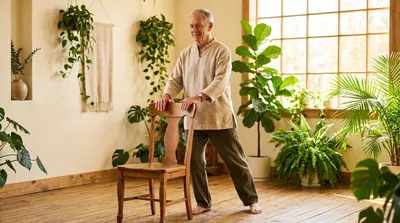
Practise near a wall initially: If you have existing balance concerns, positioning yourself near a wall during early practice provides a safety reference without preventing you from challenging your balance appropriately. You are unlikely to need it after a few weeks, but it reduces anxiety during the early learning period.
For older adults approaching balance training, the tai chi for seniors article covers additional considerations relevant to this population.
Beyond the Physical: Balance as a Metaphor in Tai Chi
This is not just a poetic observation — it has practical significance.
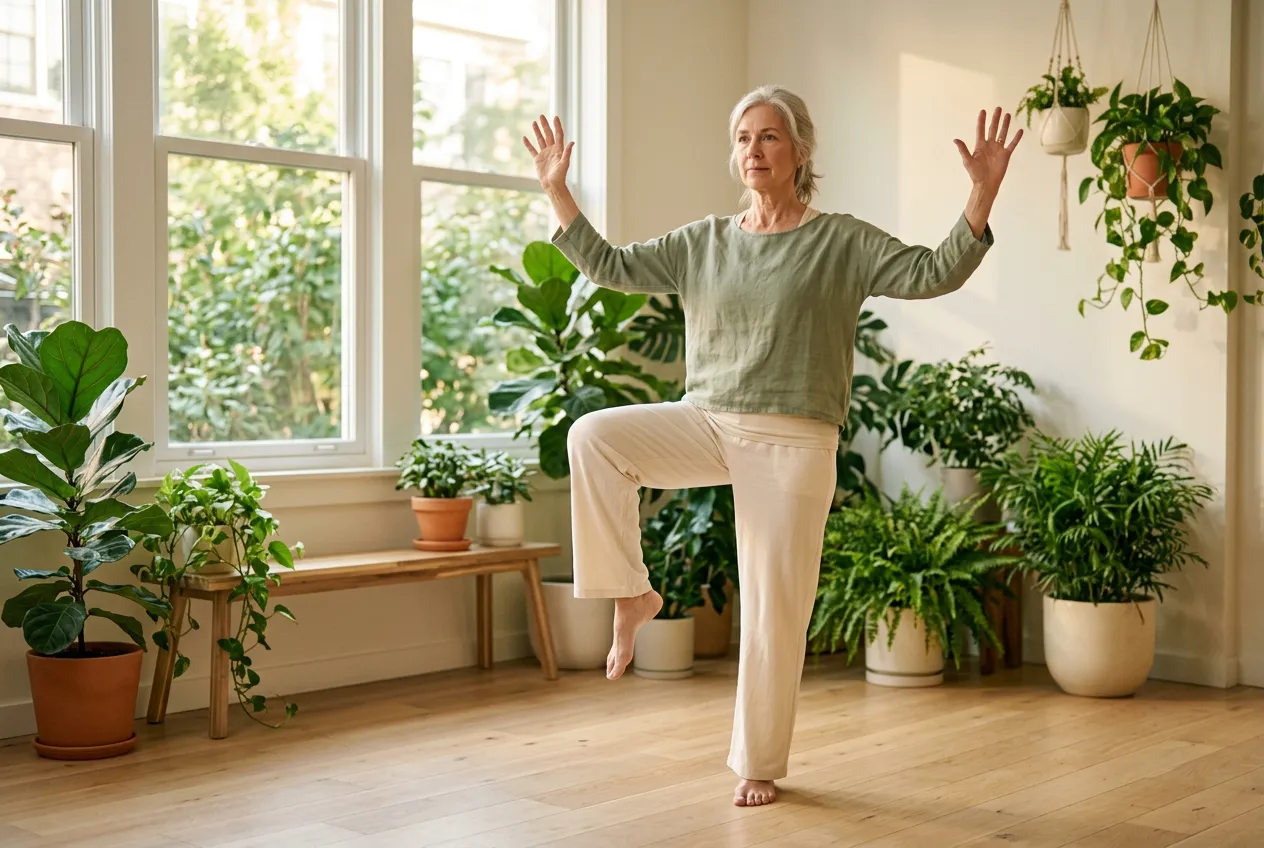
Tai chi practitioners talk about balance not just as a physical skill but as a principle that pervades the art: balance between yin and yang, between yielding and expressing, between effort and effortlessness. The physical and the philosophical reinforce each other in practice.
What this means practically is that the quality of attention tai chi cultivates — the awareness of weight distribution, of where your centre of gravity is, of how movement in one part of the body affects stability elsewhere — does not stay confined to the practice session. Long-term practitioners often describe developing a general sense of embodied awareness that carries into daily life. This is perhaps the least quantifiable benefit, but it is the one that many practitioners report as the most transformative.
Frequently Asked Questions
How long does it take to see balance improvements from tai chi?
Clinical research generally shows measurable balance improvements after 8 to 16 weeks of regular practice (two to three times per week). Subjective awareness of improved balance may take slightly longer — practitioners sometimes notice it indirectly, when they realise they are navigating stairs more confidently, or recovering from a stumble more smoothly than expected. Consistent practice is the most important factor.
Can young people benefit from tai chi for balance?
Yes. Balance is not exclusively an older-adult concern. Athletes, dancers, and active people of all ages can benefit from the proprioceptive and coordination training tai chi provides. For younger practitioners, the benefits may be less about fall prevention (which is less immediately relevant) and more about improved body awareness, movement quality, and athletic performance. The underlying neurological adaptations are not age-specific.
What balance tests do researchers use to measure tai chi’s effects?
The most commonly used clinical balance tests in tai chi research are the Berg Balance Scale (a comprehensive 14-item functional balance assessment), the Timed Up and Go (TUG) test (time to rise from a chair, walk 3 metres, return, and sit down), posturography (laboratory measurement of postural sway), and single-leg stance time. Tai chi has shown improvements on all of these measures across multiple studies.
Is better balance the same as better proprioception?
Proprioception is one component of balance, not the whole of it. Better proprioception contributes to better balance, but balance also depends on vestibular function, visual input, muscle strength, and neural processing speed. Tai chi addresses several of these simultaneously, which is why its balance effects may be broader than practices that target proprioception alone.
Can I practise tai chi if I already have significant balance problems?
Often yes, but with appropriate modifications and safety considerations. People with diagnosed vestibular disorders, significant neurological conditions (such as Parkinson’s disease), or a recent history of falls should consult a healthcare provider before starting. Some individuals may benefit from physiotherapy assessment before or alongside tai chi. That said, people with moderate balance impairment are frequently included in tai chi research trials and show meaningful improvement — the practice is specifically designed to challenge balance safely.