“Boosts your immune system” is one of the most abused phrases in wellness marketing, and it is usually meaningless. The immune system is not a dial that goes up and down, and most things sold as immune boosters do nothing measurable at all.
Tai chi is unusual in this space because there is a specific, well-designed piece of research behind the claim — a randomised controlled trial that measured immune response to a live vaccine rather than relying on vague proxies. That study, and what has followed it, is worth understanding precisely, because the accurate version of the claim is more interesting than the marketing version.
The Shingles Vaccine Study
The landmark trial was published in the Journal of the American Geriatrics Society in 2007. Researchers randomised 112 healthy older adults aged 59 to 86 to either 25 weeks of Tai Chi Chih — a simplified Western form of tai chi — or a health education control. After 16 weeks of intervention, both groups were vaccinated with the live attenuated varicella zoster vaccine.
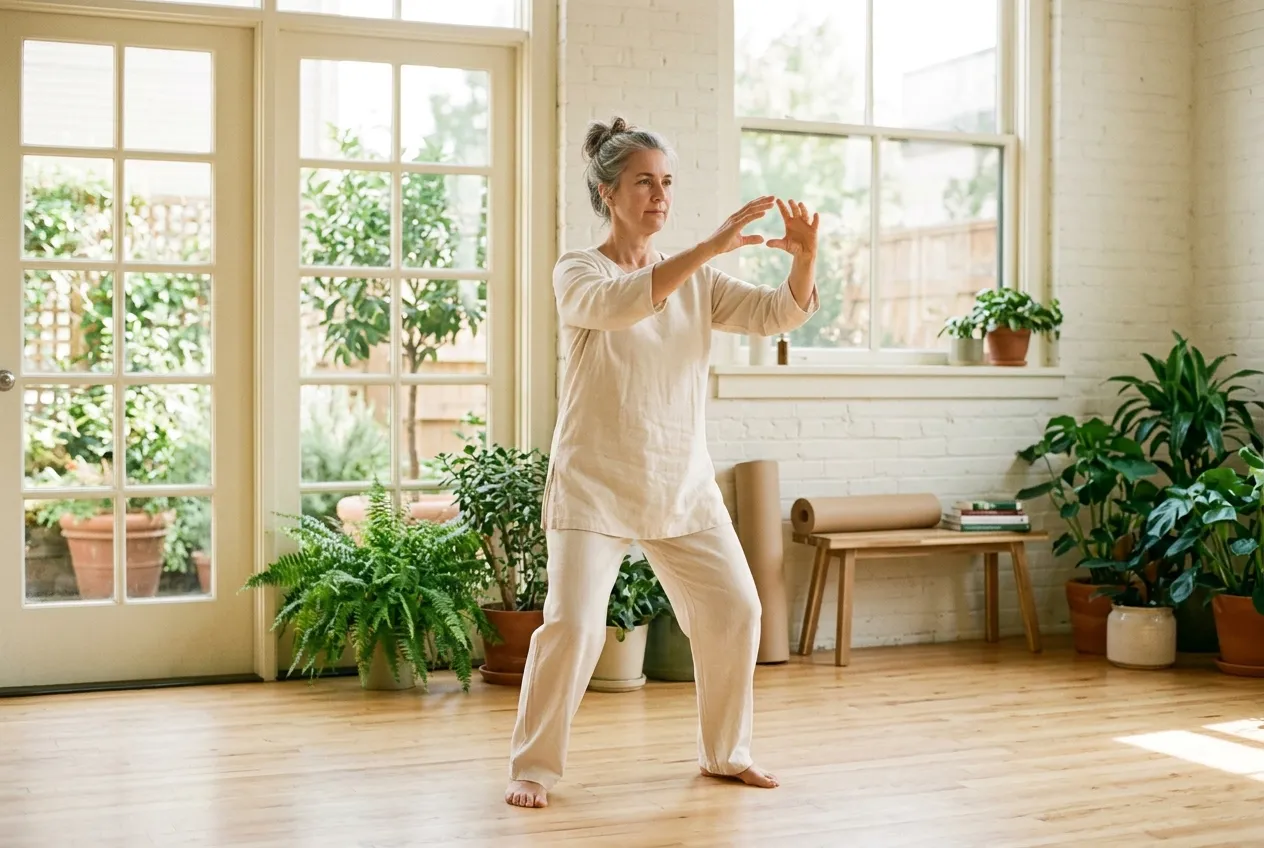
Varicella zoster is the virus that causes chickenpox and later, on reactivation, shingles. Immunity to it declines with age, which is why shingles is largely a disease of older adults. Cell-mediated immunity to the virus is a well-validated measure — it is not a proxy or a surrogate, it is the actual thing that determines whether the virus stays dormant.
The results were striking. The tai chi group showed significantly higher varicella zoster cell-mediated immunity than the control group, with a rate of increase nearly twice as large. Tai chi alone produced an increase in immunity comparable in magnitude to that produced by the vaccine itself, and the two effects were additive — participants who did tai chi and received the vaccine ended up with substantially higher immunity than those who received the vaccine alone.
That is a considerably more specific and more meaningful result than “boosts immunity”. A behavioural intervention improving vaccine response in older adults is a real and quantifiable finding. It is also the study I point people to when they ask me whether any of the health claims around tai chi hold up, because it was designed in a way that makes the result hard to dismiss.
What Else the Research Covers
Beyond the vaccine work, the immune-related tai chi literature falls into a few strands:
Inflammatory markers. Several studies have measured C-reactive protein, interleukin-6, and other markers of systemic inflammation in tai chi practitioners. Results are mixed but broadly favourable, with reductions in inflammatory markers reported in some trials, particularly those involving older adults or people with chronic conditions. Chronic low-grade inflammation is implicated in cardiovascular disease, diabetes, and frailty, so this matters, but the evidence is not as clean as the vaccine finding.
Immune cell populations. A handful of studies have reported changes in regulatory T cell populations and other immune cell measures in regular practitioners. These are small studies and the clinical significance is unclear.
Infection rates. This is the outcome people actually care about — do tai chi practitioners get fewer colds, fewer chest infections, less shingles? There is very little direct evidence, because such trials require large samples and long follow-up. The vaccine study measured immunity, not shingles incidence.
That last gap is the honest limit of the claim. We have good evidence that tai chi improves a validated immune measure in older adults. We do not have evidence that tai chi practitioners get sick less often. I have practised for over ten years and could not tell you whether I get fewer colds than I used to — which is exactly the kind of anecdote that should not be treated as evidence.
Why Movement Would Affect Immunity
Three mechanisms are plausible, and two are well supported in the broader exercise literature.
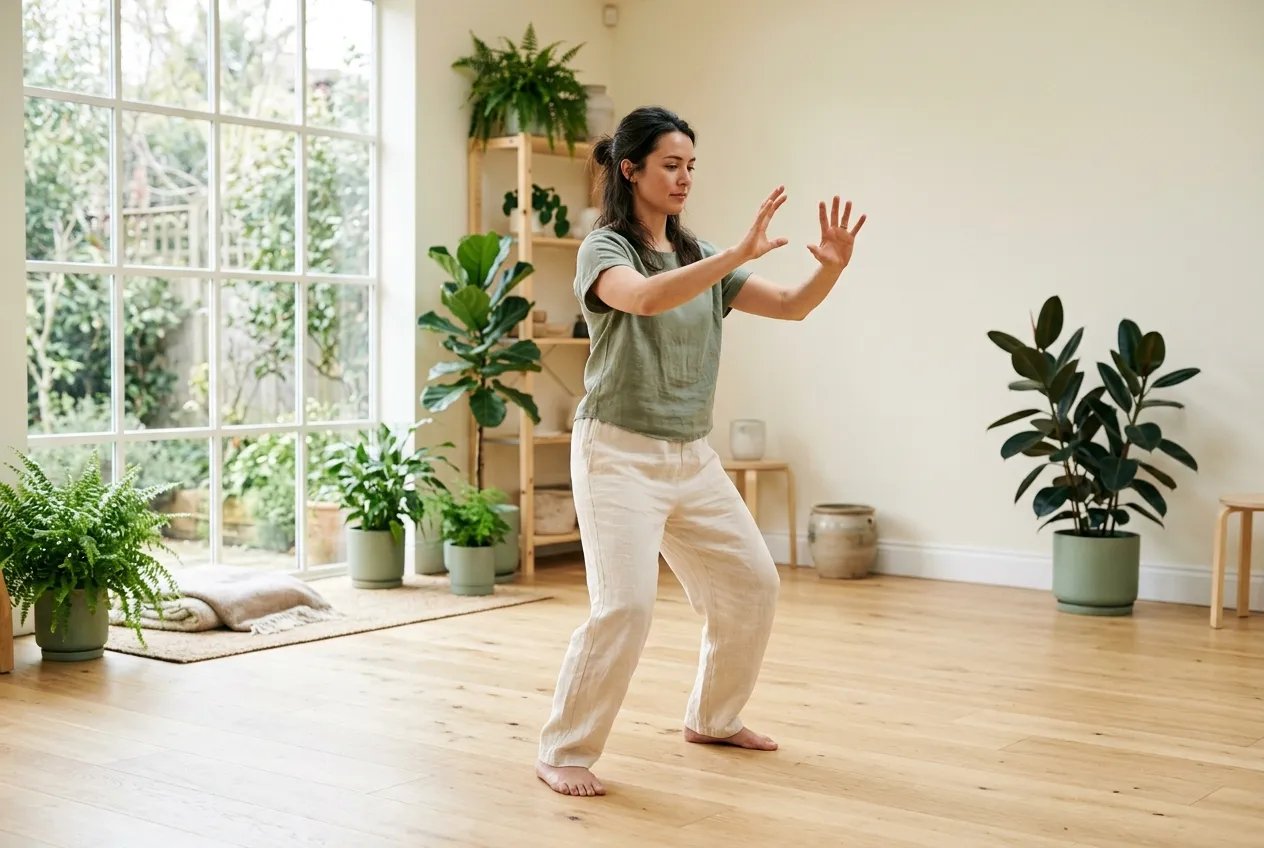
Stress reduction. Chronic psychological stress is genuinely immunosuppressive — this is one of the better-established findings in psychoneuroimmunology. Sustained cortisol elevation suppresses cell-mediated immunity specifically, which is the arm of the immune system the shingles study measured. Anything that reliably reduces chronic stress load has a plausible route to improved immune function, and tai chi does reliably reduce it.
Sleep. Sleep quality has a direct, measurable effect on immune function, including on vaccine response. Tai chi improves sleep in older adults, and this may account for a meaningful share of the immune effect. The sleep article covers that evidence in detail.
Moderate activity itself. Regular moderate exercise is associated with better immune surveillance and reduced systemic inflammation, while very high training loads can transiently suppress immunity. Tai chi sits comfortably in the moderate zone.
When I first read the vaccine study I assumed the explanation would be something specific to tai chi. It is not. Notice that none of these mechanisms is exotic. Tai chi is not doing something mysterious to the immune system — it is reducing stress, improving sleep, and providing moderate activity, all three of which have known immunological consequences. That is a more credible story than the energy-based explanations sometimes offered.
Who This Matters Most For
Immune function declines with age, a process known as immunosenescence. It is why older adults respond less well to vaccines, why shingles becomes common after sixty, and why respiratory infections are more dangerous in later life.
The tai chi immune research was conducted in older adults specifically, and that is where the finding is most relevant. If you are 35 and healthy, your immune response to a vaccine is already robust, and there is little headroom for improvement. If you are 70, there is a great deal.
Two groups where this is worth considering:
Older adults approaching vaccination. The vaccine study suggests regular practice in the weeks before vaccination may improve the response. That is a reasonable inference from the trial design, though nobody has tested “practise tai chi before your flu jab” as a specific intervention.
People with chronic inflammatory conditions. Where systemic inflammation is part of the disease process, the inflammatory marker findings are relevant, though this remains an area where the evidence is suggestive rather than settled.
For people on immunosuppressive medication or with immune deficiencies, none of this changes clinical management. Tai chi is safe to practise and may help with the deconditioning and stress that accompany chronic illness, but it does not substitute for anything.
Practising Through the Winter
The practical question this research raises for most people is whether to keep practising through the months when infections circulate — and specifically, whether to practise when feeling slightly unwell.
The conventional guidance for exercise applies here with little modification. Symptoms above the neck — a mild head cold, blocked nose, sore throat without fever — do not generally require stopping activity, and gentle movement often feels better than lying still. Symptoms below the neck — fever, chest symptoms, body aches, significant fatigue — mean rest. That distinction is rough but serviceable, and tai chi is low enough in intensity that erring toward practising is reasonable for the mild end.
What changes in winter is where you practise. Outdoor practice in cold air is entirely traditional and perfectly fine with adequate layers and a longer warm-up, but cold muscles and stiff joints raise the injury risk on the transitions, and icy ground makes balance work genuinely hazardous. I move my own practice indoors from roughly November and treat the first ten minutes as a proper warm-up rather than a formality.
The other winter factor is light. Reduced daylight affects sleep timing and mood, both of which feed into the mechanisms discussed above. Morning practice near a window, or outdoors when the weather allows, does more than the movement alone.
Practising for Immune Health
The dose in the trial was three 45-minute sessions per week for 25 weeks. That is the only immune-specific dosing information available, and it is a reasonable target.
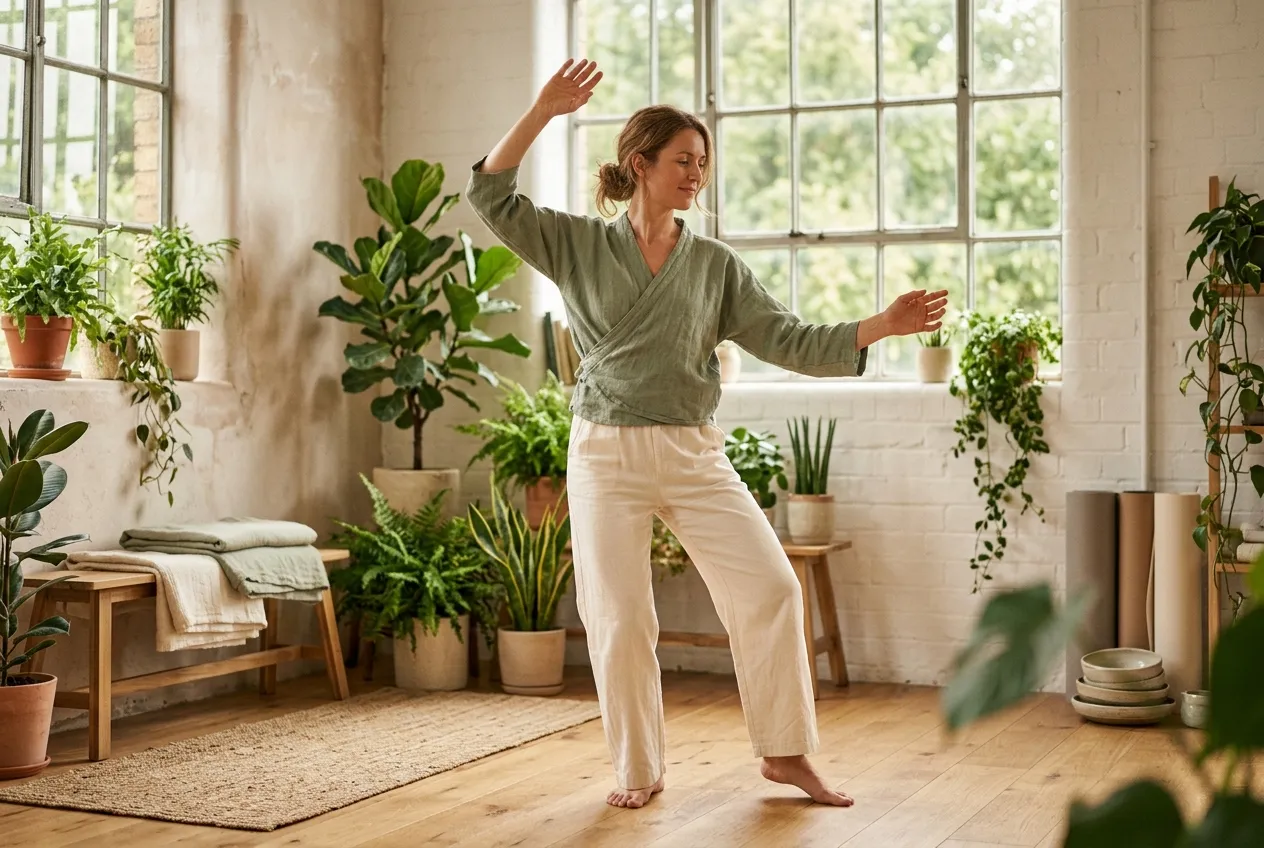
Beyond frequency, the elements most likely to matter given the mechanisms:
Emphasise the relaxation. If the effect is running mainly through stress reduction and sleep, then the settling, breathing, and standing components deserve as much attention as the form. A rushed session that leaves you no calmer has probably lost the active ingredient.
Practise consistently rather than intensively. Immunological changes in the trial developed over 16 weeks before vaccination. This is not a short-term intervention.
Do not overdo it. The relationship between exercise and immunity is not linear. Very high training loads suppress immune function transiently. Tai chi is unlikely to get anyone into that territory, but the principle argues against treating more as automatically better.
Sleep and stress are the levers. If your practice is not improving either, the immune benefit is unlikely to appear. The daily practice routine guide covers how to structure a week of practice that is sustainable rather than exhausting.
What Can Honestly Be Claimed
To be precise about where the line sits:
Supported: Regular tai chi practice improved cell-mediated immunity to varicella zoster in older adults, and enhanced the response to a live vaccine, in a randomised controlled trial. Some trials report reductions in inflammatory markers.
Plausible but not demonstrated: That this translates into fewer infections, less shingles, or better outcomes from illness.
Not supported: That tai chi prevents or treats any infectious disease, that it should replace vaccination, or that it “boosts immunity” in any general sense.
The vaccine finding is genuinely impressive and deserves to be better known. It also does not mean what wellness marketing wants it to mean. The broader health benefits article places the immune research alongside the balance, cardiovascular, and mental health evidence, where its relative strength and limits are easier to see. Other condition-specific reviews are collected in the tai chi health section.