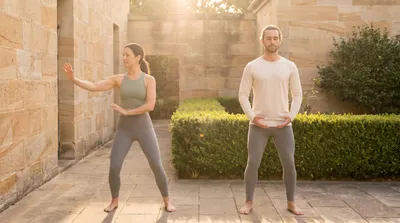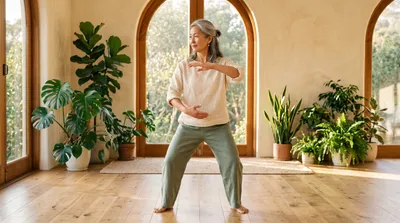
Qigong has been practised in China for at least 2,000 years, but serious Western research into its health effects is much more recent — and the findings are more robust than many people expect. This is not a wellness modality supported primarily by anecdote. Qigong has been studied in randomised controlled trials, systematic reviews, and meta-analyses across a wide range of health conditions, and the evidence for several benefits is genuinely substantial.
This article covers what the research actually shows, with real citations and honest characterisation of evidence quality. Health claims for any complementary practice deserve scrutiny, and qigong is no exception. Where the evidence is strong, I’ll say so. Where it is preliminary or limited, I’ll say that too.
A note on terminology: qigong (氣功) encompasses a broad range of movement and breathing practices. Most research has been conducted on specific sets — particularly the Eight Brocades (Ba Duan Jin), Tai Chi Qigong, and Shibashi. The findings are not perfectly interchangeable, but they point consistently in the same direction: slow, breath-coordinated, intention-guided movement has substantial health effects across multiple systems. Tai chi itself is closely related enough that the tai chi health benefits review covers overlapping territory — the two bodies of research reinforce each other.
What Are the Health Benefits of Qigong?
Qigong’s best-supported health benefits, based on the randomised controlled trial evidence covered in this article, are stress and anxiety reduction, improved balance and fall prevention in older adults, and measurable reductions in blood pressure, with more preliminary but still promising evidence for immune function and pain relief. Of everything I track in my own qigong practice, the balance and stress effects are the two I’d point a skeptical beginner toward first — they’re the most reliably documented in the research below and the ones I notice most consistently session to session.
Is Qigong Backed by Real Scientific Research?
Yes — qigong has been studied in dozens of randomised controlled trials and multiple systematic reviews and meta-analyses spanning stress, balance, pain, immune function, and cardiovascular outcomes, not just anecdotal reports. When I first started digging into the qigong literature myself, ahead of writing this article, what struck me wasn’t any single dramatic finding — it was how consistently the systematic reviews pointed the same direction across completely different research teams and patient populations. The research base isn’t as large as the literature behind general aerobic exercise, but it’s substantial enough that the reviews cited throughout this article each pool data from more than a dozen individual trials rather than relying on a single small study.
Stress Reduction and Mental Wellbeing
The mental health evidence for qigong is among the most consistent in the literature. Multiple systematic reviews have found significant reductions in anxiety and stress markers following qigong practice.
A 2019 systematic review and meta-analysis published in Frontiers in Psychiatry examined the neurophysiological and psychological mechanisms behind qigong’s effect on depression, pooling seven randomised controlled trials and finding a significant, moderate reduction in depressive symptoms, alongside a significant reduction in diastolic blood pressure — consistent with activation of the parasympathetic nervous system.
Cortisol reduction — one of the most direct physiological markers of stress response — has been documented in mind-body practice research more broadly. A 2025 systematic review and meta-analysis of 89 randomised controlled trials on mind-body interventions, including qigong, tai chi, yoga, and meditation, found these practices reduced levels of cortisol and several inflammatory markers compared with control conditions, alongside increases in anti-inflammatory and immune-related factors. The mechanism is well-understood: slow, breath-regulated movement activates the parasympathetic nervous system (“rest and digest”), counteracting the sympathetic activation (“fight or flight”) that underlies chronic stress.
In my own experience, the stress-reducing quality of a good qigong session is one of the most reliable effects in the practice. Not every session achieves meditative depth, but the combination of rhythmic movement and regulated breathing produces a recognisable physiological shift — something I’ve come to depend on for managing the demands of building a company.
The mental health benefits of qigong complement the better-known research on tai chi for anxiety and depression. Both work through similar mechanisms: movement, breath regulation, focused attention, and social participation when practised in groups.
Balance and Fall Prevention
Balance improvement is one of the most robustly supported benefits of qigong practice, particularly for older adults. The evidence is consistent across multiple study designs and populations.
A 2025 systematic review and meta-analysis published in Frontiers in Public Health pooled 40 studies on the Eight Brocades (Baduanjin) specifically and found it significantly improved static balance, dynamic balance, proactive balance, and composite balance test scores in older adults, alongside a significant reduction in fall risk. Effect sizes were clinically meaningful — not just statistically significant — and the review found the greatest benefit emerged with a minimum of 12 weeks of practice.
The mechanisms are multiple. Qigong trains proprioception — the body’s internal sense of its own position — through slow, deliberate weight transfers and single-leg balance elements (particularly in sets like the Five Animal Frolics Crane section). It also strengthens the hip and ankle musculature used for balance recovery, and the attentional demands of practice develop environmental awareness that translates to daily life.
For older adults particularly, these balance benefits have direct implications for fall prevention — one of the most significant health priorities in an ageing population, given that falls are a leading cause of injury-related mortality in adults over 65.
Flexibility and Range of Motion
Qigong practice consistently improves flexibility and joint range of motion. The gentle, full-range movements characteristic of most qigong sets — particularly the shoulder and hip movements — provide sustained low-intensity loading that maintains and gradually increases tissue extensibility.
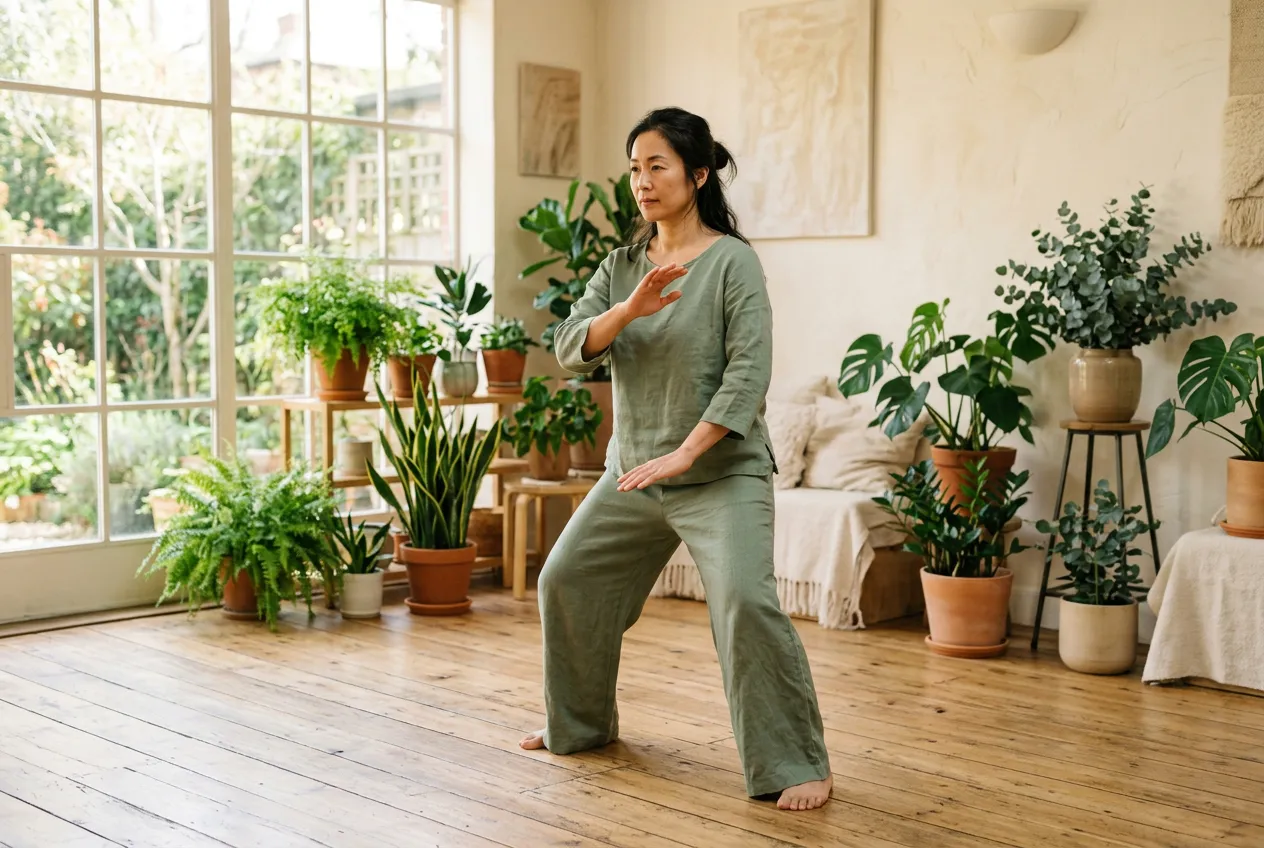
A 2017 systematic review and meta-analysis published in Evidence-Based Complementary and Alternative Medicine, pooling 19 randomised controlled trials on Baduanjin Qigong, found significant improvements in trunk flexibility among practitioners compared to control groups, alongside significant gains in quality of life, sleep quality, balance, handgrip strength, and blood pressure.
The flexibility benefits are particularly relevant for older adults, for whom stiffness and reduced range of motion are significant contributors to functional decline. Unlike aggressive stretching, qigong’s slow, non-forced movements improve flexibility without the injury risk associated with more intensive flexibility training.
Having practised qigong alongside other movement practices, I notice the flexibility benefit most clearly in the hip and shoulder girdles — the areas where the large, sweeping movements of sets like Shibashi and the Eight Brocades have the most direct effect. The flexibility gains are modest compared to dedicated yoga practice, but they come with the full complement of other qigong benefits rather than as an isolated training effect.
Pain Management
The evidence for qigong in pain management is good, with particular strength for musculoskeletal pain conditions.
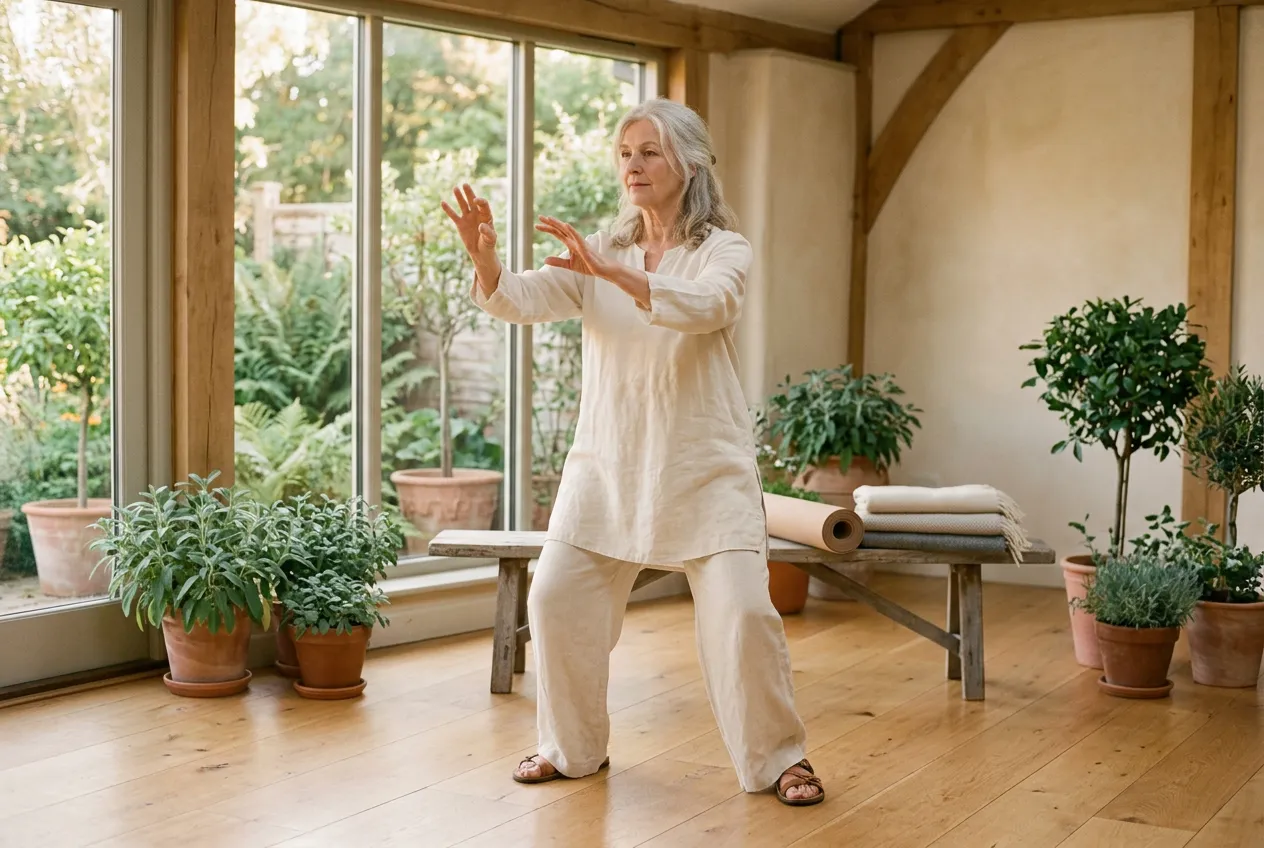
Lower back pain: A 2025 systematic review and meta-analysis published in the Journal of Orthopaedic Surgery and Research examined qigong specifically for chronic non-specific lower back pain across 16 randomised controlled trials with 1,175 participants. Qigong practice produced a significant improvement in disability scores; findings on pain intensity specifically were less consistent, with the review authors urging caution given high heterogeneity between studies.
Fibromyalgia: Fibromyalgia — a condition characterised by widespread musculoskeletal pain, fatigue, and cognitive difficulties — has been studied in several qigong trials. A 2016 systematic review in the Journal of Rheumatology found qigong practice produced significant improvements in pain, sleep quality, and physical function in fibromyalgia patients.
Arthritis and joint pain: Multiple trials have found qigong beneficial for osteoarthritis-related pain, particularly in the knees. The effects appear to work through both direct mechanisms (improved muscle support around affected joints, reduced inflammation markers) and indirect mechanisms (better sleep, reduced psychological distress, which both amplify pain perception).
The pain management evidence reflects qigong’s mechanism broadly: it is not a direct analgesic but a multi-system intervention that addresses several of the biological and psychological factors that sustain chronic pain. This means it works best as a complementary practice alongside appropriate medical management, not as a replacement for it.
Immune Function
The immune function research on qigong is genuinely interesting, though it should be characterised as promising rather than definitive. Sample sizes in the available studies are generally modest, and the immune system’s complexity makes it difficult to draw simple conclusions.
A 2020 systematic review and meta-analysis published in the journal Medicines examined the evidence for tai chi and qigong on immune parameters across 19 randomised controlled trials and 1,686 participants. The review found a significant, modest increase in the levels of immune cells among practitioners compared to control conditions. It did not, however, find a statistically significant effect on inflammatory biomarkers such as C-reactive protein and cytokines — the reviewers noted this likely reflects the bidirectional way these markers respond to mind-body practice, and called for more rigorous studies to clarify the clinical significance of the immune-cell findings.
The immune effects are plausible from a mechanistic standpoint. Chronic stress suppresses immune function — this is well-established. A practice that reliably reduces the physiological stress response should, by extension, partially reverse stress-induced immune suppression. That theoretical pathway is consistent with what the immune research finds.
However: there is no good evidence that qigong “boosts” immune function in a clinically meaningful way in people whose immune systems are functioning normally. The benefits appear most pronounced in people with elevated stress or compromised baseline immune function. Claims that qigong prevents infection or treats immune-mediated diseases are not supported by current evidence.
Cardiovascular Health
Qigong produces measurable cardiovascular benefits, though the magnitude is modest compared to vigorous aerobic exercise.
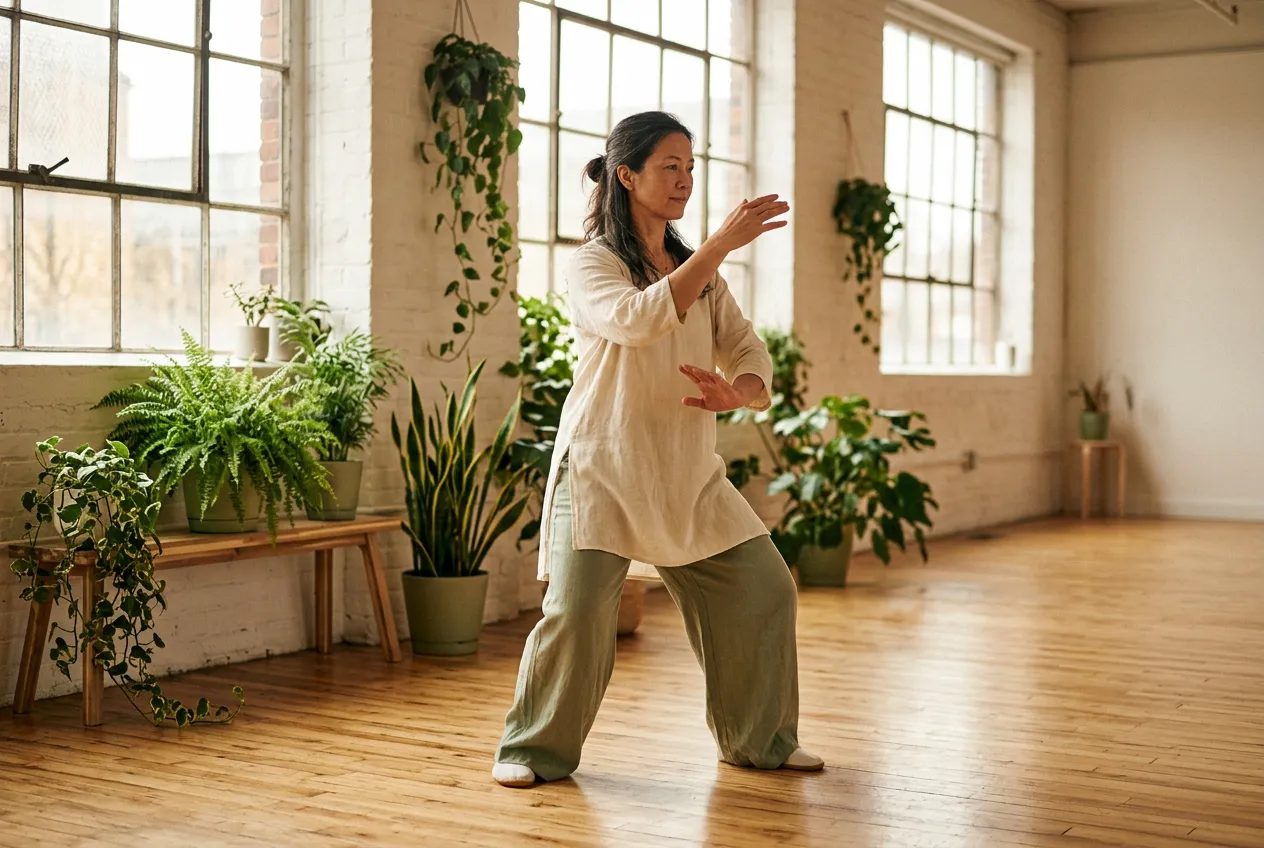
Blood pressure reduction is the most consistently documented cardiovascular effect. A 2015 systematic review in the Journal of Hypertension examined 20 randomised controlled trials of qigong for hypertension and found significant reductions in both systolic and diastolic blood pressure. The average reduction — approximately 12–17 mmHg systolic in hypertensive populations — is clinically meaningful.
Heart rate variability (HRV) improvements have also been documented. Higher HRV reflects better autonomic nervous system balance and is associated with reduced cardiovascular risk. Several studies have found significant HRV improvements in regular qigong practitioners.
The cardiovascular benefits are real but should be understood within context. Qigong is a low-to-moderate intensity practice — the metabolic demand is roughly comparable to slow walking. It is not a replacement for higher-intensity aerobic exercise where that is indicated for cardiovascular disease prevention or management. It is a genuine contributor to cardiovascular health, particularly for people who cannot tolerate higher-intensity exercise, or as a complement to it for those who can.
How to Begin Qigong Practice
If you’re considering starting qigong practice, the most important factor is choosing a set that is well-suited to beginners and has good instructional resources available. The Eight Brocades (Ba Duan Jin) is widely considered the best entry point for most beginners — it has a strong research base, clear movement structure, and excellent video instruction available. The Shibashi (Taiji Qigong 18 Movements) is another excellent starting point with a slightly more flowing, tai-chi-adjacent character.
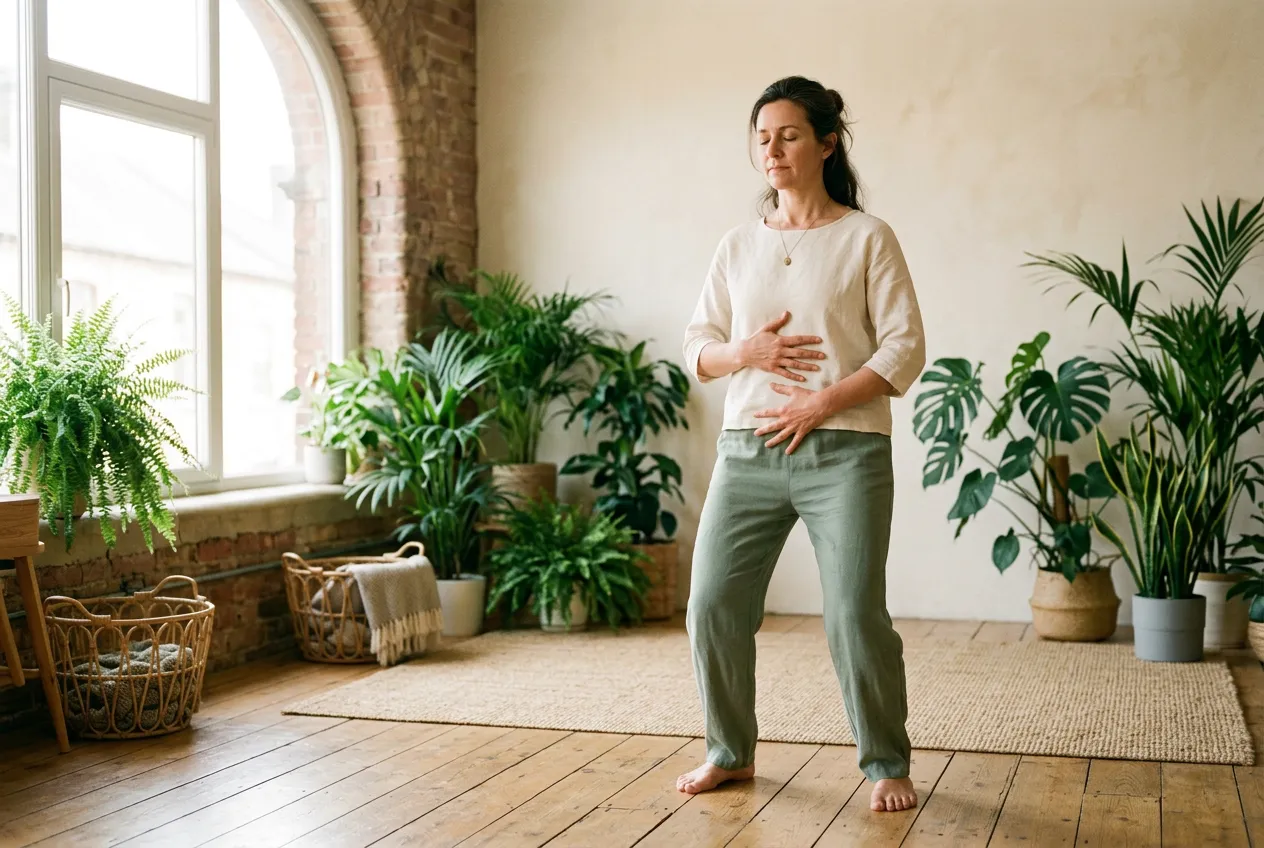
For understanding how qigong relates to tai chi as a practice — they overlap significantly but are not the same thing — the tai chi vs qigong comparison covers the key distinctions.
Practice frequency matters more than session length for building health benefits. Three to four sessions per week of 15–30 minutes each produces better results than a single long session. Daily short practice is better still. The research basis for this recommendation comes from the practice protocols used in the most positive clinical trials — those with the clearest results typically used daily practice at 20–30 minutes per session.
Browse the tai chi health section for the full range of evidence-based health guides, including conditions-specific research on arthritis, balance, and mental health.
Frequently Asked Questions
Is qigong evidence-based? Yes — qigong has a substantial and growing evidence base from randomised controlled trials and systematic reviews. The evidence is strongest for stress reduction, balance improvement, and blood pressure reduction. It is more preliminary for immune function and disease-specific applications. The overall research picture supports qigong as a genuine contributor to health maintenance, particularly for older adults and those with stress-related conditions.
How long before I notice health benefits from qigong? Most studies that find significant health effects use practice periods of 8–24 weeks. Some effects — particularly stress reduction and mood improvement — are noticeable within a few weeks of regular practice. The balance and flexibility benefits typically require 8–12 weeks of consistent practice to become clearly measurable. Longer-term practice produces cumulative benefits that extend beyond what shorter-term studies capture.
Is qigong safe for people with health conditions? For most common health conditions, qigong is considered very safe. It is a low-impact, low-intensity practice. People with acute injuries, severe balance disorders, or certain cardiovascular conditions should consult their doctor before beginning. Many clinical trials have specifically studied qigong in health-compromised populations (older adults, people with chronic pain, cancer survivors) and found it both safe and beneficial. Start with a gentle set like the Eight Brocades and pay attention to any discomfort.
Does it matter which qigong set I practise for health benefits? The research suggests that the specific set matters less than the general characteristics shared by most traditional qigong: slow movement, breath coordination, relaxed attention. The Eight Brocades has the most research behind it specifically, but other well-established sets (Shibashi, Five Animal Frolics, Tai Chi Qigong) have been shown to produce similar effects in the studies that have examined them.
Can I get the same benefits from yoga or other mind-body practices? Partially. The evidence for yoga shows similar effects in some areas — particularly stress reduction and flexibility. The balance benefits of qigong are better documented and more specific than yoga’s balance effects, particularly in older adults. The breath-regulated, slow movement character of qigong may offer advantages for older adults or those with limited mobility compared to some yoga styles that require more strength or flexibility.