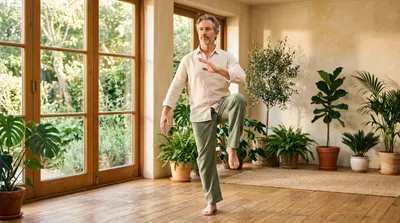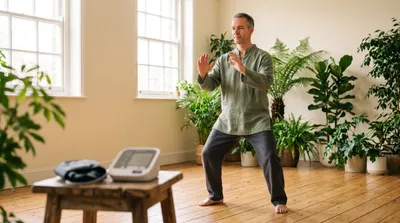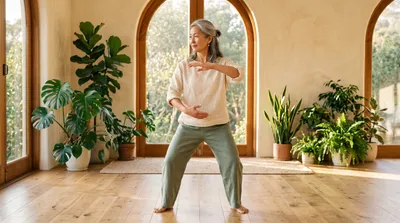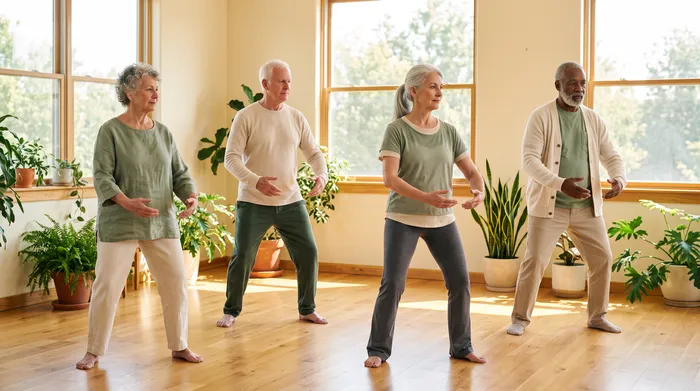
Tai chi is not cardiovascular exercise in the sense a cardiologist means the term. It rarely pushes heart rate past the low end of the moderate-intensity zone, and it does not produce the sustained aerobic stimulus that improves peak oxygen uptake. Anyone claiming tai chi replaces aerobic training for heart health is overselling it.
And yet cardiology has taken a genuine interest in it — enough that trials have been run in heart failure populations and in people who decline cardiac rehabilitation. The reason is that heart health is not only about aerobic capacity. Quality of life, adherence, autonomic balance, blood pressure, and simply doing something rather than nothing all matter, and those are the areas where tai chi performs.
This article covers what the cardiovascular evidence supports, where the limits are, and how to practise if you have an existing heart condition.
What Tai Chi Does to the Cardiovascular System
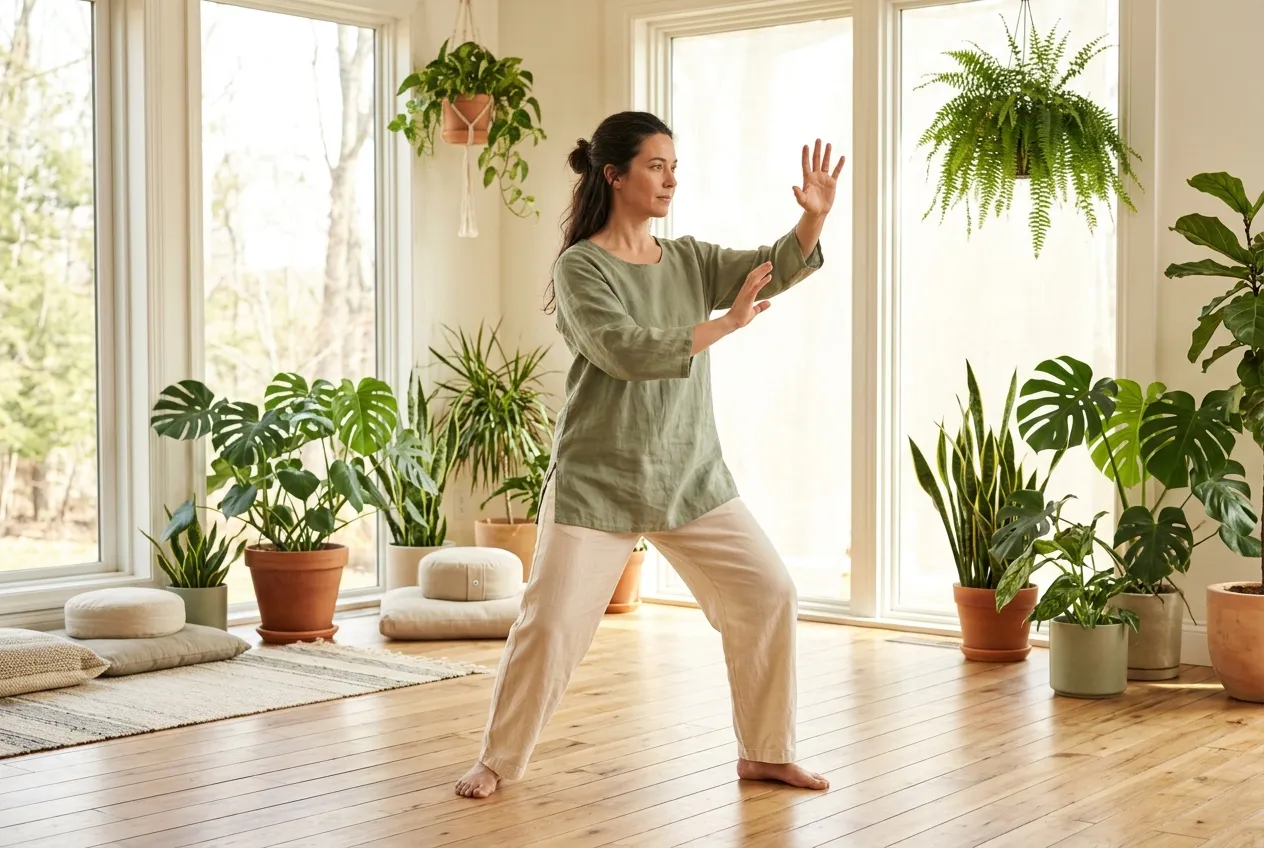
During practice, most people’s heart rate rises to somewhere between 50 and 70 percent of maximum — light to moderate intensity, depending on stance depth and form speed. Oxygen consumption is comparable to a slow walk. On its own, that is not enough to drive substantial aerobic adaptation in a healthy adult.
What it does produce is different in kind:
Autonomic rebalancing. Regular practice is associated with increased parasympathetic activity and reduced sympathetic tone, plausibly through reduced resting heart rate and improved heart rate variability — an established marker of cardiovascular risk. This mechanism is consistent with tai chi’s broader, well-established stress-reduction effect rather than a separately proven finding in its own right.
Blood pressure reduction. This is the best-supported cardiovascular outcome. A 2024 randomised trial published in JAMA Network Open found tai chi reduced ambulatory blood pressure in prehypertensive adults more effectively than moderate aerobic exercise over twelve months. The blood pressure article covers that trial and the practical implications in detail.
Endothelial and vascular measures. Arterial stiffness and endothelial function are an early, less settled area of interest — a handful of small trials point in a positive direction, but sample sizes are modest and the findings do not yet add up to a firm conclusion.
Reduced stress load. Chronic psychological stress is a recognised contributor to cardiovascular disease. Whatever else tai chi does, it reliably lowers subjective stress.
For a deconditioned person — which describes a large fraction of people with cardiovascular disease — tai chi is genuinely aerobic. Someone whose functional capacity is low enough that walking to the shop is demanding will find a tai chi session sits comfortably in their training zone. The intensity is low in absolute terms, not relative ones.
The Heart Failure Evidence
The most-cited cardiac trial is a randomised study of 100 outpatients with chronic systolic heart failure, published in Archives of Internal Medicine in 2011. Participants did twelve weeks of tai chi or attended time-matched education sessions.
The result was mixed in an instructive way. Tai chi did not improve six-minute walk distance or peak oxygen uptake — the conventional exercise capacity measures. What it did improve was quality of life, mood, and exercise self-efficacy, all of which were significantly better in the tai chi group.
It would be easy to read the absence of a fitness effect as a failure. In heart failure it is not. Quality of life is a primary treatment target in a condition where symptom burden, depression, and activity avoidance drive much of the disability. And exercise self-efficacy — the belief that you can safely exert yourself — predicts whether patients continue being active at all.
The trial also found tai chi was safe and well tolerated in this population, which was not a given before the study ran.
Coronary Heart Disease and Cardiac Rehabilitation
Cardiac rehabilitation after a heart attack or cardiac procedure is one of the best-evidenced interventions in cardiology. It is also one of the most under-used: a substantial proportion of eligible patients decline to enrol or drop out early, often citing intensity, transport, scheduling, or discomfort with gym environments.
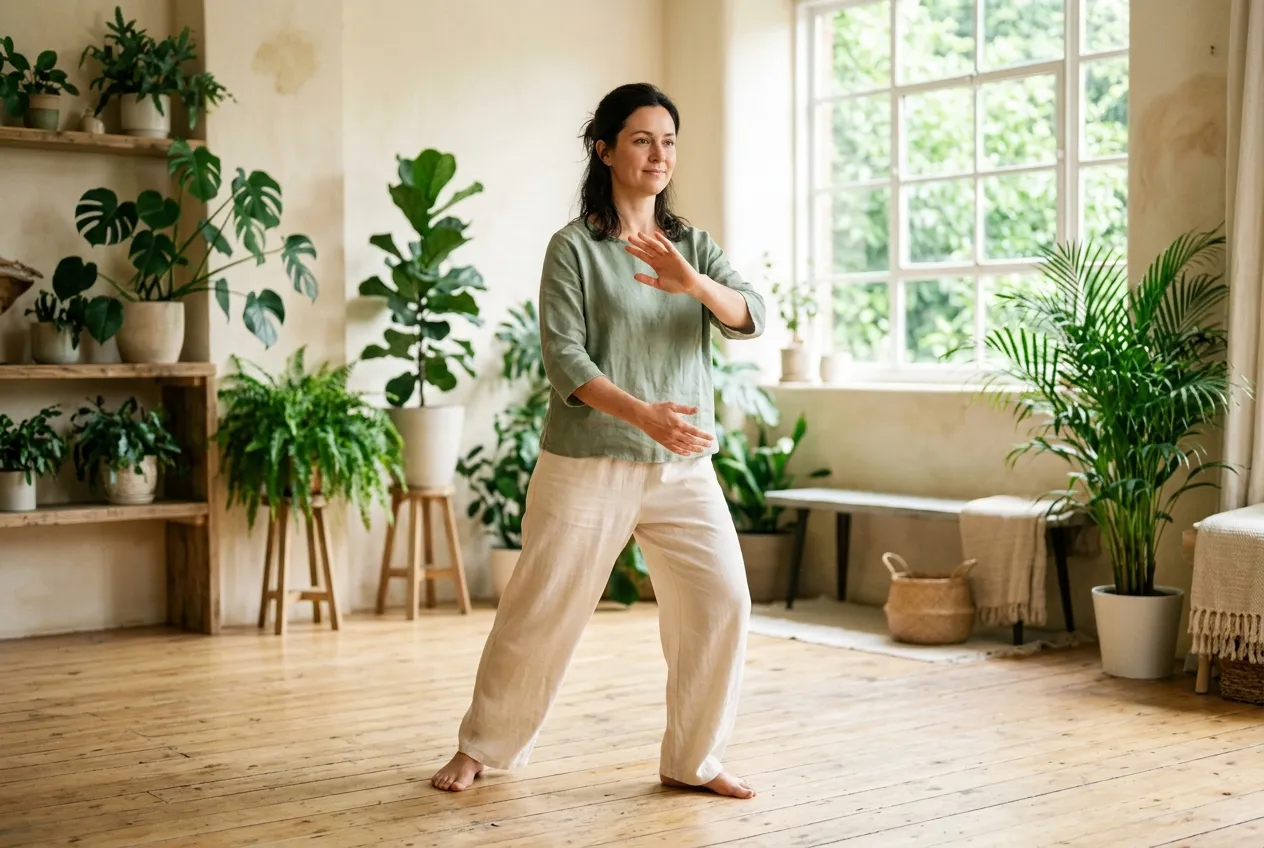
That gap is where tai chi has been studied. A phase 2 randomised trial published in the Journal of the American Heart Association in 2017 recruited patients with coronary heart disease who had specifically declined cardiac rehabilitation, randomising them to a lighter or more intensive tai chi programme. The trial found tai chi to be feasible, safe, and acceptable in this population, with improvements in physical activity levels in the more intensive group.
The framing there is the important part. The comparison is not tai chi versus cardiac rehabilitation — cardiac rehabilitation wins that comparison and should be the first choice for anyone eligible. The comparison is tai chi versus the nothing that these patients were otherwise doing.
I came to tai chi from a martial arts background rather than a cardiac one, but the pattern of people avoiding exercise environments that feel intimidating is not unfamiliar. A practice you do in ordinary clothes, in a hall, with no equipment and no performance metrics, has a real adherence advantage over one that requires a gym.
What Tai Chi Will Not Do
Being clear about this protects people:
It will not substantially raise peak aerobic capacity in someone already moderately fit. The heart failure trial found no change in peak oxygen uptake, and that is the expected result given the intensity.
It is not a treatment for coronary artery disease. It does not reverse atherosclerosis, and no responsible reading of the literature suggests otherwise.
It does not replace medication. Statins, antiplatelets, beta blockers, and the rest are prescribed on the basis of large outcome trials. Nothing in the tai chi literature justifies altering them.
It has not been shown to reduce cardiac events or mortality. No trial has been large enough or long enough to test that. Anyone claiming tai chi prevents heart attacks is going well beyond the evidence.
What can be said fairly: tai chi is a safe, sustainable form of physical activity for people with cardiovascular disease, it improves quality of life and blood pressure, and for those who will not do anything else, it is substantially better than inactivity.
Practising With a Heart Condition
Get Clearance First
If you have diagnosed cardiovascular disease, have had a cardiac event, or have symptoms on exertion, talk to your cardiologist or GP before starting. This is not a formality. Most will approve tai chi readily — it is low intensity and there is trial evidence in cardiac populations — but exertional chest pain, uncontrolled arrhythmia, severe valve disease, or decompensated heart failure all need assessment first.
Know Your Warning Signs
Stop and seek help for chest pain or pressure, unusual breathlessness, dizziness or light-headedness, palpitations that feel different from normal, or unusual fatigue that does not resolve with rest. These are the standard cardiac warning signs and they apply during tai chi as they would during any activity.
Keep the Intensity Genuinely Light
Higher stances, shorter sessions, more rest. The talk test is the simplest gauge: you should be able to hold a conversation throughout. If you cannot, you are working harder than the trials did.
Mind the Blood Pressure Traps
Two specific things to avoid. First, breath holding — it produces a transient blood pressure spike and is common during difficult transitions. Second, prolonged arm elevation above the heart, which raises blood pressure and is easy to sustain unknowingly in postures with raised hands. Lower the arms when they start to feel heavy.
Watch for Orthostatic Changes
Many cardiac medications, particularly beta blockers and diuretics, cause postural dizziness. Come out of low postures slowly, avoid sudden head turns, and pause between movements if you feel unsteady. The balance guide is relevant here, since the falls risk from cardiac medication is one of the practical hazards of this population.
Practise Where Help Is Available
Early on, practise where someone else is present rather than alone at home. Group classes have the advantage of an instructor who notices when someone looks unwell.
How It Compares With Walking, Cycling, and Swimming
People considering tai chi for cardiovascular reasons usually already have a walking habit, or a bike, or a pool membership they are not using. Knowing how the options differ makes the choice easier.

Walking is the closest comparison and the most accessible aerobic activity there is. Brisk walking produces a higher and more sustained heart rate than tai chi and a better aerobic training stimulus. Tai chi produces greater gains in balance, lower-limb strength, and the autonomic measures. They are complementary, and combining them is better than choosing between them.
Cycling offers a stronger aerobic stimulus still, with the advantage of being adjustable in intensity and easy on the knees. Its disadvantages for older adults with cardiovascular disease are the falls risk on the road and the seated posture, which does nothing for balance. A stationary bike removes the first problem and not the second.
Swimming is excellent aerobically and gentle on joints. Its practical barriers are access, cost, and the fact that many people simply will not go regularly. Water also masks the postural challenges that tai chi is specifically good at addressing.
Resistance training is the one most commonly neglected, and the evidence for maintaining muscle mass in older adults is strong. Tai chi provides some lower-limb loading through sustained partial squatting, but not enough to substitute for progressive resistance work.
The pattern worth noticing is that tai chi is not the strongest option in any single category except balance, autonomic regulation, and adherence. Adherence is the one that quietly decides outcomes. A moderate intervention performed four times a week for a decade produces more cardiovascular benefit than an optimal one abandoned after a month, and the drop-out rates in tai chi trials tend to be low compared with conventional exercise programmes.
In my experience the people who keep practising are rarely the ones who came for measurable fitness gains. They are the ones who found it interesting enough to keep doing, and the physiology followed.
Building a Realistic Cardiovascular Routine
If your goal is heart health specifically, the sensible position is that tai chi should sit alongside aerobic activity rather than replacing it, unless aerobic activity is genuinely not possible for you.
A reasonable weekly structure for someone with stable cardiovascular disease, subject to medical advice:
- Aerobic activity — walking is the default, at whatever duration and pace has been cleared, on most days.
- Tai chi — three or four sessions of 20 to 40 minutes, for autonomic balance, blood pressure, balance, and stress.
- Light resistance work — if approved, two sessions a week, since muscle mass matters for long-term function.
For people who cannot manage sustained aerobic activity — advanced heart failure, severe deconditioning, significant comorbidity — tai chi becomes the primary activity rather than the supplement, and that is a legitimate use of it. It was studied in exactly that population for exactly that reason.
The broader health benefits article covers how the cardiovascular findings sit alongside the balance, pain, and mental health evidence, and the full set of research summaries is in the tai chi health section. If you are starting from a low base and want a structure to follow, the daily practice routine guide sets out a manageable weekly pattern.