If you have been told your blood pressure is creeping up, the standard advice is to move more. What that usually means in practice is brisk walking, cycling, or something else that raises your heart rate and leaves you slightly out of breath. Tai chi does none of those things — and yet the trial evidence suggests it lowers blood pressure about as effectively as conventional aerobic exercise, and in at least one large trial, more effectively.
That result surprises people, including practitioners. This article looks at what the research actually found, why a slow-moving practice would affect blood pressure at all, and how to structure a practice if blood pressure is your reason for starting. The honest summary: tai chi is a credible option for people with prehypertension or mild hypertension, particularly those who dislike or cannot tolerate conventional exercise. It is not a replacement for medication when medication is indicated.
What the Trials Found
The strongest single piece of evidence is a randomised clinical trial published in JAMA Network Open in 2024. Researchers assigned 342 Chinese adults with prehypertension to either Yang-style tai chi or moderate-intensity aerobic exercise — stair climbing, jogging, brisk walking, cycling — with both groups doing four 60-minute sessions a week for a full twelve months.
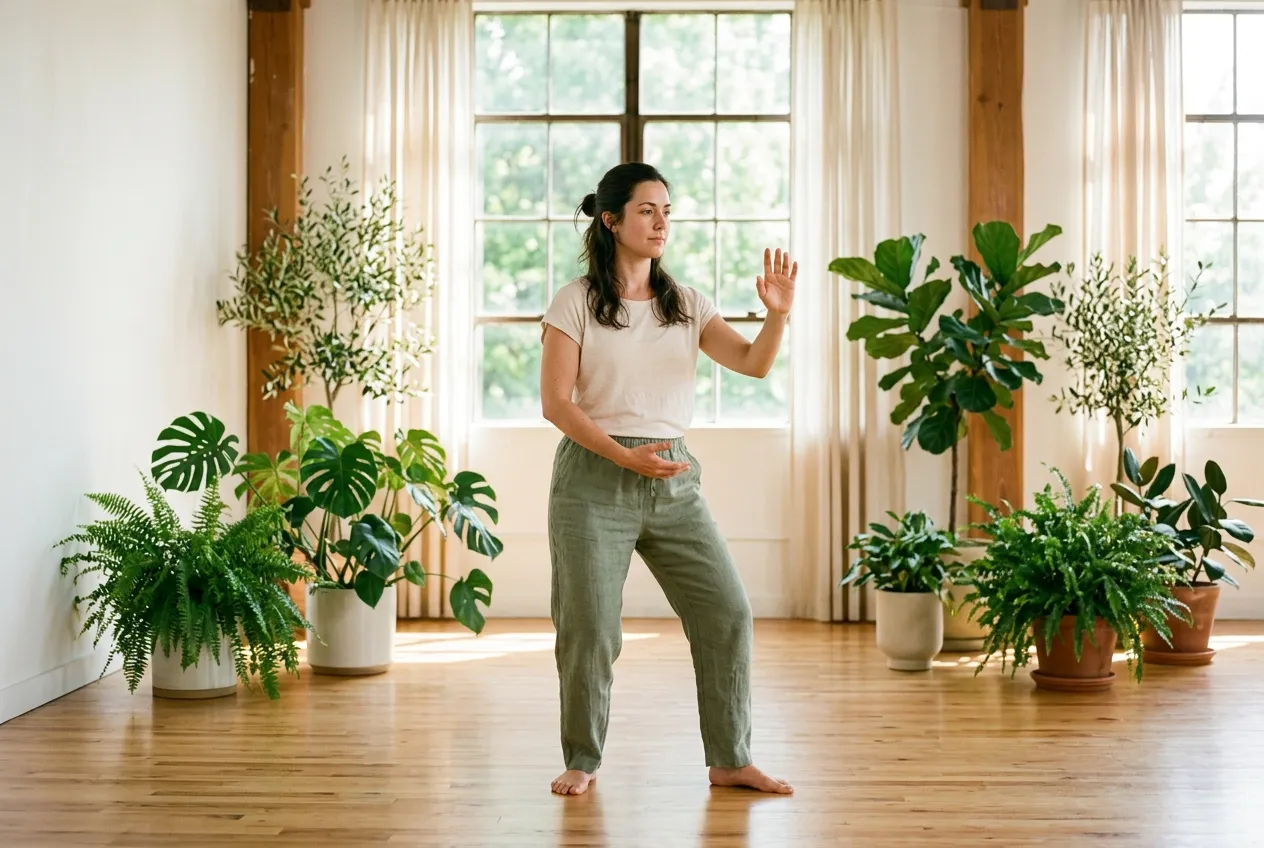
At twelve months, the tai chi group showed a greater reduction in 24-hour ambulatory systolic blood pressure than the aerobic exercise group. More of the tai chi participants also returned to normal blood pressure readings over the study period. The trial is notable for its length — twelve months is long for an exercise study — and for using ambulatory monitoring rather than single clinic readings, which are notoriously noisy.
The first time I read that result, my reaction was scepticism. I have practised tai chi for over ten years and I have never finished a session feeling that I had exerted my cardiovascular system in the way a hard cycle does. But the finding is consistent with a broader pattern in the literature: mind-body practices affect blood pressure through routes that have little to do with cardiovascular training load.
Smaller trials and meta-analyses across the past two decades point in the same direction, generally showing systolic reductions in the range of several millimetres of mercury for regular tai chi practice compared with no exercise. Reductions of that size are not dramatic for any one person, but at a population level they shift cardiovascular risk meaningfully.
Why a Slow Practice Would Affect Blood Pressure
Blood pressure is not simply a function of how hard you exercise. It reflects the balance between the sympathetic nervous system, which raises vascular tone and heart rate, and the parasympathetic system, which lowers them. Chronic sympathetic overactivity is one of the well-established contributors to essential hypertension.
Tai chi appears to work primarily on that balance rather than on cardiac output. Several mechanisms are plausible and partially supported:
Sustained parasympathetic activation. Slow movement combined with slow, deep, abdominal breathing is a reliable way to shift autonomic balance. Tai chi practitioners often show heart-rate-variability patterns consistent with higher parasympathetic tone during and after practice, in line with the well-documented autonomic effects of slow breathing generally.
Breathing rate. Tai chi naturally slows respiration to somewhere between four and eight breaths per minute during sustained practice. Slow breathing at roughly six breaths per minute has an independent, well-documented blood-pressure-lowering effect through baroreflex sensitisation, which is why device-guided breathing has been studied as a hypertension intervention in its own right.
Reduced stress reactivity. Cortisol and chronic stress load contribute to hypertension. Regular practice appears to blunt stress reactivity over time.
Consistency. This one is undramatic but probably matters most. Tai chi is gentle enough that most people keep doing it. An intervention producing a modest effect that people sustain for years beats a larger effect they abandon after eight weeks.
In my own practice, the change I notice most is not during the form but in the twenty minutes afterwards — a settled, slightly heavy calm that feels physiologically distinct from the buzz after a run. That subjective difference is what the autonomic data seems to be describing.
Who This Applies To
The evidence base is strongest for people with prehypertension — readings in the roughly 120-139 over 80-89 range — and mild hypertension. This is the group where lifestyle intervention alone can plausibly change the trajectory, and it is the group the 2024 trial specifically recruited.
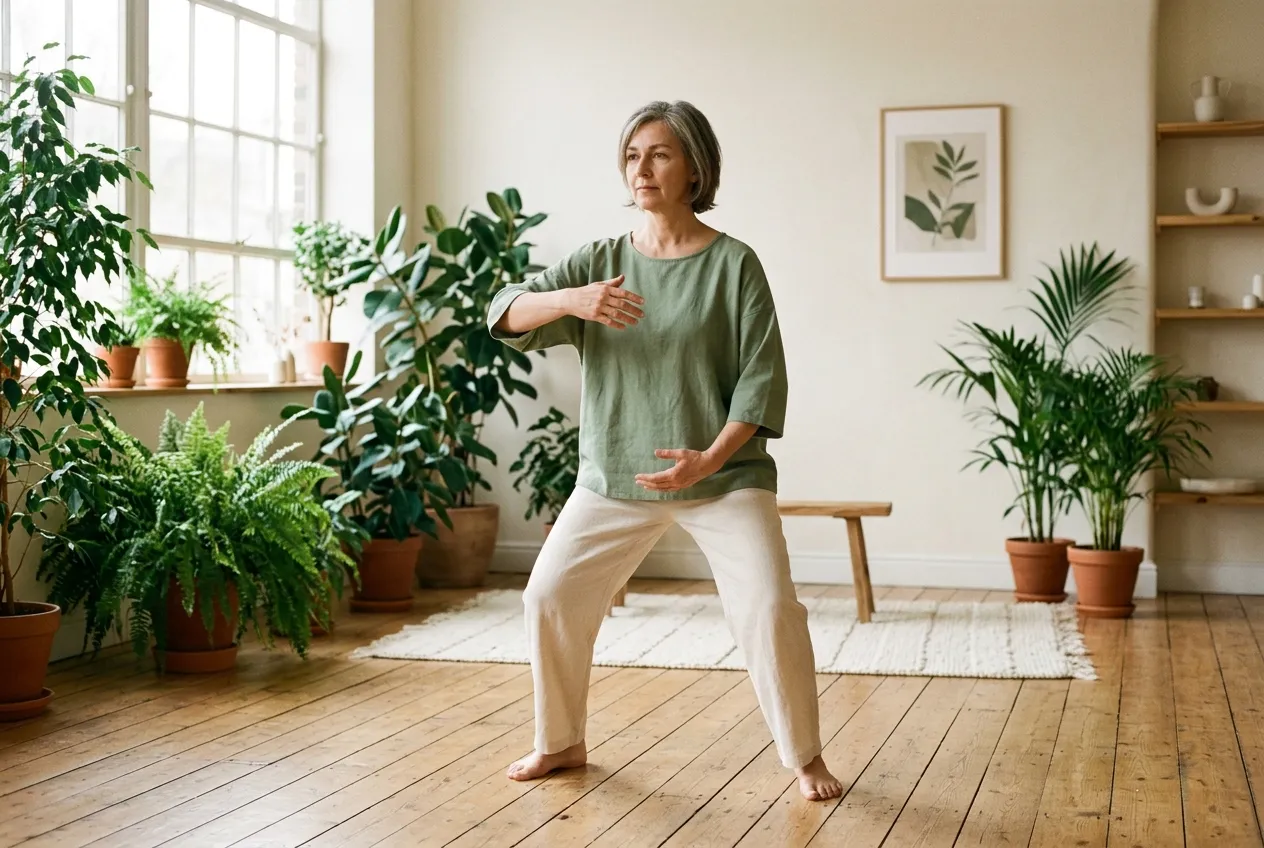
If your blood pressure is substantially elevated, or if you have already had a cardiovascular event, tai chi belongs in the picture as an adjunct rather than as the plan. The heart health evidence covers what happens in cardiac populations specifically, including trials in people with heart failure and those declining conventional cardiac rehabilitation.
A point worth stating plainly, because people do get this wrong: nobody should stop or reduce antihypertensive medication because they have started practising tai chi. Blood pressure medication is adjusted by the prescriber based on measured readings over time. If regular practice does lower your numbers, that is a conversation to have with your doctor with data in hand, not a decision to make on your own.
Structuring a Practice for Blood Pressure
The trials that produced results were not casual. The 2024 study used four hour-long sessions a week for a year. Most positive trials cluster around three to five sessions a week over at least twelve weeks. That is the dose to aim for if blood pressure is the goal.
Session Structure
A practical session that reflects the trial protocols:
- Ten minutes of warm-up and joint mobilisation — gentle shoulder circles, waist rotations, knee circles, ankle work. The warm-up sequence used across the site works well here.
- Five to ten minutes of standing and breathing — settling into stance, letting the breath drop into the abdomen, unhurried. This is where the autonomic shift starts.
- Thirty minutes of form practice — the Yang-style 24 form run through several times is ideal, since it is what most trials used.
- Five to ten minutes of closing — slow walking, standing, or seated breathing to let the state settle rather than snapping straight back into your day.
Practice Emphasis
Three things matter more than movement accuracy if blood pressure is the target:
Do not hold your breath. Breath holding during exertion produces the Valsalva effect and a sharp transient blood pressure spike. In tai chi this most often happens during the harder transitions, when concentration crowds out breathing. If you notice your breath stopping in a particular movement, slow that movement down until it does not.
Keep stances high. Deep stances raise perceived exertion and encourage breath-holding. There is no blood pressure benefit to a low stance. Higher, comfortable stances let the practice stay in the parasympathetic zone where its effect appears to come from.
Practise at a consistent time. Morning practice suits most people, but consistency matters more than timing. Blood pressure follows a circadian rhythm, and practising at the same time daily makes your own before-and-after readings easier to interpret.
Since I started paying attention to breath continuity rather than posture depth, my own sessions feel considerably less effortful — and, if the mechanism explanations are right, that is the point rather than a compromise.
Measuring Whether It Is Working
If you are practising specifically for blood pressure, measure properly or do not bother measuring at all. Casual readings taken at random moments will tell you nothing except how variable blood pressure is.
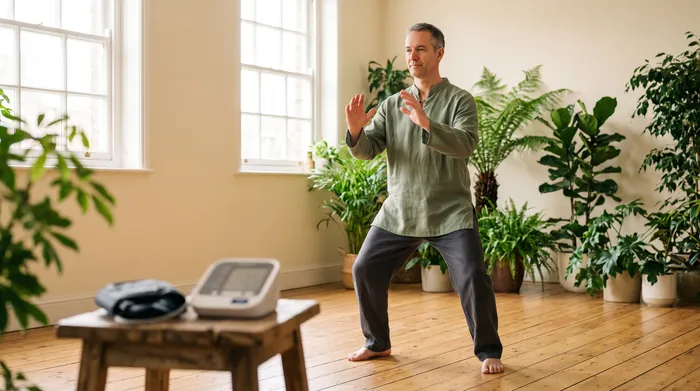
A reasonable protocol: use a validated upper-arm home monitor, take readings at the same two times each day, sit quietly for five minutes first, take two or three readings a minute apart and record the average, and evaluate trends over weeks rather than days. The American Heart Association’s home monitoring guidance sets out the standard technique.
Expect to see nothing meaningful for at least six to eight weeks. Most trials that found effects measured them at twelve weeks or later, and the largest one ran for a year. This is one of the reasons blood pressure is a difficult motivator — the feedback loop is slow, invisible, and easily swamped by a bad night’s sleep or a salty meal.
Where Tai Chi Fits Alongside Everything Else
Exercise is one lever among several for blood pressure, and not the largest one for most people. Sodium reduction, weight loss where relevant, alcohol reduction, and sleep quality all move the number, sometimes more than exercise does. Tai chi is compatible with all of them and competes with none.
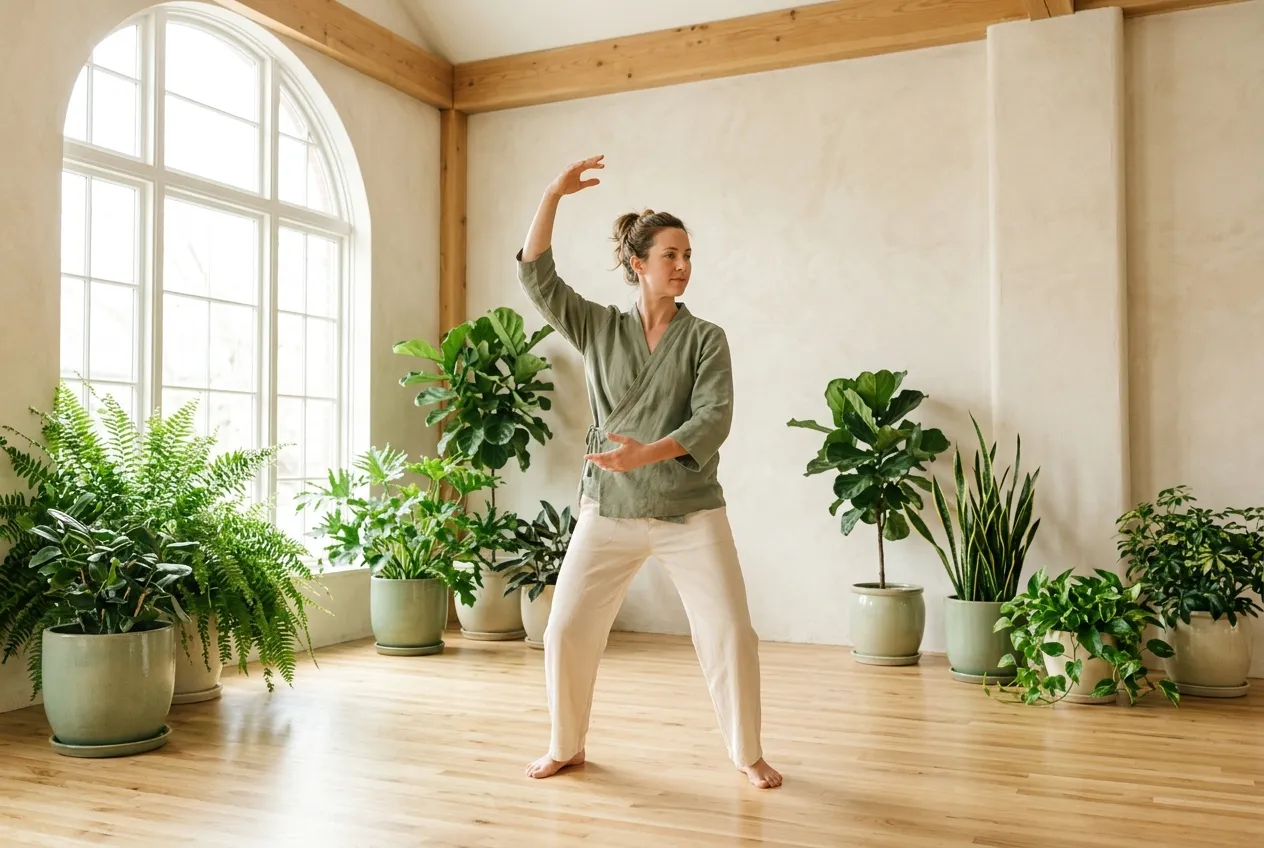
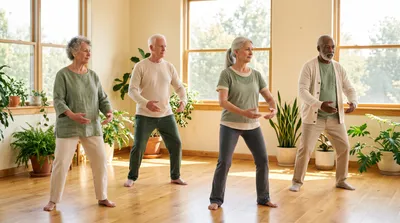
What it offers that a treadmill does not is a practice most people can do at seventy or eighty, in a small space, without equipment, and without the joint loading that pushes people out of running and into inactivity. For older adults specifically — the group with the highest hypertension prevalence — that accessibility is the argument. The guide to tai chi for seniors covers the practical adaptations that keep practice sustainable into later life, and the wider health benefits article puts the blood pressure findings alongside the balance, mood, and pain research. For the broader picture of what the evidence supports, browse the full set of tai chi health guides.
Frequently Asked Questions
How much can tai chi lower blood pressure?
Across trials, regular tai chi practice is typically associated with systolic reductions in the range of a few millimetres of mercury up to around ten, depending on the population, starting blood pressure, and how long the intervention ran. The 2024 JAMA Network Open trial in adults with prehypertension found greater reductions in the tai chi group than in a matched aerobic exercise group over twelve months. Individual results vary widely, and people starting from higher readings tend to see larger changes.
How long before I see a change in my readings?
Plan on at least eight to twelve weeks of consistent practice before drawing any conclusion, and understand that the trials showing the clearest effects ran for six to twelve months. Day-to-day readings fluctuate enough that shorter comparisons are unreliable.
Can I stop my blood pressure medication if tai chi works?
No — not on your own. Medication decisions belong to your prescriber and are based on measured readings over time. Bring your home monitoring log to your appointment and let your doctor decide whether any adjustment is warranted.
Is tai chi better than walking for blood pressure?
The 2024 trial compared tai chi with a mix of moderate aerobic activities including brisk walking and found tai chi produced the greater reduction. That is one trial, and the more defensible reading is that tai chi is at least as effective as moderate aerobic exercise, with the practical advantage of being easier for many people to sustain. If you already walk regularly and enjoy it, adding tai chi rather than swapping is the sensible move.
Which style of tai chi is best for blood pressure?
Yang style has the most research behind it, largely because the 24-form is the standard used in Chinese clinical trials. Sun style and the various health-oriented simplified forms would be expected to work through the same mechanisms. Chen style, with its lower stances and explosive movements, is less obviously suited to the goal, particularly for beginners.
Are there any movements I should avoid if my blood pressure is high?
Avoid anything involving breath holding, sustained isometric holds, or deep squatting stances. If your blood pressure is significantly elevated and not yet controlled, skip low postures entirely and tell your instructor. Standing practice with sustained arm elevation can also raise readings transiently in some people — keep arms at or below shoulder height until your readings are stable.