Tai chi is one of the cheapest practices in existence to sustain — no equipment, no venue, no kit — and one of the more awkward ones to start for free, because the thing beginners most need is correction, and correction is what everyone charges for.
Still, an enormous amount can be done without spending anything, and for some people — trying the practice out, bridging between classes, practising in places with no teachers — free resources are not the budget option but the only option. This is an honest map of what exists, what each kind of resource does well, and where the limits sit. Since I run a paid tai chi platform, you should know my incentive runs the other way here; take that as you will, but the recommendations below are what I would tell a friend.
Free Video: The Main Event
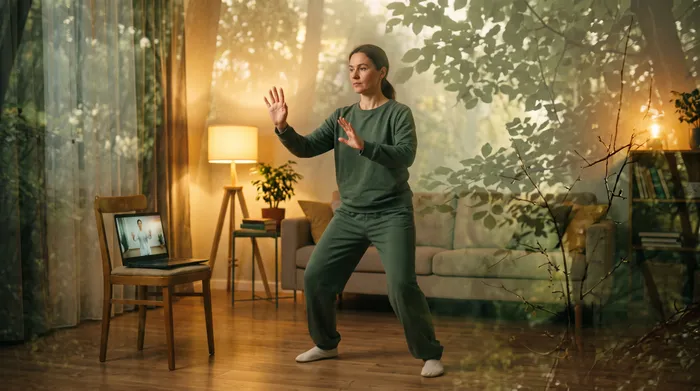
Video is where free tai chi learning actually happens, and the quality ceiling on free video is now genuinely high.
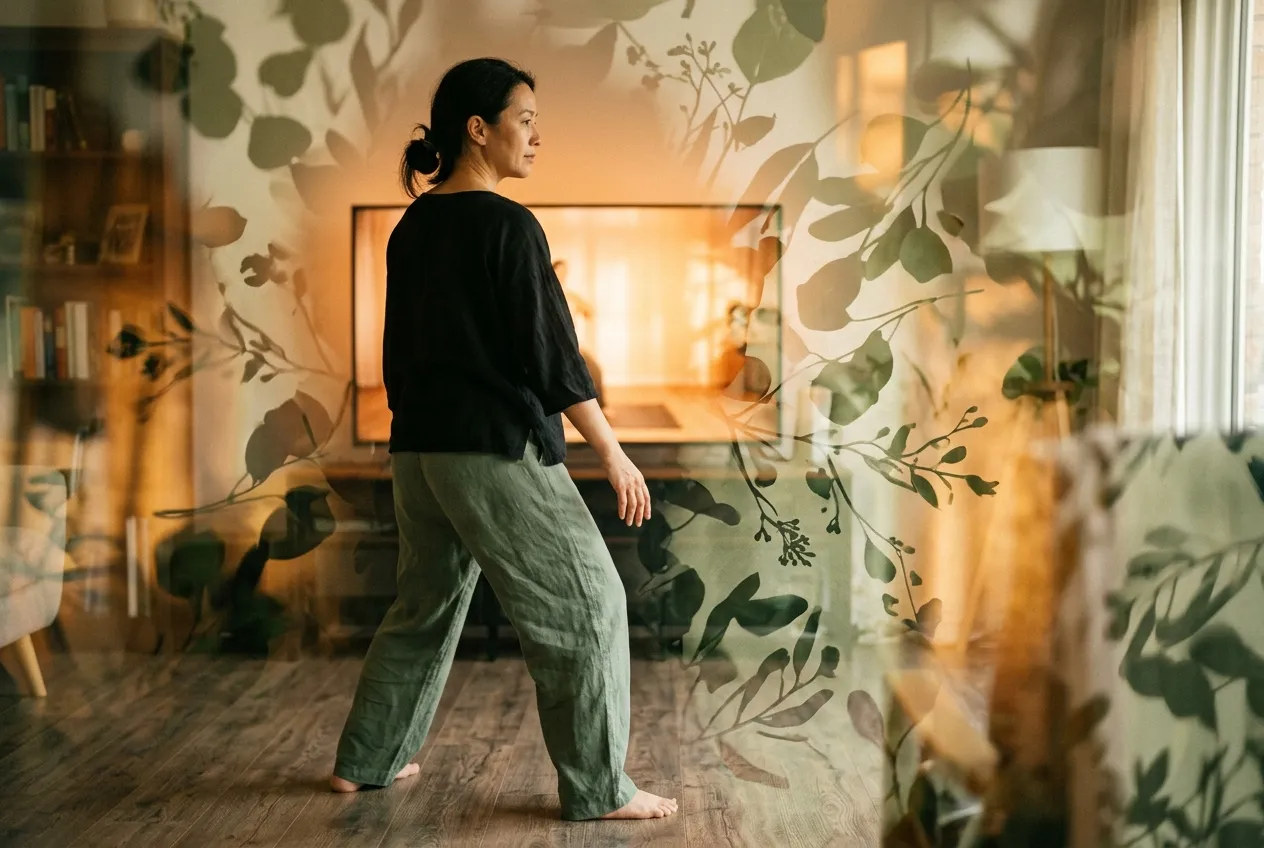
YouTube carries complete, competent instruction for every mainstream short form. Search for the specific sequence — “Yang 24 form tutorial” gets you further than “learn tai chi” — and prefer channels that teach movement by movement with repetition and multiple angles over channels that simply perform. Names to look for: several respected teachers run substantial free channels, including health-programme instructors trained in the Tai Chi for Health lineage, university and hospital wellness channels, and established school channels using free content as their shopfront. That shopfront model is worth understanding: the free material is usually real teaching, complete enough to learn from, published in the reasonable hope you might eventually want more.
How to use it well: pick one teacher and one form and stay put. The free-video failure mode is grazing — a different instructor every session, each with slightly different choreography, producing a form that is an average of five versions and a copy of none. Treat the chosen playlist as your course, work through it in order, and revisit early lessons after later ones, exactly as you would in a paid course.
What video cannot do, free or paid, is see you. No amount of watching corrects a collapsing knee you do not know is collapsing. The realistic mitigations: film yourself monthly and compare against the source; practise in front of a mirror for alignment checkpoints; and read the home practice guide for the habits that keep solo learning honest.
Free In-Person: More Common Than People Think
Free video is convenient; free correction is gold, and it exists in more places than the search results suggest.
Health-service programmes. Falls-prevention and healthy-ageing schemes in many countries commission tai chi classes that are free at the point of use — through the NHS and local authorities in the UK, through health systems, senior centres and area agencies on ageing in the US, and equivalents elsewhere. They are usually aimed at older adults and usually teach simplified health-oriented material, which is exactly right for their audience. If you are over sixty or referred for balance reasons, this is the first door to knock on.
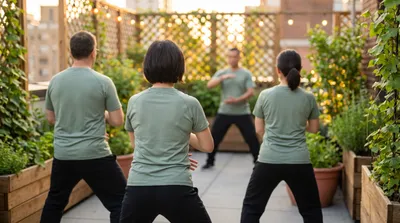
Park groups. In cities with Chinese communities especially, early-morning park practice is a standing institution, and joining is often as simple as turning up repeatedly and copying respectfully from the back row. Etiquette varies — some groups are open, some are effectively private classes — so watch first, ask second. The outdoor practice guide covers the wider habit.
Community tasters and open days. Most paying classes run free first sessions, and community centres cycle through free taster programmes constantly. A month of deliberate taster-hopping is a legitimate, honest way to sample teachers before committing — and teachers know it.
Libraries, unglamorously, still stock instructional DVDs and the better books, and library streaming services often include wellness video content.
University and hospital channels deserve a specific mention because they solve the trust problem. Medical-school integrative health departments, physiotherapy programmes, and hospital wellness services publish free tai chi and qigong routines whose content has been reviewed for the populations they serve. The production is rarely beautiful; the safety and the pacing are dependable, which for older beginners and anyone with health conditions is the better trade.
Live streams and replay classes are the newest layer: many schools now stream classes free or donations-optional, and a live class you follow in real time — even uncorrected — imports some of the accountability and pacing that recorded video lacks. Time zones permitting, one live session a week anchors a free practice noticeably better than replays alone.
Free Apps and Structured Courses
The app landscape divides into genuinely free, freemium, and trials — and the distinction matters more than the marketing suggests.
Genuinely free apps with complete content are rare, because producing good tai chi video is expensive. What free tiers reliably offer is enough to evaluate — a handful of lessons, a short routine — before the paywall. Used deliberately, that is still useful: a structured free tier plus a YouTube playlist covers a beginner’s first months adequately. The online classes guide covers the paid landscape and what distinguishes courses worth money, for whenever that question arrives.
Massive open course platforms occasionally carry university-produced tai chi or qigong courses free to audit, and health organisations — arthritis charities, Parkinson’s organisations, heart foundations — publish free follow-along routines tailored to their communities, which are often better matched to those needs than anything generic.
Judging Quality When Everything Is Free
With no price signal, quality judgement falls entirely on you, and beginners are the least equipped to make it. Some workable proxies:
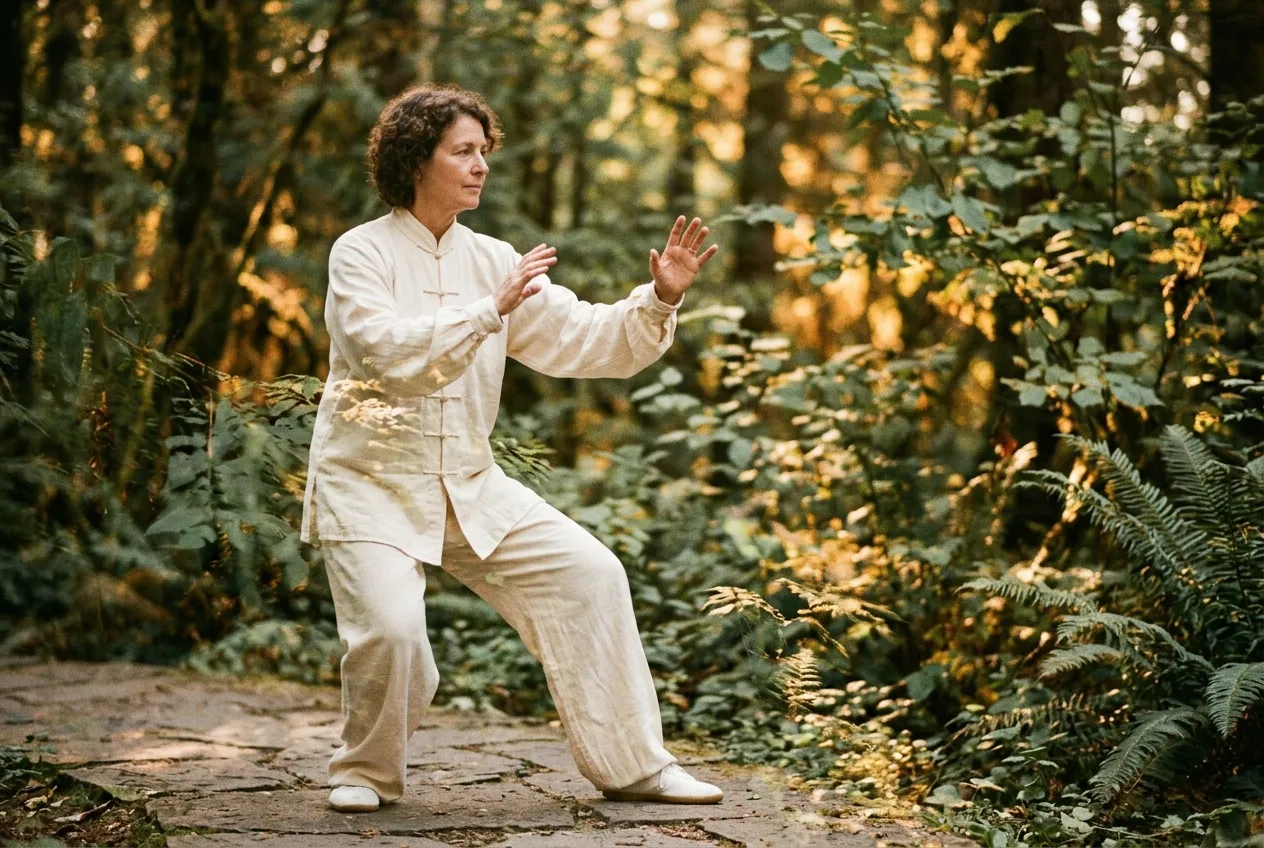
Teaching structure over production values. A fixed camera in a community hall showing a movement four times from two angles teaches more than a drone-shot mountain-top performance. Cinematography correlates with marketing budget, not teaching skill.
Named lineage and checkable credentials. A teacher who says who trained them, in what style, for how long, is offering something verifiable. “Master” as a self-description with no history attached is a modest warning sign; so is heavy emphasis on energy effects over mechanics.
Feet in frame. Genuinely useful test. Teachers who understand video teaching show the feet constantly, because that is where tai chi happens; channels that frame like portrait photography, waist-up, cannot teach stances no matter how good the teacher.
Consistency with other sources. Cross-check any single movement against one other reputable source. Details legitimately vary between lineages, but a version that differs wildly from everything else is more likely idiosyncratic than secret.
The comments are data. Channels with long-running learner communities, questions answered by the teacher, and follow-up corrections are running a class in public. Channels with applause are running a performance.
What Free Genuinely Cannot Do
Being clear-eyed about the limits is part of using free resources well.
No correction. Said already, but it is the whole limit. Errors learned alone consolidate, and unlearning a consolidated habit costs more than a term of classes would have.
No progression judgement. A teacher decides when you are ready for the next thing; alone, you will either rush or stall, and most people rush.
No partner work. Push hands and everything downstream of it requires another human.
Weaker accountability. The class you paid for and are expected at gets attended; the playlist waits politely forever.
The practical synthesis most cheap-but-serious learners land on: free video as the daily backbone, plus occasional paid contact — a monthly class, a workshop a quarter — used specifically for correction. That hybrid costs a fraction of weekly classes and fixes the one thing free cannot provide. If even occasional payment is genuinely out of reach, the health-service and park routes above are the correction sources that cost nothing.
A Free Starting Plan
Pulling it together into something you could begin this week:
- Pick your form and teacher once. Yang 24 is the default for reasons the beginners guide covers. Choose one complete free video course for it and commit.
- Practise short and daily. Fifteen minutes: warm-up, the current lesson’s material, one run of everything learned so far, quiet close.
- Add one live element. A park group, a health-service class, or a monthly taster — whatever your area offers — for the correction and the company.
- Film yourself every four weeks. Compare against the source video. This is the poor practitioner’s teacher, and it is startlingly effective at revealing what you cannot feel.
- Reassess at three months. By then you will know whether this practice is yours. If it is, that is the moment paid instruction repays itself fastest — and if it is not, you have lost nothing but mornings you enjoyed anyway.
One last reassurance for anyone feeling that the free route is the lesser one: the art itself was transmitted for centuries by people copying from the back of a courtyard. Careful imitation, daily repetition, and honest self-observation are not the budget version of learning tai chi — they are learning tai chi. The paid layers exist to speed that process and catch its errors, never to replace it.
More practice guidance is collected in the tai chi practice section.