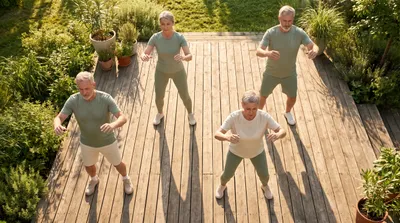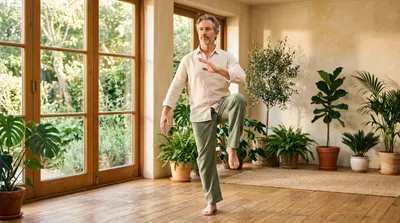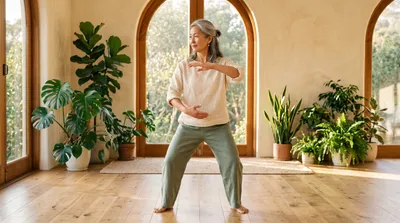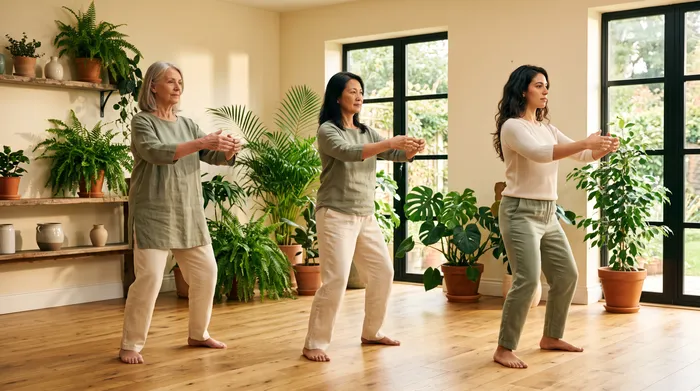
Women make up the clear majority of tai chi practitioners in most Western classes — a striking inversion of the practice’s origins as a martial art in a male-dominated tradition. Walk into a community tai chi class in Britain or the United States and the room is likely to be three-quarters women, most of them over fifty.
That demographic reality has not been matched by research designed around women’s health specifically. Most tai chi trials recruit mixed populations and report results without sex-specific analysis. What follows separates what the evidence genuinely supports from what is reasonable inference, across the life stages where the questions differ.
Bone Density: A Mixed Picture
This is the claim most frequently made about tai chi and women’s health, and it deserves careful handling because the evidence is genuinely conflicting.
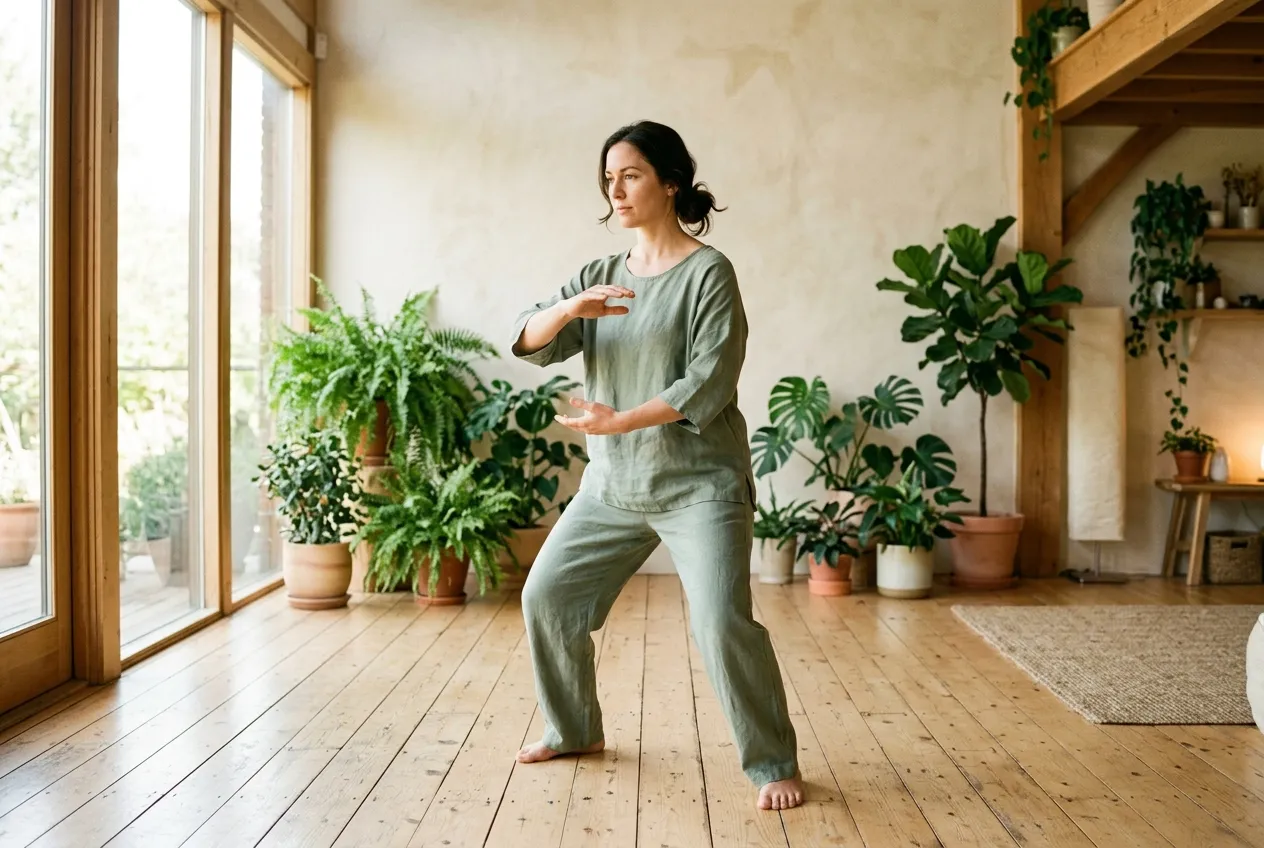
The theory is sound. Bone responds to mechanical loading, weight-bearing exercise preserves bone mineral density, and postmenopausal bone loss is a major driver of fracture risk. Tai chi is weight-bearing, so it ought to help.
The trials are less convincing than the theory. A systematic review and meta-analysis of randomised controlled trials, published in 2017, pooled six studies covering 350 postmenopausal women and concluded that tai chi did not significantly attenuate bone mineral density loss at either the lumbar spine or the femoral neck. Later meta-analyses drawing on additional trials have been more favourable, suggesting tai chi may help preserve bone health in postmenopausal women, but the picture remains inconsistent.
Having read through this literature more than once looking for a clean answer, I have not found one. The most defensible position: tai chi is not established as an effective intervention for bone mineral density, and it should not be relied on as the primary strategy for osteoporosis prevention. The loading it provides is real but modest — considerably less than the impact loading of jumping or the mechanical stress of progressive resistance training, both of which have better evidence for bone.
What tai chi does do for fracture risk is different and arguably more important. Most osteoporotic fractures happen because someone falls. Tai chi has strong, consistent evidence for reducing falls, which is a direct route to reducing fractures regardless of what happens to bone density. The fall prevention article covers that evidence, and for a woman with osteopenia or osteoporosis, that is the reason to practise.
I have seen tai chi recommended for osteoporosis on the basis of the bone density claim more often than on the falls claim, which gets the argument backwards.
Menopause and Perimenopause
The symptom cluster of perimenopause — disrupted sleep, mood changes, anxiety, joint aches, cognitive fog, changes in body composition — maps unusually well onto what regular tai chi practice affects.
Direct trial evidence specifically in menopausal populations is limited. What exists is largely small studies reporting improvements in menopause symptom scores and quality of life. The stronger argument comes from the general literature: tai chi reliably improves sleep quality, reduces anxiety and depressive symptoms, and reduces perceived stress in adult populations, and those outcomes are precisely the ones that most degrade quality of life during the menopausal transition.
Three specific points worth making:
Sleep is often the highest-value target. Broken sleep drives most of the daytime symptoms people find hardest. An evening tai chi practice as a wind-down routine addresses this directly, and the sleep article sets out how to structure it.
Joint and muscle aches respond to gentle movement. Musculoskeletal aching is one of the more under-discussed perimenopausal symptoms. Gentle continuous movement generally helps where stretching alone does not.
Practice is compatible with everything else. Tai chi does not interact with hormone replacement therapy or any other treatment, and does not need to be traded off against anything.
What it does not do: it does not affect hot flushes reliably, it does not replace HRT for women who need it, and it does not alter the hormonal transition itself.
Pregnancy and Postpartum
Tai chi during pregnancy is a common question. Gentle tai chi is generally appropriate for women with uncomplicated pregnancies who were already practising, with adaptations worked out alongside an instructor and a midwife or obstetrician.
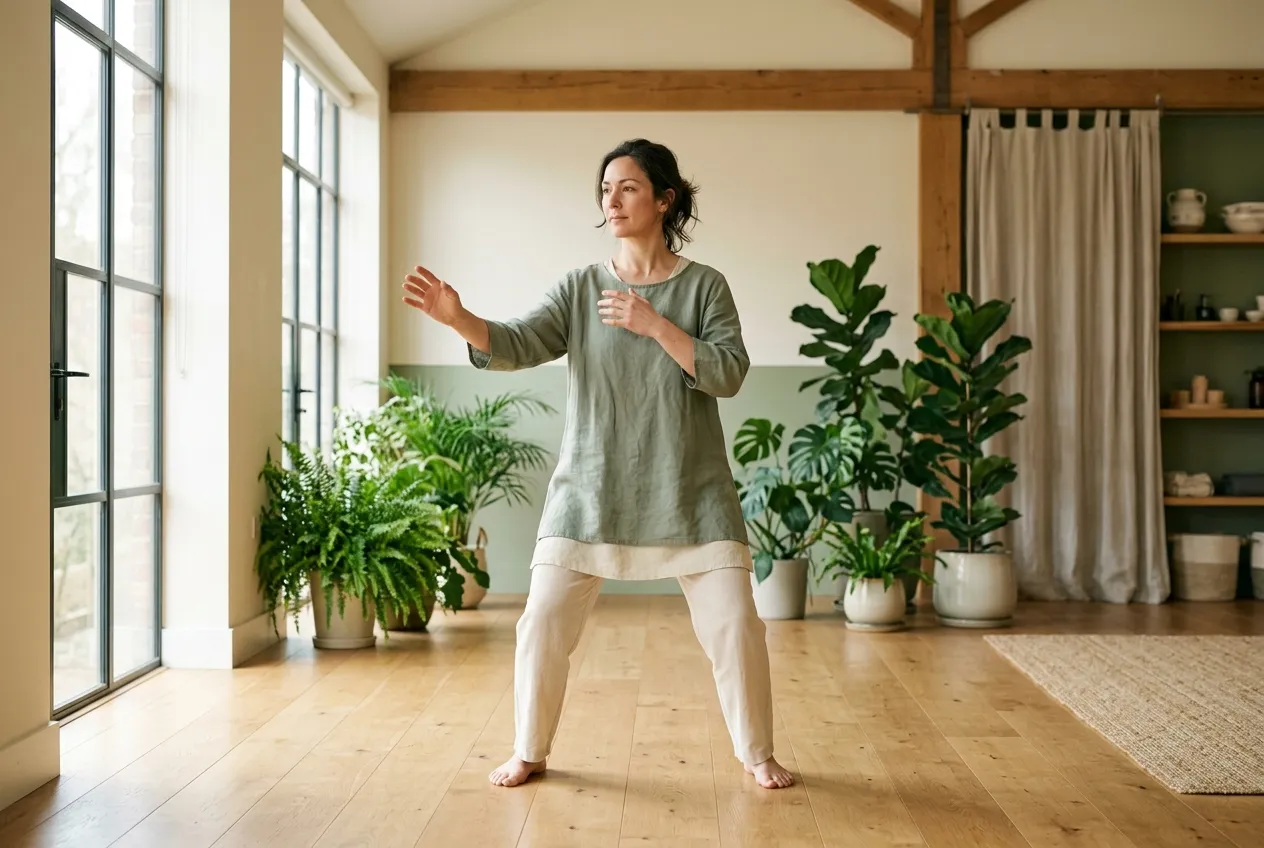
Postpartum, the considerations shift to pelvic floor recovery, abdominal separation, and joint laxity that persists for months after birth. Tai chi’s low-impact, non-loaded character makes it a reasonable early return-to-movement option, though pelvic floor rehabilitation should come from a specialist physiotherapist rather than from a general movement class.
Bladder and Pelvic Health
This one gets little attention and deserves more. Pelvic floor dysfunction — stress incontinence, urgency, prolapse symptoms — affects a large proportion of women, particularly after childbirth and after menopause, and is chronically under-treated because people do not raise it.
Tai chi is not pelvic floor therapy and does not replace targeted pelvic floor muscle training, which has strong evidence and should be the first-line approach. But two features of practice are relevant. The emphasis on abdominal rather than chest breathing works with, rather than against, pelvic floor mechanics, since the diaphragm and pelvic floor move as a coordinated unit. And the practice avoids the sharp intra-abdominal pressure spikes generated by heavy lifting, jumping, and high-impact exercise, which are the activities most likely to provoke symptoms.
For women who have been advised to avoid high-impact exercise for pelvic floor reasons, tai chi is one of the more useful remaining options.
Postural Change and Upper Back Health
Increased thoracic kyphosis — the rounded upper back that becomes more pronounced with age — is more common in women, partly because of vertebral compression fractures related to osteoporosis and partly because of long-term postural patterns.
Tai chi works against this directly. The postural requirements of every style include a lengthened spine, an open chest, and a head position balanced over the body rather than carried forward. Held for thirty minutes several times a week, that becomes training rather than instruction.
The chest-opening movements in particular are worth emphasising for anyone noticing upper back rounding, and the shoulder exercise guide covers movements that target the same area.
Tai Chi at Different Stages
Twenties and thirties. The least common age group in classes and the one with the most to gain from starting early. Movement quality, postural habits, and stress management established now compound over decades. This is also the stage where tai chi is most likely to be dismissed as too slow — a mistake, but an understandable one.
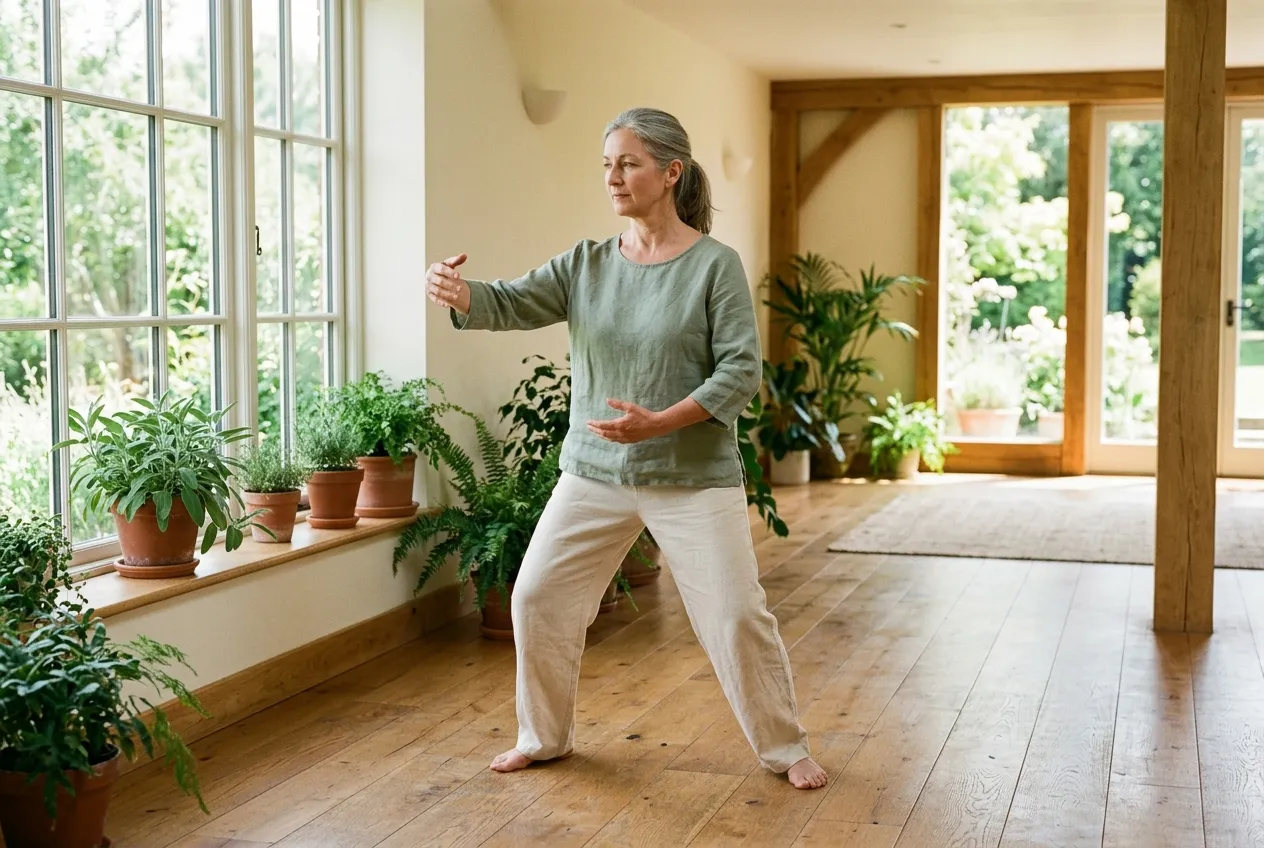
Forties and fifties. The stage where most women arrive at tai chi, frequently prompted by perimenopausal symptoms, an injury that ended a higher-impact activity, or simply noticing that recovery takes longer than it did. This is the highest-value entry point: enough capacity to learn properly, and enough motivation from symptoms to keep going. The guide to tai chi over 50 covers what to expect from starting at this stage.
Sixties and beyond. Falls prevention becomes the dominant clinical rationale, and the evidence here is at its strongest. Balance, lower-limb strength, and confidence in movement are what determine independence, and tai chi addresses all three. The balance article covers the mechanisms.
Why Classes Skew Female
Worth a short digression, because the demographic pattern has practical consequences for anyone choosing a class.
Tai chi arrived in the West through two channels that pulled in different directions. One was the martial arts route of the 1960s and 70s, which brought it into dojos and kung fu schools alongside karate and wing chun, and drew a mostly male audience. The other was the health and wellness route, which grew from the 1990s onward as research on falls and arthritis accumulated and as health services began commissioning classes for older adults. The second channel is far larger now, and it recruits from a population — older adults engaging with preventive health — that is disproportionately female.
The consequence is that the phrase “tai chi class” covers two quite different things. A community-centre class run by a health-oriented instructor and a class at a martial arts school teaching the same style will feel almost nothing alike, in pace, in atmosphere, and in what is expected of you.
Neither is the authentic version. The health-oriented lineage is a genuine development of the tradition, and the medical evidence that gives tai chi its current credibility comes almost entirely from simplified, health-focused protocols rather than from traditional martial training. But knowing which room you are walking into saves a wasted first class.
For what it is worth, I came in through the martial arts side and spent my first couple of years assuming that was the real thing and the health classes were a dilution. Watching what the health-oriented research has actually demonstrated changed my view of that entirely.
Practical Considerations
Clothing. Nothing specialised is needed — loose trousers and a top that allows arm movement. Flat, thin-soled shoes matter more than clothing, since the practice depends on feeling the ground. Cushioned running shoes actively interfere with this, and heels are obviously out.
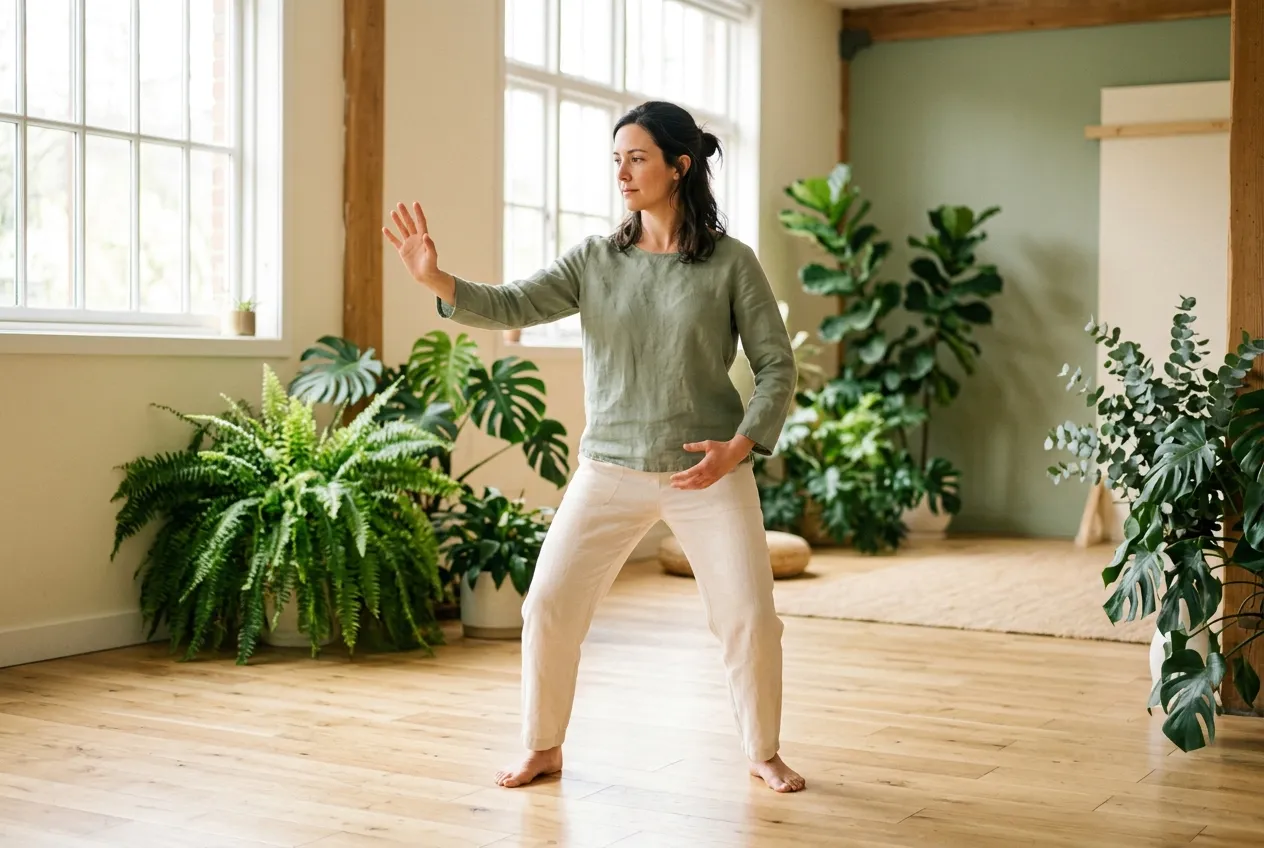
Class culture. Most community tai chi classes are welcoming, informal, and predominantly female. Classes attached to martial arts schools have a different character and may involve partner work and a more traditional atmosphere. Neither is better; they suit different people, and it is worth knowing which you are walking into.
Practising alone. Tai chi is one of the few practices that works perfectly well at home in a small space, which matters for anyone whose schedule makes fixed class times impossible.
Bone health, properly addressed. If osteoporosis or osteopenia is the concern, tai chi should sit alongside — not instead of — the interventions with better bone evidence: adequate calcium and vitamin D, progressive resistance training, and, where indicated, medication. Discuss it with your GP rather than assembling a plan from articles.
The broader health benefits overview covers the full research picture across conditions, the mental health guide goes deeper on anxiety and mood, and the rest of the evidence summaries are collected in the tai chi health section.
Frequently Asked Questions
Does tai chi help with osteoporosis?
Indirectly and importantly, by reducing falls — which is what causes most osteoporotic fractures. The evidence that tai chi preserves bone mineral density itself is mixed, with a 2017 meta-analysis finding no significant effect in postmenopausal women and later analyses being more favourable. Treat it as a falls-prevention intervention rather than a bone-building one, and combine it with resistance training and appropriate medical management.
Can tai chi help with menopause symptoms?
It helps most reliably with sleep disruption, anxiety, low mood, and stress — which for many women are the symptoms that most affect daily life. Direct trial evidence in menopausal populations is limited, and there is no good evidence that tai chi reduces hot flushes. It does not replace hormone replacement therapy for women who need it.
Is tai chi safe during pregnancy?
For uncomplicated pregnancies, gentle tai chi is generally considered appropriate, with specific modifications worked out alongside an instructor experienced in teaching pregnant students. Discuss it with your midwife or obstetrician first — this is standard advice for any exercise in pregnancy, not a tai chi-specific caution.
Is tai chi good for pelvic floor problems?
It is compatible with pelvic floor recovery and avoids the high-impact loading that provokes symptoms, and its emphasis on abdominal breathing supports the diaphragm-pelvic floor relationship. It is not a substitute for pelvic floor muscle training or specialist physiotherapy, which is what actually treats the problem.
Should women practise differently from men?
Not in any fundamental way. Practical differences worth noting are that women have on average greater joint laxity, which makes attention to knee alignment more important rather than less; that pelvic floor considerations affect breathing and lifting cues; and that hip anatomy affects comfortable stance width, so a stance that suits one person’s structure may not suit another’s. Beyond that, the practice is the practice.
Is tai chi enough exercise on its own for a woman in her fifties?
For general movement, balance, and stress, it does a great deal. It does not provide sufficient aerobic stimulus or sufficient resistance loading to cover current physical activity guidelines on its own. The most complete combination for this age group is tai chi plus regular walking plus twice-weekly resistance work — the last being the element most commonly missing and the most valuable for maintaining bone and muscle.